Service
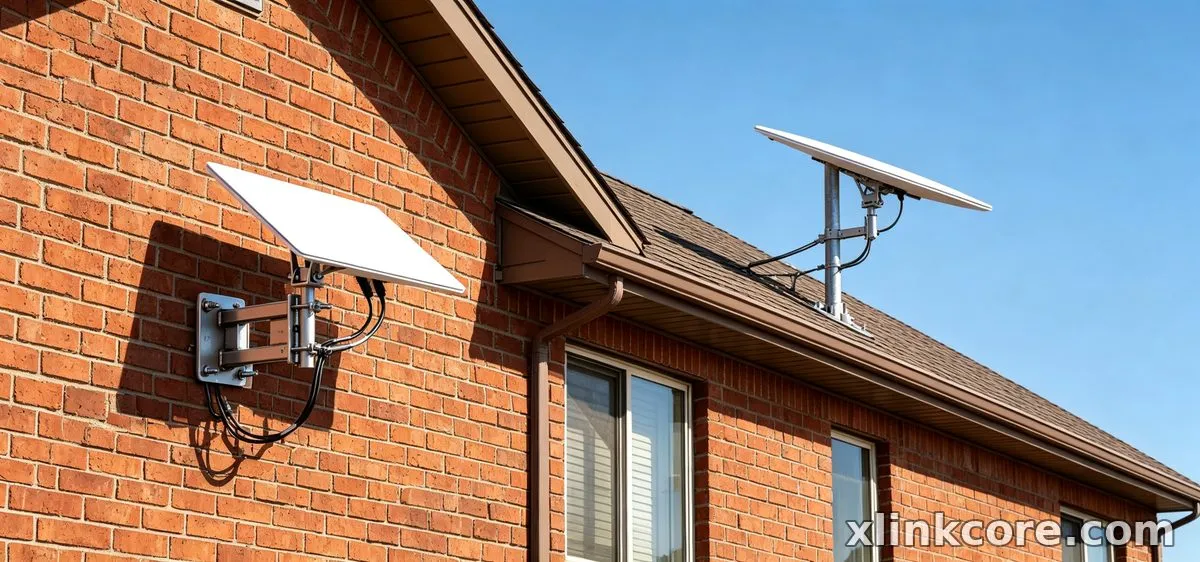
The Best Starlink Mount for Your Dish: Roof, Pole, Wall, Flat and Adjustable Options
? What This Article Covers
- ▶Why Industrial Teams Choose Starlink
- ▶Selecting the Right Mount for Towers, Masts, and Structures
- ▶Cable Management and Protection in Harsh Environments
Starlink is not limited to residential rooftops. In industrial environments such as construction sites, cellular towers, remote monitoring stations, oil and gas facilities, and mines, Starlink is often the only high-throughput connection available that can be deployed rapidly without waiting for fiber or microwave links. Success in harsh environments depends not only on the satellite terminal itself but also on its mounting method, cable protection, and reliable power supply.Why Industrial Teams Choose Starlink
Industrial deployments face challenges rarely encountered in residential setups: extreme temperatures, constant vibration, corrosive dust, high winds, and the necessity for uninterrupted operation. Residential mounting methods do not last on drilling rigs or desert towers. Every component must be planned with an industrial-grade mindset.
✓Assess the physical environment: temperature ranges, humidity, chemical exposure, and wind loads.✓Plan for remote access and diagnostics—you won't always be on-site.✓Design for maintainability: Can technicians replace cables or mounts without special tools?Selecting the Right Mount for Towers, Masts, and Structures
The mount is the foundation of a reliable industrial Starlink installation. On construction sites, you may need to attach to scaffolding, temporary masts, or concrete parapets. On towers, you require mounts that securely hold pipes and structural steel without damaging coatings. In oil & gas and mining, it is often necessary to minimize drilling or welding to avoid creating ignition sources or structural weak points.
XLinkCore's industrial mount solutions are designed with these realities in mind. Our product line for pipes, poles, and structural steel provides installers with a safe and adjustable platform for both Standard and Mini terminals. A superior industrial mount must allow for tilt adjustment after installation, as remote locations often present unexpected line-of-sight obstructions.
✓Use stainless steel hardware in coastal, chemical, or high-humidity environments.✓Choose vibration-dampening rubber or padded mounts for equipment on operating machinery or towers.✓In cold climates, account for ice accumulation in addition to the terminal and verify the mount's load capacity.✓For temporary construction sites, use non-penetrating bases or clamp-on mounts that leave no trace.Explore the optimal installation solution for your project in our Industrial-Grade Starlink Mount Collection.
Cable Management and Protection in Harsh Environments
Starlink cables are not armored. In industrial environments, they must be protected against crushing, abrasion, UV radiation, and pest damage. Even the best mount will fail if the cable is chewed through or melted against a hot surface.
Route cables inside conduit whenever possible. For exposed sections, use UV-rated cable trays or split loom. Always secure cables with stainless steel clips or ties, especially on vibrating structures where insulation may wear out. Additionally, leave a drip loop before entering an enclosure to keep water away from connectors.
If you need extensions beyond the factory cable length, use high-quality shielded extension cables and low-loss adapters. In industrial setups, the distance from the dish to the router or switch room is often significant, so plan your cable path carefully. Minimize joints and house them inside waterproof junction boxes.
For step-by-step guidance on cable routing through walls, towers, and harsh environments, consult our Starlink Installation Guides.
Power Considerations for Remote Industrial Sites
Starlink terminals consume significant power, especially when heaters activate in cold weather. On construction sites using generators, power can be unstable. Oil and gas sites may only have access to 12V DC battery systems. In mining operations, grid power might be lost for days at a time.
Robust power distribution capable of handling surges, sags, and voltage fluctuations is required. If you need to maintain connectivity for remote monitoring or safety systems, an Uninterruptible Power Supply (UPS) or battery backup is essential. Many industrial users operate Starlink from solar and battery setups, which requires careful DC wiring and compatible power adapters.
XLinkCore's power products include filtered 12V DC adapters and extension cables designed to deliver clean, stable power to Starlink terminals in remote locations. Do not rely on cheap, unverified adapters; they can cause intermittent reboots and shorten the lifespan of your electronics.
Plan for a resilient power architecture by exploring XLinkCore Power Accessories for Starlink.
Grounding, Lightning, and Surge Protection
On towers and exposed structures, Starlink equipment is at high risk from lightning and electrostatic discharge. Proper grounding is mandatory. All mounts must be connected to the site's lightning protection system if one exists. Cable shields should be grounded at the entry point, and a surge protector installed on the Ethernet line before it reaches the router is required.
For remote towers and oil & gas facilities, use grounding kits to connect the mast structure to the site's ground grid. Adhere to national electrical codes and industrial specifications. Remember that a satellite dish is not a lightning rod. If not properly grounded, it can become part of the network conducting surges directly into your control room.
✓If no building ground structure is nearby, install a dedicated ground rod for the Starlink mount.✓Use properly rated Ethernet surge protectors at building entry points.✓Inspect grounding continuity annually, especially after storms.✓In lightning-prone areas, consider fiber optic media converters to electrically isolate the router from the dish.We detail grounding standards and installation specifics in our Technical Information Library.
Addressing Dust, Ice, and High Vibration
Industrial environments are unforgiving. Dust from mines or construction can enter connectors and moving parts. Ice can form on mounts and cables, increasing weight and stressing brackets. Vibration from pumps, generators, and heavy machinery can loosen hardware and interfere with the Starlink internal gimbal or motors.
Select mount components featuring shielded bearings, high-grade gaskets, and corrosion-resistant coatings. Use thread-locking fluid on all fasteners, but choose removable grades to allow for maintenance. For extreme vibration, install mass dampers or use a mount design that allows the dish to flex slightly without stressing the mounting flange.
Regular maintenance is key: check torque, clean connectors, and remove dust accumulation from the dish surface. While Starlink terminals have no user-serviceable parts, you can protect their environment and connection.
Planning for Scalability and Redundancy
Industrial networks are rarely static. Construction sites may move offices every few months. Mines may expand to new pits. Oil and gas operators may want to add surveillance cameras or PLC telemetry. Design your Starlink deployment with future expansion in mind.
Choose mounts that support both current and future generations of Starlink terminals. XLinkCore mounts are designed to adapt between different Starlink models, allowing for upgrades without re-drilling. Also consider wiring additional conduit or pulling spare cables now to accommodate a second dish or other network equipment later.
In mission-critical operations, redundancy is often required: two Starlink dishes on different mounts, power from separate sources, and automatic failover at the router level. This is common in oil & gas and remote monitoring installations where downtime means production loss or safety incidents.
For support with large-scale industrial deployments, visit our Industrial Solutions Hub.
XLinkCore's Approach to Industrial Reliability
XLinkCore does not just sell accessories; we design them for the environments where your team actually works. Our industrial line is the result of feedback from contractors, tower technicians, and network engineers who need parts to survive for years. From corrosion-resistant mounts to industrial-grade power adapters, every product is tested for compatibility and performance with Starlink terminals.
When planning a deployment, we recommend building a complete kit that includes mounts, cables, power supplies, grounding components, and spare hardware. Having the right parts on hand before arriving at the site can save hours of labor time and prevent unacceptable downtime.
Industrial Starlink deployment does not need to be experimental. Proven mounts, protected cabling, stable power, and proper grounding provide a connection that operates like a utility. That is the standard XLinkCore helps you achieve.
Looking for the Accessories You Need to Set Up?
Starlink Network Accessories offers a complete lineup of Starlink mounts, cables, and power solutions designed for marine, RV, industrial, and off-grid applications. For bulk orders or custom OEM/ODM solutions, please contact our team.
Contact UsDesigned by:Shenzhen Starlink Network Accessories Co., Ltd. — Starlink-compatible accessories to keep you connected wherever you are.
? What This Article Covers
- ▶Why Industrial Teams Choose Starlink
- ▶Selecting the Right Mount for Towers, Masts, and Structures
- ▶Cable Management and Protection in Harsh Environments
Starlink is not limited to residential rooftops. In industrial environments such as construction sites, cellular towers, remote monitoring stations, oil and gas facilities, and mines, Starlink is often the only high-throughput connection available that can be deployed rapidly without waiting for fiber or microwave links. Success in harsh environments depends not only on the satellite terminal itself but also on its mounting method, cable protection, and reliable power supply.
Why Industrial Teams Choose Starlink
Industrial deployments face challenges rarely encountered in residential setups: extreme temperatures, constant vibration, corrosive dust, high winds, and the necessity for uninterrupted operation. Residential mounting methods do not last on drilling rigs or desert towers. Every component must be planned with an industrial-grade mindset.
✓Assess the physical environment: temperature ranges, humidity, chemical exposure, and wind loads.
✓Plan for remote access and diagnostics—you won't always be on-site.
✓Design for maintainability: Can technicians replace cables or mounts without special tools?
Selecting the Right Mount for Towers, Masts, and Structures
The mount is the foundation of a reliable industrial Starlink installation. On construction sites, you may need to attach to scaffolding, temporary masts, or concrete parapets. On towers, you require mounts that securely hold pipes and structural steel without damaging coatings. In oil & gas and mining, it is often necessary to minimize drilling or welding to avoid creating ignition sources or structural weak points.
XLinkCore's industrial mount solutions are designed with these realities in mind. Our product line for pipes, poles, and structural steel provides installers with a safe and adjustable platform for both Standard and Mini terminals. A superior industrial mount must allow for tilt adjustment after installation, as remote locations often present unexpected line-of-sight obstructions.
✓Use stainless steel hardware in coastal, chemical, or high-humidity environments.
✓Choose vibration-dampening rubber or padded mounts for equipment on operating machinery or towers.
✓In cold climates, account for ice accumulation in addition to the terminal and verify the mount's load capacity.
✓For temporary construction sites, use non-penetrating bases or clamp-on mounts that leave no trace.
Explore the optimal installation solution for your project in our Industrial-Grade Starlink Mount Collection.
Cable Management and Protection in Harsh Environments
Starlink cables are not armored. In industrial environments, they must be protected against crushing, abrasion, UV radiation, and pest damage. Even the best mount will fail if the cable is chewed through or melted against a hot surface.
Route cables inside conduit whenever possible. For exposed sections, use UV-rated cable trays or split loom. Always secure cables with stainless steel clips or ties, especially on vibrating structures where insulation may wear out. Additionally, leave a drip loop before entering an enclosure to keep water away from connectors.
If you need extensions beyond the factory cable length, use high-quality shielded extension cables and low-loss adapters. In industrial setups, the distance from the dish to the router or switch room is often significant, so plan your cable path carefully. Minimize joints and house them inside waterproof junction boxes.
For step-by-step guidance on cable routing through walls, towers, and harsh environments, consult our Starlink Installation Guides.
Power Considerations for Remote Industrial Sites
Starlink terminals consume significant power, especially when heaters activate in cold weather. On construction sites using generators, power can be unstable. Oil and gas sites may only have access to 12V DC battery systems. In mining operations, grid power might be lost for days at a time.
Robust power distribution capable of handling surges, sags, and voltage fluctuations is required. If you need to maintain connectivity for remote monitoring or safety systems, an Uninterruptible Power Supply (UPS) or battery backup is essential. Many industrial users operate Starlink from solar and battery setups, which requires careful DC wiring and compatible power adapters.
XLinkCore's power products include filtered 12V DC adapters and extension cables designed to deliver clean, stable power to Starlink terminals in remote locations. Do not rely on cheap, unverified adapters; they can cause intermittent reboots and shorten the lifespan of your electronics.
Plan for a resilient power architecture by exploring XLinkCore Power Accessories for Starlink.
Grounding, Lightning, and Surge Protection
On towers and exposed structures, Starlink equipment is at high risk from lightning and electrostatic discharge. Proper grounding is mandatory. All mounts must be connected to the site's lightning protection system if one exists. Cable shields should be grounded at the entry point, and a surge protector installed on the Ethernet line before it reaches the router is required.
For remote towers and oil & gas facilities, use grounding kits to connect the mast structure to the site's ground grid. Adhere to national electrical codes and industrial specifications. Remember that a satellite dish is not a lightning rod. If not properly grounded, it can become part of the network conducting surges directly into your control room.
✓If no building ground structure is nearby, install a dedicated ground rod for the Starlink mount.
✓Use properly rated Ethernet surge protectors at building entry points.
✓Inspect grounding continuity annually, especially after storms.
✓In lightning-prone areas, consider fiber optic media converters to electrically isolate the router from the dish.
We detail grounding standards and installation specifics in our Technical Information Library.
Addressing Dust, Ice, and High Vibration
Industrial environments are unforgiving. Dust from mines or construction can enter connectors and moving parts. Ice can form on mounts and cables, increasing weight and stressing brackets. Vibration from pumps, generators, and heavy machinery can loosen hardware and interfere with the Starlink internal gimbal or motors.
Select mount components featuring shielded bearings, high-grade gaskets, and corrosion-resistant coatings. Use thread-locking fluid on all fasteners, but choose removable grades to allow for maintenance. For extreme vibration, install mass dampers or use a mount design that allows the dish to flex slightly without stressing the mounting flange.
Regular maintenance is key: check torque, clean connectors, and remove dust accumulation from the dish surface. While Starlink terminals have no user-serviceable parts, you can protect their environment and connection.
Planning for Scalability and Redundancy
Industrial networks are rarely static. Construction sites may move offices every few months. Mines may expand to new pits. Oil and gas operators may want to add surveillance cameras or PLC telemetry. Design your Starlink deployment with future expansion in mind.
Choose mounts that support both current and future generations of Starlink terminals. XLinkCore mounts are designed to adapt between different Starlink models, allowing for upgrades without re-drilling. Also consider wiring additional conduit or pulling spare cables now to accommodate a second dish or other network equipment later.
In mission-critical operations, redundancy is often required: two Starlink dishes on different mounts, power from separate sources, and automatic failover at the router level. This is common in oil & gas and remote monitoring installations where downtime means production loss or safety incidents.
For support with large-scale industrial deployments, visit our Industrial Solutions Hub.
XLinkCore's Approach to Industrial Reliability
XLinkCore does not just sell accessories; we design them for the environments where your team actually works. Our industrial line is the result of feedback from contractors, tower technicians, and network engineers who need parts to survive for years. From corrosion-resistant mounts to industrial-grade power adapters, every product is tested for compatibility and performance with Starlink terminals.
When planning a deployment, we recommend building a complete kit that includes mounts, cables, power supplies, grounding components, and spare hardware. Having the right parts on hand before arriving at the site can save hours of labor time and prevent unacceptable downtime.
Industrial Starlink deployment does not need to be experimental. Proven mounts, protected cabling, stable power, and proper grounding provide a connection that operates like a utility. That is the standard XLinkCore helps you achieve.
Looking for the Accessories You Need to Set Up?
Starlink Network Accessories offers a complete lineup of Starlink mounts, cables, and power solutions designed for marine, RV, industrial, and off-grid applications. For bulk orders or custom OEM/ODM solutions, please contact our team.
Contact UsDesigned by:Shenzhen Starlink Network Accessories Co., Ltd. — Starlink-compatible accessories to keep you connected wherever you are.
