Service
Starlink Mounting Essentials: Roof, Pole, Wall, Flat, and Adjustable Solutions for Every Dish Generation
? In This Article
- ▶Why accessory compatibility is your first purchasing decision
- ▶Standard 4 vs 4X vs V5: Know what you are connecting
- ▶What cable length should you buy?
Starlink hardware has evolved with every dish generation. A cable or mount that works on one model may be completely incompatible with another. Before adding a longer cable, roof mount, or 12V adapter to your cart, precisely identify which dish and connector type you own. Accessories compatible with XLinkCore are engineered for specific Starlink versions; therefore, starting with a compatibility check saves time, money, and unnecessary re-installation.Why Accessory Compatibility is the First Purchasing Decision
The wrong purchase sequence is a common mistake. Customers often select a mount first, only to realize later that the cable length from the dish to the router is too short or that the power supply does not fit their off-grid system. Start with your dish model, measure the cable route, and only then select your accessories.
Standard 4 vs 4X vs V5: Know What You Are Connecting
Cable names like Standard 4, Standard 4X, and V5 indicate which generation of connectors the cable is designed for. Standard 4 is a common cable type found in many Starlink configurations. Standard 4X refers to the family of XLinkCore-compatible cables for this same connector group, engineered specifically for routing and durability. V5 refers to the newer generation of cables used with recent dish models.
Do not assume the connector is identical across all versions. A V5 cable may look similar but will not necessarily work with a Standard 4 port. If you need a replacement, search for the exact same cable family rather than just the dish name. For typical configurations, XLinkCore maintains separate product lines, allowing you to match generations without guessing.
✓Check the connector shape and latch mechanism before placing your order.✓Compare the port on your router or power supply with the cable you plan to buy.✓If you own an older dish, a V5 cable alone will not solve compatibility issues.✓Use the Standard 4X cable series as a starting point for Standard 4 connectors and compare it with the V5 cable family designed for newer dishes.What Cable Length Should You Buy?
Cable length is not just about reaching from the dish to the router. Longer cables increase bulk, create trip hazards, and complicate waterproof sealing if a connector is required. Measure the entire route, including drops, wall penetrations, and any loops left for service maintenance.
✓Buy enough length for the actual route, not just the straight-line distance.✓Consider a shorter cable with an additional connector if you must pass through a wall.✓Choose a cable with a slim connector if your mount has a small cable entry point.✓Leave extra slack near the dish so that wind movement and temperature changes do not stress the connection.Which Mount Should You Choose?
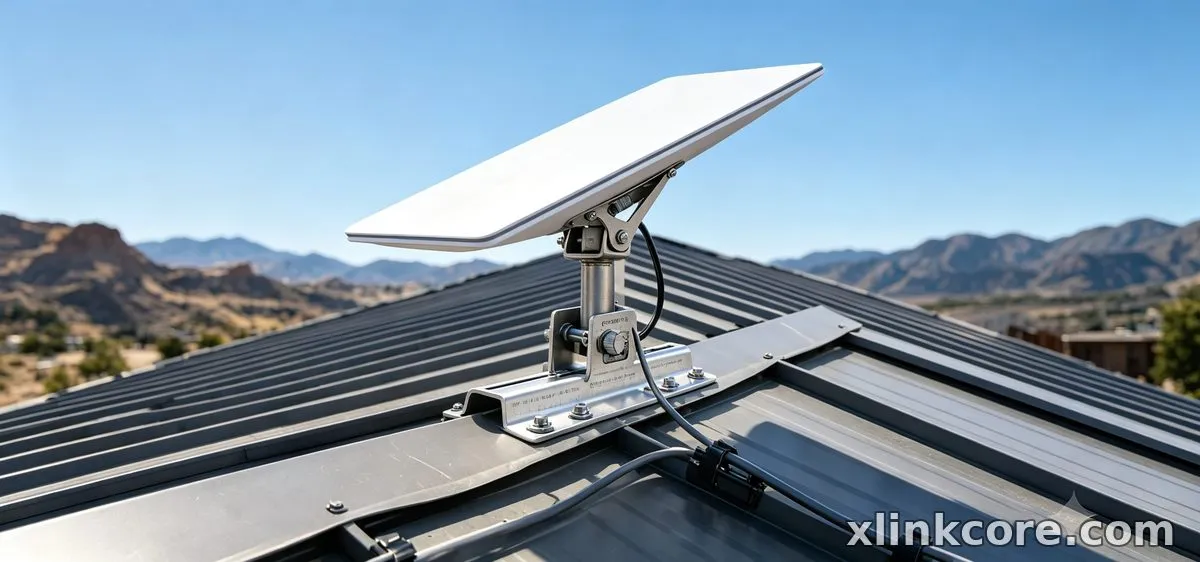
Choosing a mount depends on the surface type, wind exposure, and cable routing method. A flat roof mount is ideal when drilling holes is not permitted. A pole mount helps clear snow or ensures an optimal line of sight. A wall mount looks neater on brick or siding. Every mount changes the dish position and the cable entry point.
✓Flat roof: Use a weighted or low-profile mount that does not trap water.✓Pole: Select a mount with the correct clamp width and plate size for your dish.✓Wall: Leave room for the cable to drop vertically and enter the building.✓RVs or boats: Use a mount designed for vibration and motion, rather than static home installation.Before purchasing, confirm that the mount fits the exact dish you own. The XLinkCore Starlink Mount Collection groups options by mounting surface, allowing you to compare roof, pole, wall, RV, and marine mounts side-by-side.
Power and PoE: Complete the Connection
The cable transmits both data and power in most Starlink configurations, so the power source must match the cable generation and router model. If you are running on battery or solar power, a 12V DC adapter may replace the original power supply, but only if the connector and voltage requirements are compatible.
Read the power section before buying a longer cable. For example, a cable compatible with an original AC power supply may not work with a third-party DC adapter unless the pinout is identical. XLinkCore power accessory options (see offer) include adapters and cables designed for specific Starlink configurations, but you must still verify your dish generation.
What to Check Before Buying Any Starlink Accessory
✓Dish Model: Check if you have Standard, Mini, High Performance, or an older model.✓Cable Generation: Confirm compatibility with Standard 4, Standard 4X, or V5 before finalizing your purchase.✓Route Length: Measure the actual path, not just the distance from dish to window.✓Mounting Surface: Check the roof material, thickness, and whether you have permission to drill.✓Power Source: Confirm AC, PoE, or 12V DC compatibility with your cable and router.✓Weatherproofing: Plan for waterproof connections if using a connector or adapter outdoors.✓Return Policy: Buy from a supplier that clearly states which dish and cable versions each accessory fits.Build an XLinkCore-Compatible Kit in the Right Order
Start with your dish model and cable family. Next, select a mount that fits the surface and cable route. Finally, match the power supply to the cable and your off-grid or mobile power system. XLinkCore designs compatible cables, mounts, and power accessories for Standard 4, Standard 4X, and V5 configurations, allowing you to build a system without mixing incompatible parts.
Carefully check product labels and compare them with your dish before placing an order. A few minutes of verification prevents loose connections, insufficient voltage, or mounts unable to withstand wind. If in doubt, choose the cable and mount based on the exact connectors you already own, rather than just the dish name.
Need the right accessories for your setup?
Starlink Network Accessories offers a full range of mounts, cables, and power solutions for Starlink, designed for marine, RV, industrial, and off-grid applications. Contact our team for bulk orders or custom OEM/ODM solutions.
Contact UsDesigned by Shenzhen Starlink Network Accessories Co., Ltd. – Starlink-compatible accessories that keep you connected anywhere.
? In This Article
- ▶Why accessory compatibility is your first purchasing decision
- ▶Standard 4 vs 4X vs V5: Know what you are connecting
- ▶What cable length should you buy?
Starlink hardware has evolved with every dish generation. A cable or mount that works on one model may be completely incompatible with another. Before adding a longer cable, roof mount, or 12V adapter to your cart, precisely identify which dish and connector type you own. Accessories compatible with XLinkCore are engineered for specific Starlink versions; therefore, starting with a compatibility check saves time, money, and unnecessary re-installation.
Why Accessory Compatibility is the First Purchasing Decision
The wrong purchase sequence is a common mistake. Customers often select a mount first, only to realize later that the cable length from the dish to the router is too short or that the power supply does not fit their off-grid system. Start with your dish model, measure the cable route, and only then select your accessories.
Standard 4 vs 4X vs V5: Know What You Are Connecting
Cable names like Standard 4, Standard 4X, and V5 indicate which generation of connectors the cable is designed for. Standard 4 is a common cable type found in many Starlink configurations. Standard 4X refers to the family of XLinkCore-compatible cables for this same connector group, engineered specifically for routing and durability. V5 refers to the newer generation of cables used with recent dish models.
Do not assume the connector is identical across all versions. A V5 cable may look similar but will not necessarily work with a Standard 4 port. If you need a replacement, search for the exact same cable family rather than just the dish name. For typical configurations, XLinkCore maintains separate product lines, allowing you to match generations without guessing.
✓Check the connector shape and latch mechanism before placing your order.
✓Compare the port on your router or power supply with the cable you plan to buy.
✓If you own an older dish, a V5 cable alone will not solve compatibility issues.
✓Use the Standard 4X cable series as a starting point for Standard 4 connectors and compare it with the V5 cable family designed for newer dishes.
What Cable Length Should You Buy?
Cable length is not just about reaching from the dish to the router. Longer cables increase bulk, create trip hazards, and complicate waterproof sealing if a connector is required. Measure the entire route, including drops, wall penetrations, and any loops left for service maintenance.
✓Buy enough length for the actual route, not just the straight-line distance.
✓Consider a shorter cable with an additional connector if you must pass through a wall.
✓Choose a cable with a slim connector if your mount has a small cable entry point.
✓Leave extra slack near the dish so that wind movement and temperature changes do not stress the connection.
Which Mount Should You Choose?
Choosing a mount depends on the surface type, wind exposure, and cable routing method. A flat roof mount is ideal when drilling holes is not permitted. A pole mount helps clear snow or ensures an optimal line of sight. A wall mount looks neater on brick or siding. Every mount changes the dish position and the cable entry point.
✓Flat roof: Use a weighted or low-profile mount that does not trap water.
✓Pole: Select a mount with the correct clamp width and plate size for your dish.
✓Wall: Leave room for the cable to drop vertically and enter the building.
✓RVs or boats: Use a mount designed for vibration and motion, rather than static home installation.
Before purchasing, confirm that the mount fits the exact dish you own. The XLinkCore Starlink Mount Collection groups options by mounting surface, allowing you to compare roof, pole, wall, RV, and marine mounts side-by-side.
Power and PoE: Complete the Connection
The cable transmits both data and power in most Starlink configurations, so the power source must match the cable generation and router model. If you are running on battery or solar power, a 12V DC adapter may replace the original power supply, but only if the connector and voltage requirements are compatible.
Read the power section before buying a longer cable. For example, a cable compatible with an original AC power supply may not work with a third-party DC adapter unless the pinout is identical. XLinkCore power accessory options (see offer) include adapters and cables designed for specific Starlink configurations, but you must still verify your dish generation.
What to Check Before Buying Any Starlink Accessory
✓Dish Model: Check if you have Standard, Mini, High Performance, or an older model.
✓Cable Generation: Confirm compatibility with Standard 4, Standard 4X, or V5 before finalizing your purchase.
✓Route Length: Measure the actual path, not just the distance from dish to window.
✓Mounting Surface: Check the roof material, thickness, and whether you have permission to drill.
✓Power Source: Confirm AC, PoE, or 12V DC compatibility with your cable and router.
✓Weatherproofing: Plan for waterproof connections if using a connector or adapter outdoors.
✓Return Policy: Buy from a supplier that clearly states which dish and cable versions each accessory fits.
Build an XLinkCore-Compatible Kit in the Right Order
Start with your dish model and cable family. Next, select a mount that fits the surface and cable route. Finally, match the power supply to the cable and your off-grid or mobile power system. XLinkCore designs compatible cables, mounts, and power accessories for Standard 4, Standard 4X, and V5 configurations, allowing you to build a system without mixing incompatible parts.
Carefully check product labels and compare them with your dish before placing an order. A few minutes of verification prevents loose connections, insufficient voltage, or mounts unable to withstand wind. If in doubt, choose the cable and mount based on the exact connectors you already own, rather than just the dish name.
Need the right accessories for your setup?
Starlink Network Accessories offers a full range of mounts, cables, and power solutions for Starlink, designed for marine, RV, industrial, and off-grid applications. Contact our team for bulk orders or custom OEM/ODM solutions.
Contact UsDesigned by Shenzhen Starlink Network Accessories Co., Ltd. – Starlink-compatible accessories that keep you connected anywhere.
