Service
Roof Mount vs Mast Mount: Which Is Best in High Winds?
💡 In This Article
- ▶Overview: Two Different Use Cases
- ▶Key Differences That Matter in the Real World
- ▶How to Choose (Decision Checklist)
Fixed roof mounts and free-standing mast mounts are both easy to buy today, and both do the same basic job: hold the dish rigid enough that its phased array can track satellites without hunting. Neither type is universally better — a badly placed mount of either kind will always underperform a well-placed one of the other.
The right call comes down to three practical variables: how you actually use the site (a year-round home, a seasonal cabin, or a trailer that moves), how you install it (drilling into roof structure versus anchoring or ballasting on the ground), and how critical continuous service is to you. This guide compares XLinkCore roof-mount and mast-mount hardware, built by Shenzhen Starlink Network Accessories Co., Ltd., so you can decide before you drill a single hole.

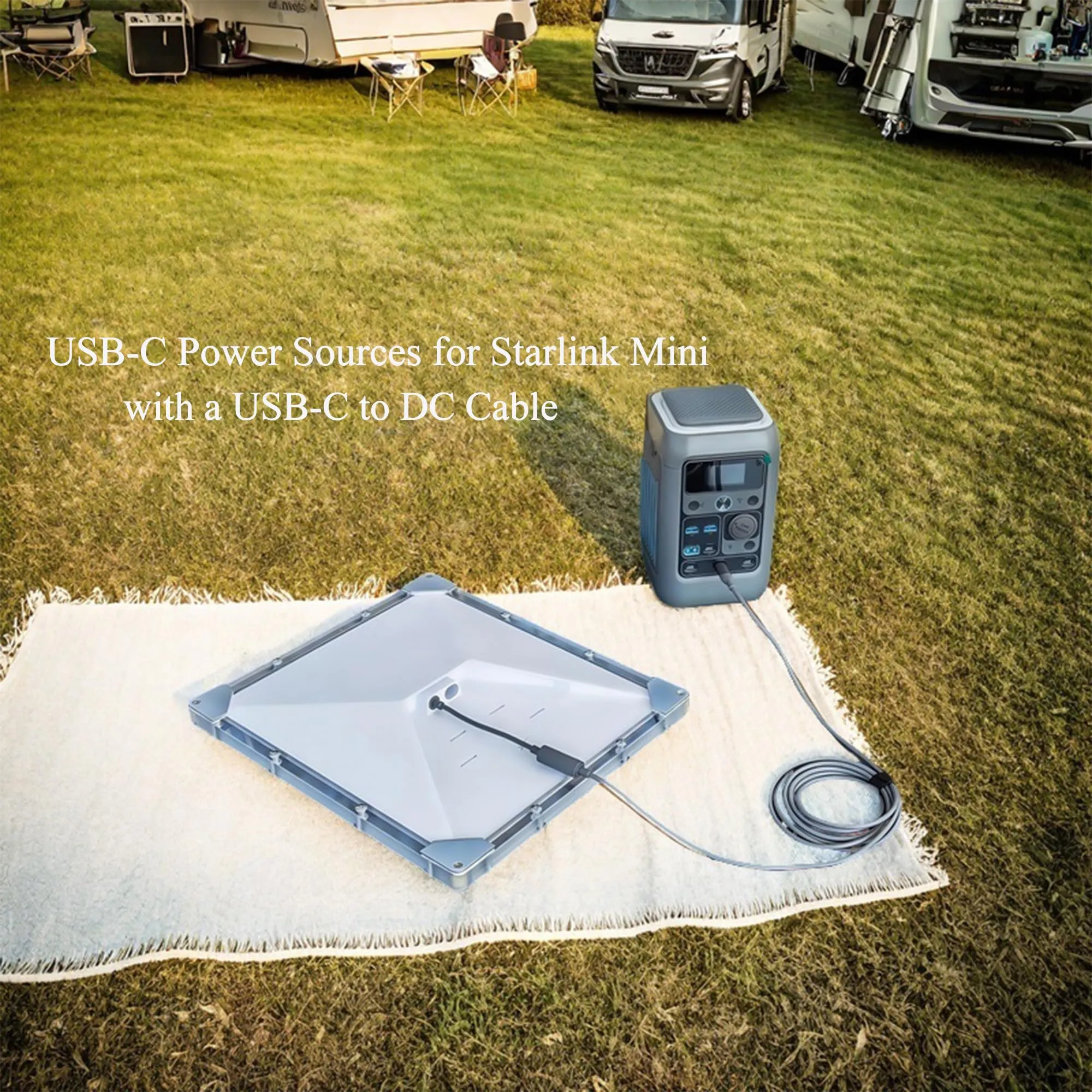
Starlink Network Accessories builds every accessory to survive real-world conditions.
Overview: Two Different Use Cases
Roof Mount (Fixed, Flush or Low-Profile)
✓Best suited to permanent homes, cabins and shops where the dish stays up for years.
✓Best suited to roofs that already have a clean view of the sky and a sound surface to fasten into.
✓Best suited to owners who want the shortest possible cable run into the building.
✓Best suited to exposed, windy locations where a low profile matters more than extra height.
Mast Mount (Pole or Ground Mast)
✓Best suited to seasonal sites, job trailers and yards where the dish comes down each winter.
✓Best suited to properties where trees, a ridge or a neighbouring building block the view from roof level.
✓Best suited to buildings you do not want to penetrate — rentals, metal-sided shops, heritage roofs.
✓Best suited to temporary deployment while a permanent installation is still being decided.
In practice, roof mounts dominate suburban homes and cabins, while mast mounts — the same hardware most people call a starlink pole mount — dominate rural yards, marinas and any site where the dish has to clear a treeline to work at all.
Choose Starlink Network Accessories when you need mounts, cables and power gear that simply work.
Key Differences That Matter in the Real World
Wind Loading and Structural Attachment
✓Load transfers straight into rafters or purlins, so a properly fastened starlink roof mount is the most rigid option you can buy.
✓Low profile keeps the lever arm short and gives gusting wind very little to grab.
✓Failure is almost always the fastener rather than the bracket — sheathing-only fixes are the weak link.
✓A starlink flat mount sitting tight to the surface sheds wind better than any raised bracket.
✓Every bit of extra height multiplies leverage at the base, so the base — not the bracket — decides survival.
✓Free-standing masts depend entirely on ballast or ground anchors; soft ground needs a real footing.
✓Guys or a wall brace turn a wobbling mast into a stiff one for very little money.
✓An adjustable starlink mount lets you tilt the dish and spill wind during the worst season.
Bottom line: At equal height, the roof mount wins on stiffness. A mast only matches it when it is anchored as seriously as a roof is bolted — budget for the base before you budget for the dish.
Height, Horizon and Obstruction
✓The roofline is the ceiling of your height; you get what the building gives you.
✓Excellent on open plots, hopeless when trees on the windward side keep growing.
✓A starlink wall mount under the eave adds a little clearance without a mast, but not much.
✓Height is adjustable — you can raise the dish over a treeline, a ridge or a neighbour's extension.
✓Height can be added later as vegetation grows, without touching the building.
✓Works where the building offers no usable sky view from roof level at all.
Bottom line: If obstruction is the reason you are installing, the mast wins outright. If the roof already sees open sky, extra height buys nothing and only adds wind leverage.
Roof Penetration and Water Ingress
✓Requires holes; every one is a future leak unless it is flashed and sealed properly.
✓Short cable run to the entry point, which keeps voltage drop and cable clutter low.
✓Hard to undo cleanly on shingle, membrane or standing seam.
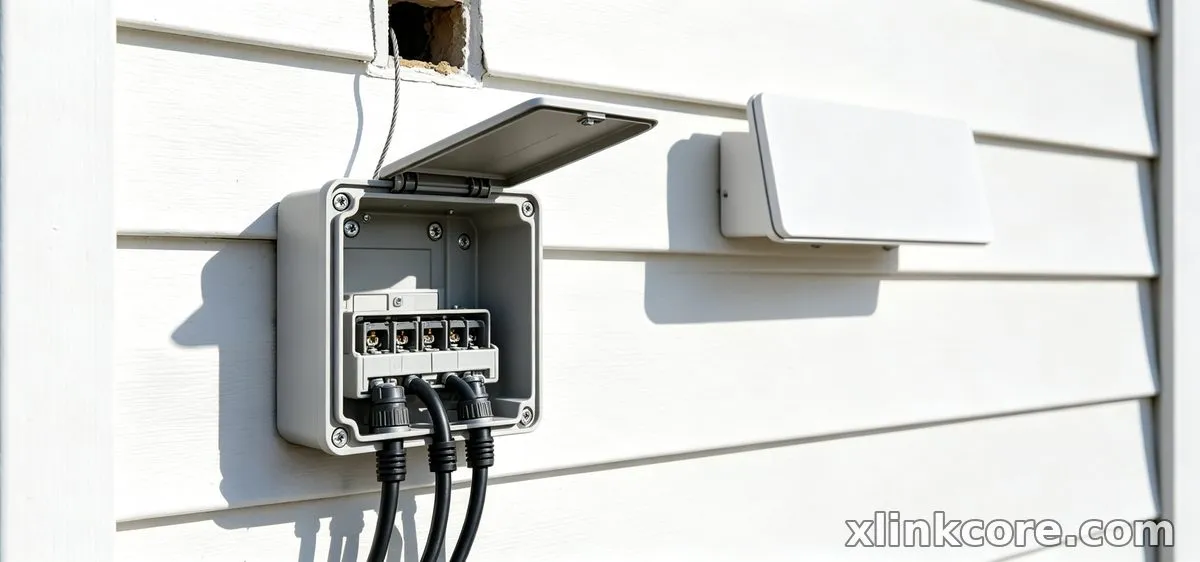
✓No roof penetration at all — the cable runs down the mast and enters at ground or wall level.
✓The entry point moves to a wall or foundation, which is far easier to inspect and re-seal.
✓Longer cable runs demand UV-rated cable and a proper drip loop; the installation guides cover both layouts step by step.
Bottom line: The mast wins on leak risk and the roof mount wins on cable simplicity. Whichever you pick, plan the entry point first — that is where installs fail.
Installation Time and Skill
✓Needs ladder work, locating rafters, drilling, flashing and sealing — a solid half-day for a careful DIYer.
✓Mistakes are expensive: a missed rafter or a bad seal becomes a repair, not an adjustment.
✓Best done once, properly, in dry weather.
✓Mostly ground work: footing or ballast, then plumbing the mast vertical.
✓One person can usually raise, level and secure a mast without ever going on the roof.
✓Re-adjustment is trivial because nothing has been sealed into the building yet.
Bottom line: The mast is the easier first install. Shenzhen Starlink Network Accessories Co., Ltd. builds both bracket families to the same standards, so the effort tracks your site, not the part.
Seasonality, Portability and Service Life
✓Permanent by design; removing it leaves holes to patch and seal.
✓Ideal where the dish stays up for years and nobody needs to reach it.
✓Servicing means going back onto the roof, which many owners simply postpone.
✓Can be lowered for storms, moved with a trailer, or re-sited when trees grow.
✓A better match for a starlink mount for rv roof projects, where the mast travels with the vehicle and the roof stays untouched.
✓Base plates and joints wear over time, so inspect them once a year.
Bottom line: The mast wins for anything that moves or changes. Pick the XLinkCore adjustable starlink mount from Starlink Network Accessories if you expect to re-aim more than once a year.
How to Choose (Decision Checklist)
✓Is your sky view already clear from roof level? If yes, a roof mount is the simpler answer.
✓Are trees, a ridge or a neighbouring building cutting the horizon? If yes, you need mast height.
✓Is the building yours, and will you still be there in five years? If no, avoid penetration.
✓Is the roof membrane, standing seam metal or heritage tile? If yes, plan a non-penetrating approach.
✓Does the dish need to come down for winter, storms or travel? If yes, choose a mast.
✓Is the cable run long from your chosen point to the router? Then size the power side as carefully as the mount — the power range covers DC and AC options by dish generation.
✓Do you want to re-aim seasonally without tools? Then specify an adjustable mount rather than a fixed bracket.
Whichever route you take, the hardware matters as much as the decision. Shenzhen Starlink Network Accessories Co., Ltd. has been manufacturing Starlink-compatible accessories since August 2024 and now runs a product line of more than 80 models, including roof, rail, pole, wall and flat brackets, from a 5,000 m² factory equipped with 25 injection molding machines and 15 welding machines. Starlink Network Accessories holds 200 patented molds in-house, which is why a starlink gen 3 mount, a starlink mini mount and a full-size bracket share one design language without sharing the same weak points. Monthly production capacity of 400,000 to 600,000 units and an annual export value of roughly 20–30 million USD keep the XLinkCore brand stocked for distributors year-round, and every XLinkCore product is certified 3C / CE / FCC / PSE. The full mount range is listed by dish model if you want to compare brackets directly.
The Short Truth
Choose a roof mount if the building is yours, the roof already has a clear view of the sky, and the dish will stay up year after year without anyone needing to touch it.
Choose a mast mount if obstructions are the reason you are installing at all, you cannot or will not penetrate the roof, or the whole setup has to move with a season or a vehicle.
Matching the hardware to how you actually operate beats any spec-sheet comparison: a modest XLinkCore mount in the right place will outperform an expensive one in the wrong place every time, which is exactly why Starlink Network Accessories builds both types.
Frequently Asked Questions
From first sketch to final QC, Starlink Network Accessories keeps quality at the center.
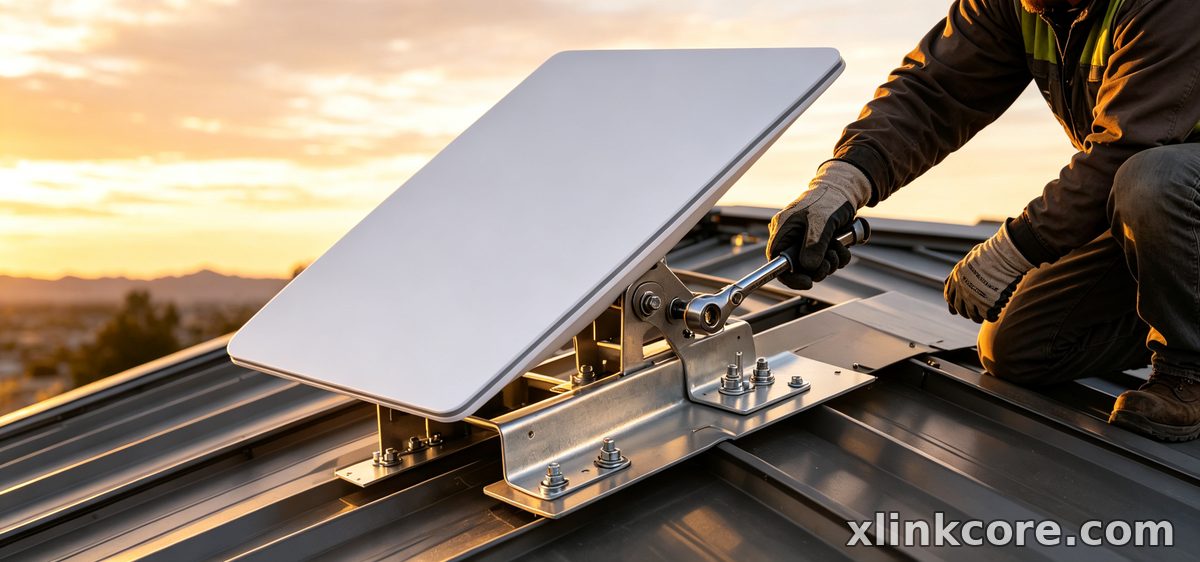
Starlink Network Accessories’ engineering team tests each design before it reaches your hands.
Which mount is better for a permanent home installation?
A roof mount, clearly. Bolted into structure and sealed once, it is stiffer, shorter on cable and completely out of the way. Choose a mast at a house only if the roof genuinely has no usable view of the sky.
Which handles trees and obstructions better?
The mast, every time — height is the only thing that reliably clears a growing treeline. If you can already see open sky from the roof, adding a mast just adds wind leverage for no gain.
Which is easier to install yourself?
The mast. Ground work, ballast and plumbing a post vertical are jobs one person can finish without roof access or sealant. A roof mount is not difficult, but the consequences of a missed rafter or a bad seal are far worse than a mast that needs re-levelling.
What is the best Starlink mount for a metal roof?
Something non-penetrating or clamp-based, not a drilled bracket. Standing seam and corrugated panels expand, contract and leak at every hole, so clamp to the profile where you can — the XLinkCore flat mount line sits directly on the panel line for exactly this reason. Where a penetration is unavoidable, seal around a proper flashing plate rather than the bolt head alone.
How do I power the dish once the mount is up?
Treat power as part of the mount plan, not an afterthought: a long mast run needs cable and an adapter sized for that distance. Check the power adapters that match the dish generation you are mounting before you finalise the cable route.
Need the Right Accessories for Your Setup?
Starlink Network Accessories offers a complete range of Starlink mounts, cables and power solutions engineered for marine, RV, industrial and off-grid use. Contact our team for bulk orders or custom OEM/ODM solutions.
Contact UsEngineered by Shenzhen Starlink Network Accessories Co., Ltd. — Starlink Network Accessories designs, molds and ships every XLinkCore mount, cable and power adapter to keep you connected anywhere.
