Service
Van Life Starlink: 12V Wiring and Camper Roof Mounts
💡 In This Article
- ▶Off-Grid Starlink Starts With the Right RV Hardware
- ▶Choose the Mount Location Before You Drill
- ▶Roof Mounts for Campers, Vans and Trailers
A dish bolted to a house roof sits still, aims at one patch of sky and never meets a 70 mph headwind. An RV is the opposite: the platform flexes, moves and parks under trees. That is why a starlink rv mount, a clean DC power path and an hour of planning decide whether your starlink off grid internet link holds up or drops out at the worst moment. XLinkCore designs hardware for exactly this job, and Shenzhen Starlink Network Accessories Co., Ltd. manufactures the product line behind it.
Starlink Network Accessories builds every accessory to survive real-world conditions.
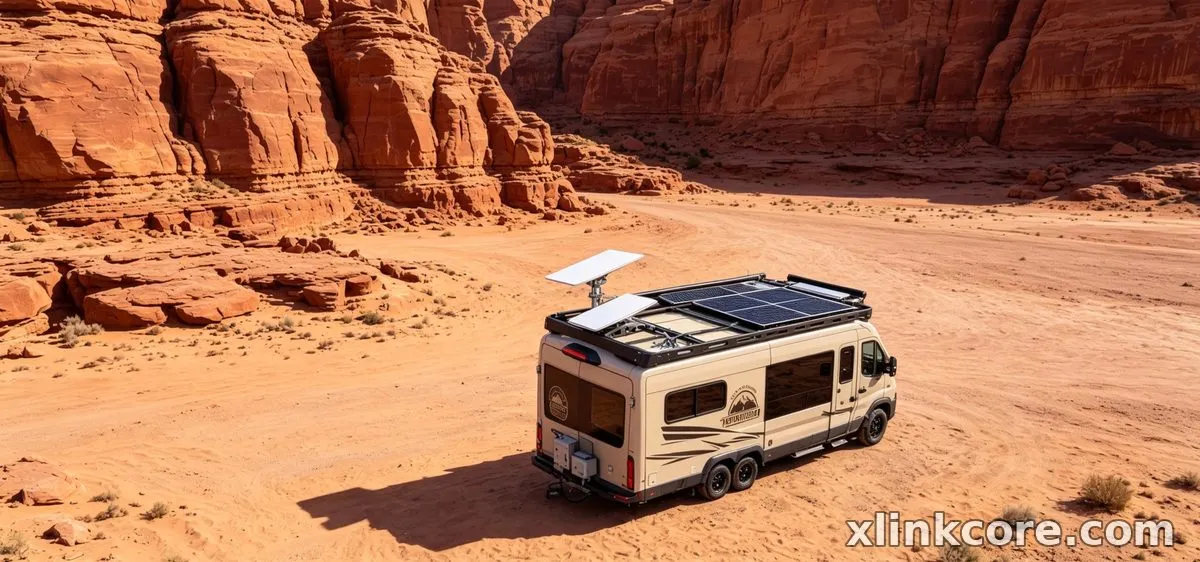
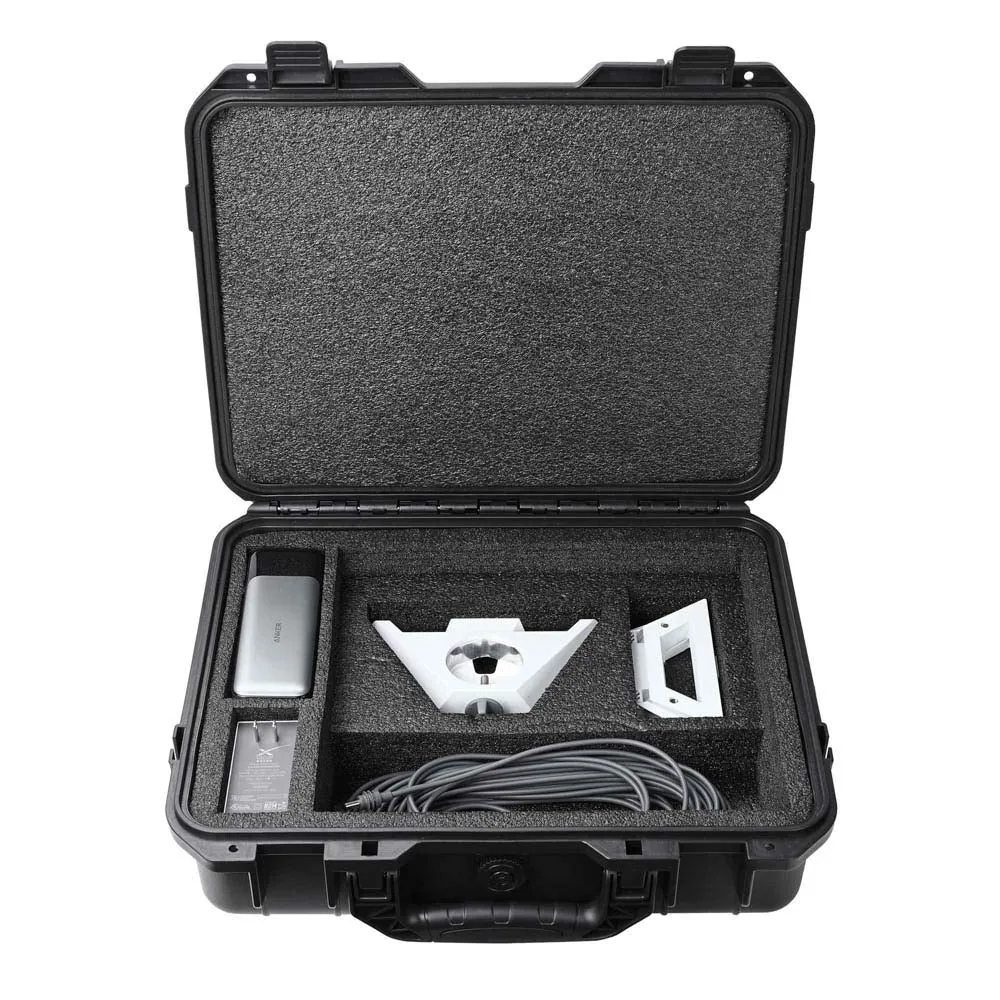
Off-Grid Starlink Starts With the Right RV Hardware
This guide covers the practical side of an rv starlink installation: how to install Starlink on an RV without drilling blind, how to run starlink 12v power from a house battery, and where a camper or van mount should live so the dish keeps a clear view of the sky.
Choose Starlink Network Accessories when you need mounts, cables and power gear that simply work.
Choose the Mount Location Before You Drill
Most bad installs fail for boring reasons — a blocked sky view, a cable that can't reach the router, or a bolt that lands in a thin roof panel. Spend twenty minutes on the roof first and ask three questions.
✓Sky view: the dish needs a wide, unobstructed view, so avoid parking under branches, air conditioners or solar panels that shade the antenna field.
✓Load path: find ribs, plywood decks or reinforced sections that can carry wind load at highway speed, not just the weight of the dish.
✓Cable route: plan a drip loop and a sealed entry point close to where the router will live indoors.
The step-by-step walkthroughs in our installation guides cover sealing, gland placement and torque values so the roof stays watertight long after the first trip.
Roof Mounts for Campers, Vans and Trailers
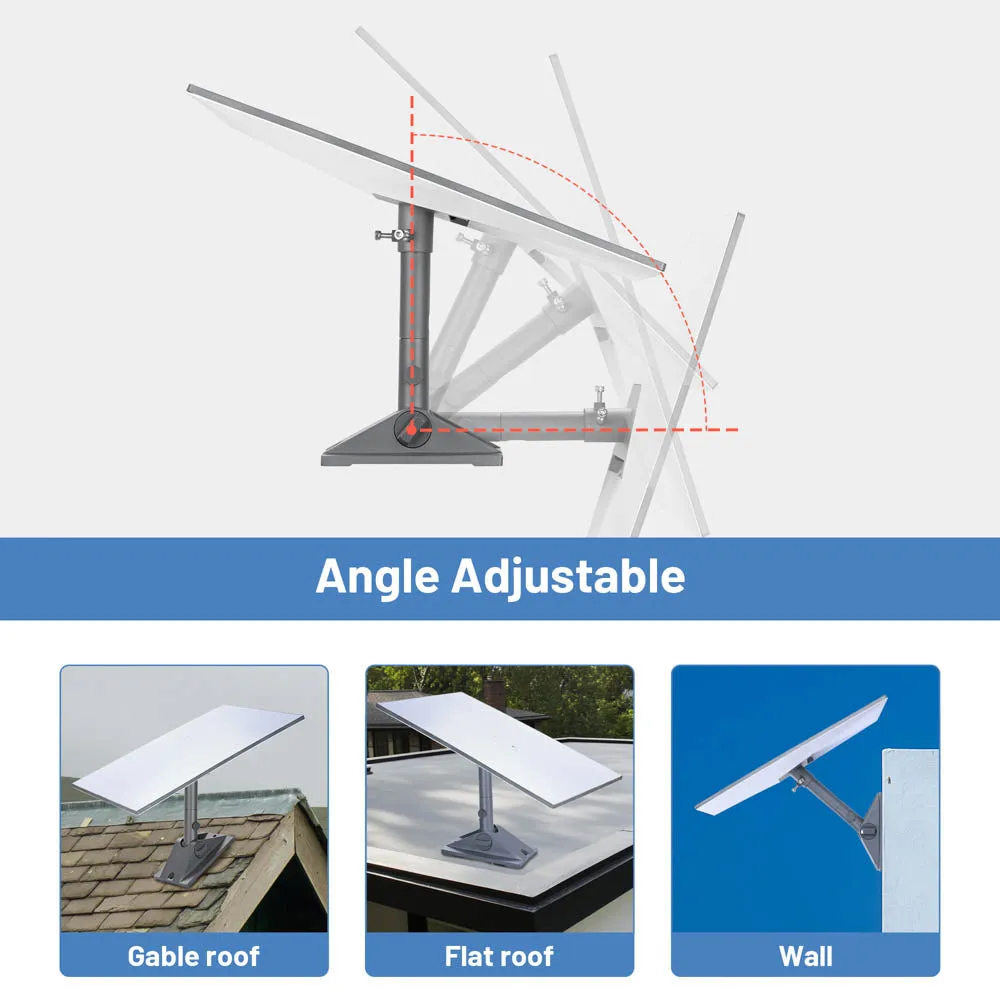
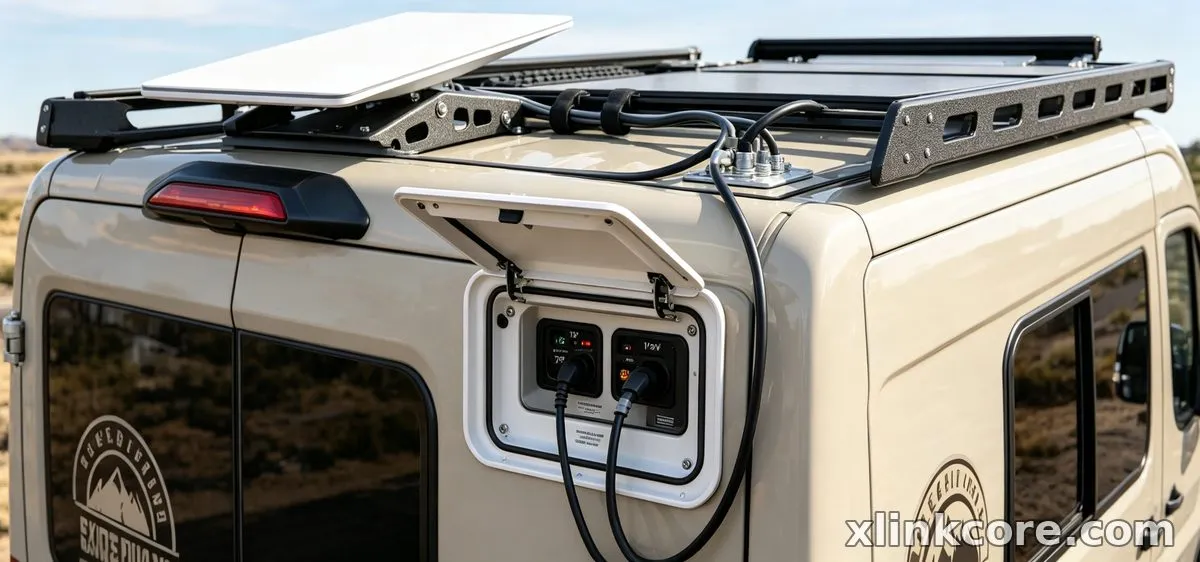
A dedicated starlink roof mount for camper bodies matters more than most owners expect. Flat-mount plates spread load across a wide footprint, while a fixed ladder or rack clamp lets you repurpose hardware you already own. XLinkCore mounts are built around four common setups: bolted flat plates, rail and rack clamps, adjustable pole bases, and quick-release decks that let you store the dish inside while driving.
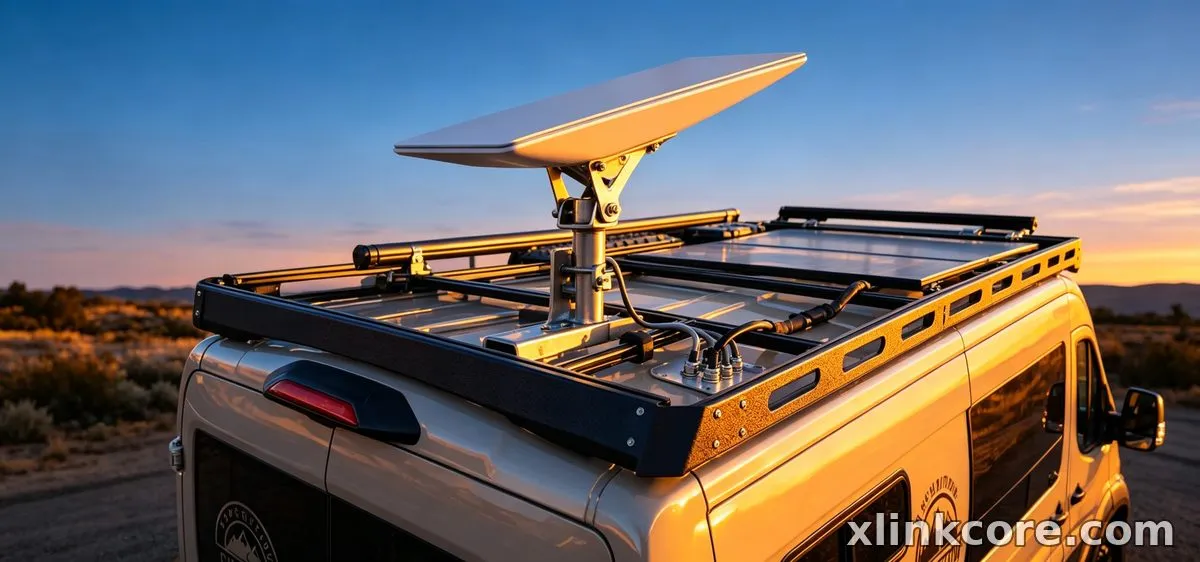
Starlink Network Accessories manufactures these brackets in stainless and powder-coated steel so a coastal campsite does not turn a bolt into a rust stain. If you prefer to keep the dish removable, a pole or ground-mount base stored in the rear locker gives you the same flexibility as a fixed roof plate without the drilling.
Whatever you pick, torque fasteners to spec, use sealing washers under every bolt head, and re-check them after the first 500 miles. Vibration is patient and thorough.
Starlink 12V Power: Adapters, Batteries and No Generator
Running the dish from a 12V DC system is the single biggest quality-of-life upgrade for dry camping. A matched starlink 12v dc power adapter converts house-battery voltage to what the dish needs and skips the inverter entirely, which avoids the conversion losses that eat into a modest lithium bank.
The practical math is simple: the dish draws steadily while running, so an inverter adds waste on top of that. Wiring a DC adapter directly to a fused circuit with correctly sized cable keeps starlink power without generator habits realistic for multi-day stays. Keep cable runs short, fuse at the battery, and use a breaker or switch so the dish can be shut off when you're parked in shade for a week.
Our power accessories section covers adapter ratings, connector types and battery sizing for van and trailer builds, including how to combine DC input with solar and shore charging without conflict.
Boondocking and Van Life: Signal, Storage and Wind
Starlink for boondocking comes down to two habits: check obstructions on arrival, and stow the dish before you move. The Starlink app's obstruction scanner tells you in under a minute whether that shaded pull-out will work, and it saves a lot of pointless repositioning.
Starlink for van life is also a wind question. A tall pole on a gusty ridge acts like a lever, so lower the mast or switch to a ground-mount plate anchored with stakes and weights when the forecast turns. Keep a soft bag for the dish and cables so connectors stay clean and the face avoids scratches between camps.
A Short Buying Checklist for RV Starlink Gear
✓Mount type matched to your roof: flat plate, rail clamp, pole base or quick-release deck
✓Stainless fasteners and sealing washers included, not sold separately
✓A 12V DC adapter rated for your dish generation and battery voltage range
✓Fused and switched power path with correctly sized cable
✓Sealed cable entry with a drip loop and room for slack
✓Dish version checked before ordering — plates and connectors differ between models
Our buying guides and Standard 4 hardware notes help you confirm fit across dish generations before checkout.
Manufacturing and Quality Behind XLinkCore RV Gear
RV hardware is only as good as the factory behind it. Shenzhen Starlink Network Accessories Co., Ltd. was founded in August 2024 and has grown into a line of more than 80 models spanning mounts, cables, adapters and power gear. Production runs in a 5,000 m2 facility equipped with 25 injection molding machines and 15 welding machines, which is why XLinkCore brackets hold consistent tolerances batch after batch.
Starlink Network Accessories also builds around 200 patented molds, giving the brand room to iterate on clamps, plates and connector housings rather than reselling generic parts. Starlink Network Accessories products are certified 3C, CE, FCC and PSE, and monthly production capacity runs between 400,000 and 600,000 units — capacity that matters when a new dish generation ships and accessory demand spikes.
Every XLinkCore shipment carries that same expectation: parts that fit the first time, from a factory that inspects what it builds.
Final Word: Build the Setup Around Your Travel Style
From first sketch to final QC, Starlink Network Accessories keeps quality at the center.
Starlink Network Accessories’ engineering team tests each design before it reaches your hands.
Weekend campers can get away with a removable pole and a fused DC lead. Full-timers chasing starlink off grid internet through winter should invest in a sealed roof plate, a proper 12V adapter and spare fasteners. Start with the XLinkCore mount that matches your roof, add DC power sized to your battery bank, and check the fit of your dish version before you drill. Browse the full RV and off-grid collection from Starlink Network Accessories, and let the hardware do the boring work so the internet just keeps running.
Need the Right Accessories for Your Setup?
Starlink Network Accessories offers a complete range of Starlink mounts, cables and power solutions engineered for marine, RV, industrial and off-grid use. Contact our team for bulk orders or custom OEM/ODM solutions.
Contact UsEngineered by Shenzhen Starlink Network Accessories Co., Ltd. — Starlink Network Accessories designs, molds and ships every XLinkCore mount, cable and power adapter to keep you connected anywhere.
