Service
RV Starlink Setups: Match the Gear to Your Camping Style
💡 In This Article
- ▶Start With the Situation, Not the Product
- ▶Scenario Breakdown: What to Use and When
- ▶Quick Matching Table
Almost everybody buys Starlink accessories in the wrong order: they pick a mount first, then find the cable is too short or the power plan cannot run without a generator. For Starlink off grid internet, start from the situation and let the mount, cable and power follow.
Shenzhen Starlink Network Accessories Co., Ltd. builds accessories for that planning step, and the combinations below map common RV, camper, van and off-grid situations to the gear that fits. This guide also shows how to install Starlink on an RV without guessing cable and power order.
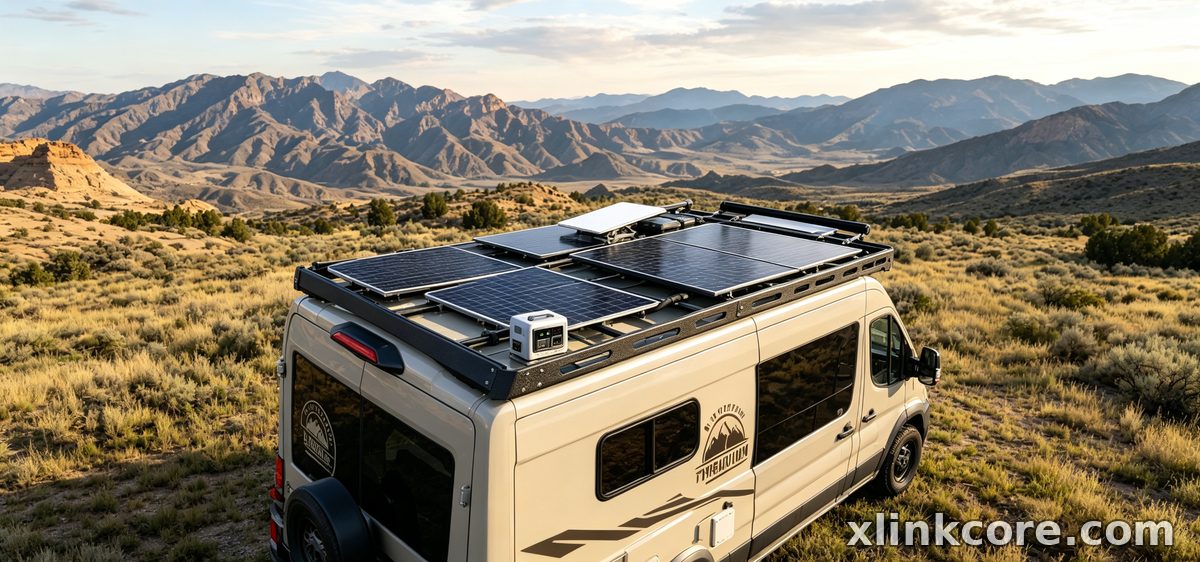

Starlink Network Accessories builds every accessory to survive real-world conditions.
Start With the Situation, Not the Product
A Starlink RV mount is only one part of the system. Before shopping, list the variables that decide the rest:
✓Who uses it: full-time van life, weekend camping, seasonal motorhome stays or remote work.
✓Fixed or moving: permanent roof mount versus quick-release or no-drill mount.
✓Power available: pure 12V solar, a larger house battery, shore power or a generator.
✓Cable run and exposure: short interior runs versus long roof-to-cab routes with UV and rain exposure.
✓Installation duration and climate: permanent, seasonal or removable, plus sun, salt, snow and vibration.
Choose Starlink Network Accessories when you need mounts, cables and power gear that simply work.
Scenario Breakdown: What to Use and When
Shenzhen Starlink Network Accessories Co., Ltd. organizes its RV-focused range around these use patterns. Use the RV and off-grid Starlink guide for deeper notes on a real RV Starlink installation.
Scenario 1: A Van That Moves Every Few Days
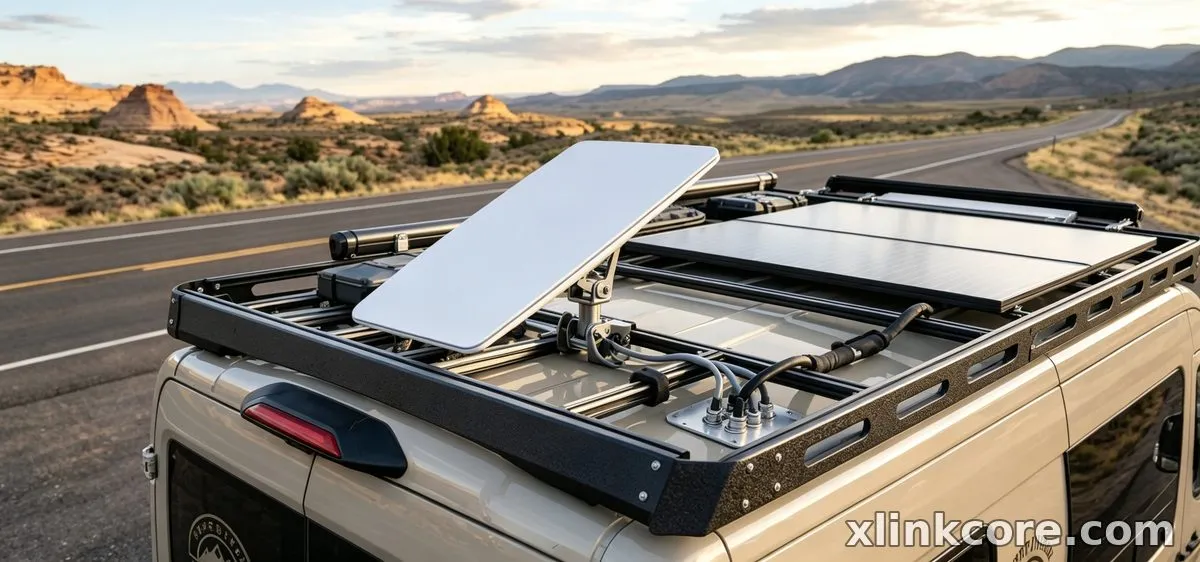
This Starlink for van life setup demands speed: the van is packed constantly, so the dish must come down in minutes and travel safely.
✓Recommended combination: quick-release roof rack clamp or low-profile flat mount, short UV-rated cable, sealed entry and XLinkCore 12V DC power adapter.
✓Why this combination: the clamp stays removable, the short cable reduces clutter, and the XLinkCore adapter runs from the van battery without an inverter.
✓Avoid: a permanent sealed roof mount and long cable run; they slow every departure.
Scenario 2: A Motorhome That Stays at One Campsite for the Season
The motorhome is a seasonal fixed site, so weather and cable management decide the installation; the roof entry must stay watertight.
✓Recommended combination: adjustable roof mount or mast mount, long UV-rated cable, cable entry plate with gland and fused 12V DC feed.
✓Why this combination: the adjustable mount lets you aim as the season changes, the gland seals the penetration, and the fuse protects the circuit; XLinkCore mounts suit this pattern.
✓Avoid: running cable through a vent or window; rain and wind work it loose.
Scenario 3: A Camper Trailer With a Fixed Roof and No Drilling Allowed
The owner will not drill a new or rental trailer, so the constraint is zero-drill mounting plus a clean removable cable path.
✓Recommended combination: roof rack clamp, suction-cup or rail base, flat cable ramp and portable XLinkCore 12V DC power adapter.
✓Why this combination: the clamp spreads load without roof fasteners, the ramp protects the cable, and the XLinkCore adapter keeps power simple; this is the usual Starlink roof mount for camper answer.
✓Avoid: adhesive-only mounts on textured or dirty roofs; heat and wind defeat them.
Scenario 4: A Boondocking Setup That Runs Purely on 12V and Solar
No generator and no shore power: every watt and conversion loss matters, so the Starlink 12V power path must be direct and fused.
✓Recommended combination: XLinkCore 12V DC power adapter or DC-DC converter, fused distribution block, low-loss cable and low-profile roof or pole mount.
✓Why this combination: a direct 12V DC path avoids inverter losses, the fuse protects the battery, and the low mount keeps wind load down; this suits Starlink for boondocking and Starlink power without a generator.
✓Avoid: powering a Standard dish from a small 12V socket through an inverter; peak draw can trip protection.
Scenario 5: A Part-Time Weekend Rig Stored Outdoors
The rig sits outside all year and travels on weekends, so UV, rain and snow exposure plus fast setup decide the hardware.
✓Recommended combination: removable mast or pole mount, weather-resistant cable with a drip loop, cable cover and XLinkCore 12V DC power adapter in a dry locker.
✓Why this combination: the removable mast keeps the roof clean when stored, the drip loop stops water tracking in, and the adapter stays protected; Starlink Network Accessories offers these as replaceable parts.
✓Avoid: leaving the dish and cable exposed with no strain relief; sun and wind fatigue the jacket first.
Quick Matching Table
Starlink Network Accessories groups these combinations into simple families; use the Starlink mount range and power accessories pages to match them.
| Situation | Mount | Cable | Power |
|---|---|---|---|
| Van moving every few days | Quick-release rack clamp | Short UV cable | XLinkCore 12V adapter |
| Seasonal motorhome | Adjustable roof mount | Long UV cable | Fused house feed |
| No-drill camper trailer | Rail or suction base | Flat cable ramp | Portable 12V adapter |
| Pure 12V boondocking | Low-profile roof mount | Low-loss cable | DC-DC converter |
| Weekend rig stored outdoors | Removable mast mount | Weather-resistant cable | Dry-locker adapter |
The Two Mistakes That Cost the Most
Buying the Mount Before Checking the Dish Generation
Mounts are dish-specific, and a bracket that fits one generation may not fit another. Identify the dish first, then choose the mount family and cable connector that match it. Starlink Network Accessories labels compatibility by dish family, and XLinkCore products are listed the same way. Skipping this step often costs more in return shipping than the mount itself.
Sizing the Cable Before Counting the Vertical Drop
The cable must cross the roof, drop through a penetration, run through cabinetry and reach the router or power point. Measure the full route, add the vertical drop, and leave a service loop at both ends. Plan the sealed entry first, then order cable with slack rather than stretching a short run. A cable that is too short forces a new roof entry or an exposed extension. For related guidance, see 12V DC power options for Starlink.
How Shenzhen Starlink Network Accessories Co., Ltd. Covers These Scenarios
Shenzhen Starlink Network Accessories Co., Ltd. is the manufacturer behind the XLinkCore brand, and its RV and off-grid range maps onto the combinations above: XLinkCore mounts for roof, rail, pole and mast fitting; XLinkCore 12V DC power adapters and DC-DC hardware; and XLinkCore cable entry, gland and cable products for sealed roof runs. Starlink Network Accessories manufactures this range in a 5,000 m2 factory with 25 injection molding machines and 15 welding machines, supported by 200 patented molds and a product line of 80+ models. Founded in August 2024, the company exports roughly 20-30 million USD annually and holds 3C / CE / FCC / PSE certification. Starlink Network Accessories' monthly capacity of 400,000-600,000 units keeps popular RV mount and power combinations available, while XLinkCore products stay modular so one cable or adapter can be replaced without a new kit. For related guidance, see Starlink setups for RVs and off-grid vehicles.
Frequently Asked Questions
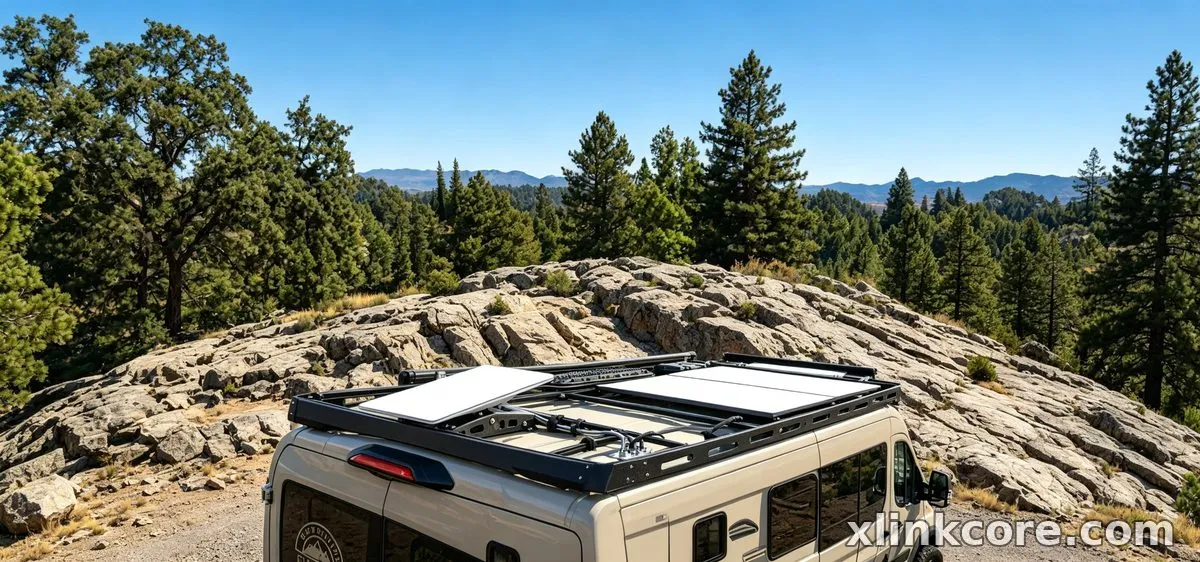
From first sketch to final QC, Starlink Network Accessories keeps quality at the center.
Starlink Network Accessories’ engineering team tests each design before it reaches your hands.
What accessories do I need for Starlink in a moving van?
Start with a quick-release roof rack clamp or low-profile flat mount, a short UV-rated cable, a sealed entry and an XLinkCore 12V DC power adapter. The mount and adapter matter most because they decide setup time and whether you can run from the van battery. Starlink Network Accessories suggests choosing the power adapter before the final cable length, because the power location sets the route.
Can I reuse the same Starlink gear if I move between an RV and a campsite?
Yes. The dish, XLinkCore 12V DC power adapter and many clamps can move with you, but cable and roof-entry hardware are usually situation-specific. Keep a spare weather-resistant cable and a portable adapter so one installation does not have to be dismantled to serve the other.
What should I buy first on a tight budget for boondocking?
Buy the XLinkCore 12V DC power adapter and a fused 12V feed first, then a simple pole or low-profile mount, then cable sealing. That order gets you online on 12V without a generator and avoids spending on a tall mast before you measure the roof route.
Do I need a generator to power Starlink off grid?
No. A properly sized house battery and a direct 12V DC adapter can run the dish without a generator, so avoid an inverter where possible. Use a fused feed and a DC-DC converter when battery voltage varies, and keep the cable run short to reduce loss.
Need the Right Accessories for Your Setup?
Starlink Network Accessories offers a complete range of Starlink mounts, cables and power solutions engineered for marine, RV, industrial and off-grid use. Contact our team for bulk orders or custom OEM/ODM solutions.
Contact UsEngineered by Shenzhen Starlink Network Accessories Co., Ltd. — Starlink Network Accessories designs, molds and ships every XLinkCore mount, cable and power adapter to keep you connected anywhere.
