Service
Off-Grid Starlink: 12V Power for RVs and Campers
💡 In This Article
- ▶Why Off-Grid Travelers Need Purpose-Built Starlink Gear
- ▶Planning an RV Starlink Installation Before You Drill
- ▶Matching a Starlink RV Mount to Your Roof Material
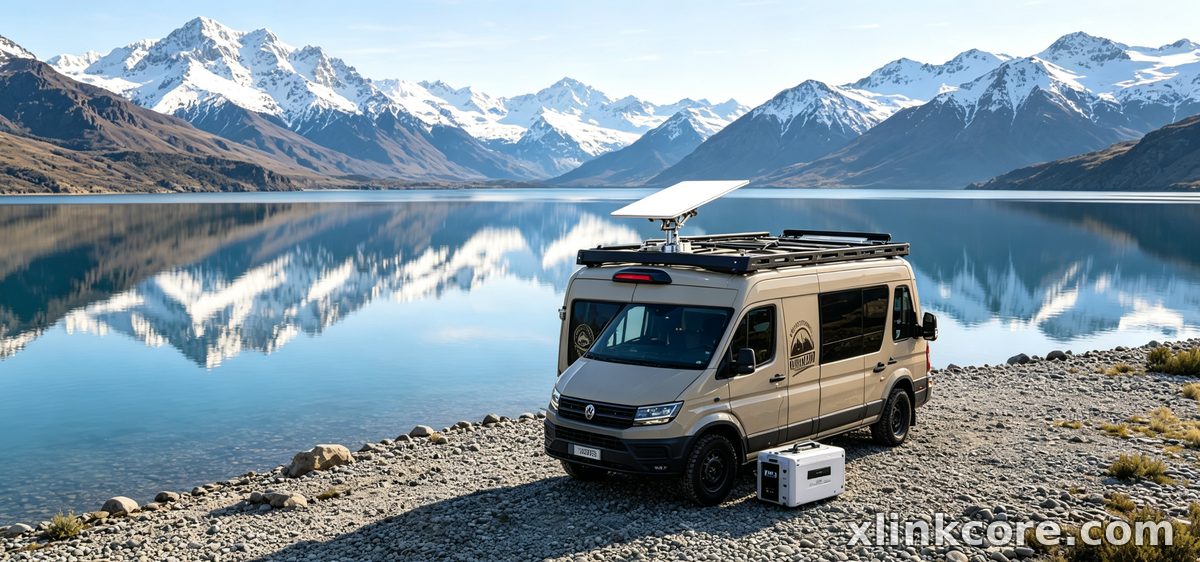
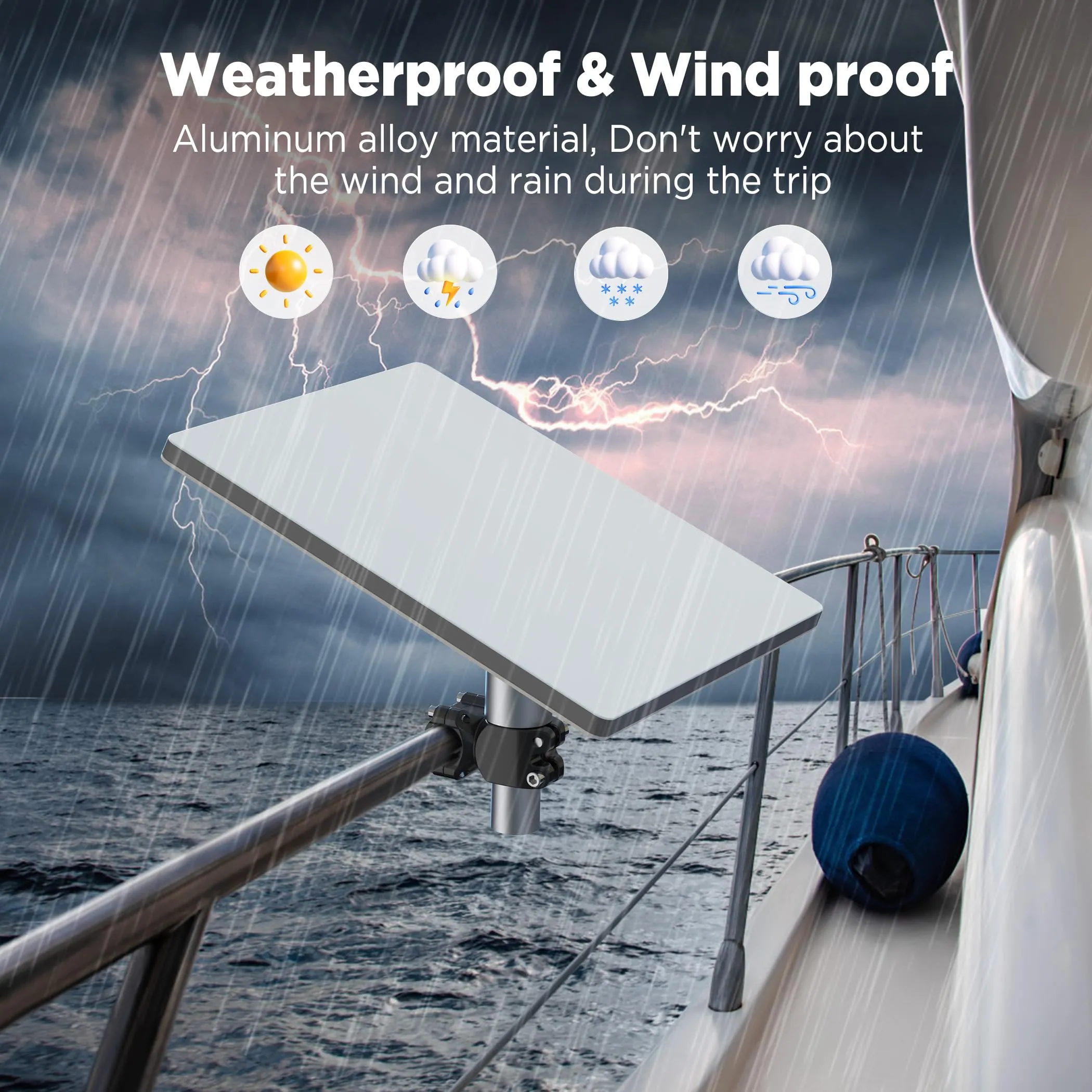
Starlink has become the default connection for people who work and live away from cities, and starlink off grid internet is now a realistic replacement for campground Wi-Fi and mobile hotspots. The dish itself, though, was designed for a house that never moves. Put it on a vehicle and three things change at once: the mount has to survive wind, vibration and highway speeds; the power has to come from a battery bank instead of a wall socket; and every cable entry has to stay watertight through rain, dust and washboard roads. Shenzhen Starlink Network Accessories Co., Ltd. was founded in August 2024 to solve exactly those problems, and the XLinkCore product line now spans 80+ models of mounts, cables and power hardware built for mobile installs.
Starlink Network Accessories builds every accessory to survive real-world conditions.
Why Off-Grid Travelers Need Purpose-Built Starlink Gear
Choose Starlink Network Accessories when you need mounts, cables and power gear that simply work.
Planning an RV Starlink Installation Before You Drill
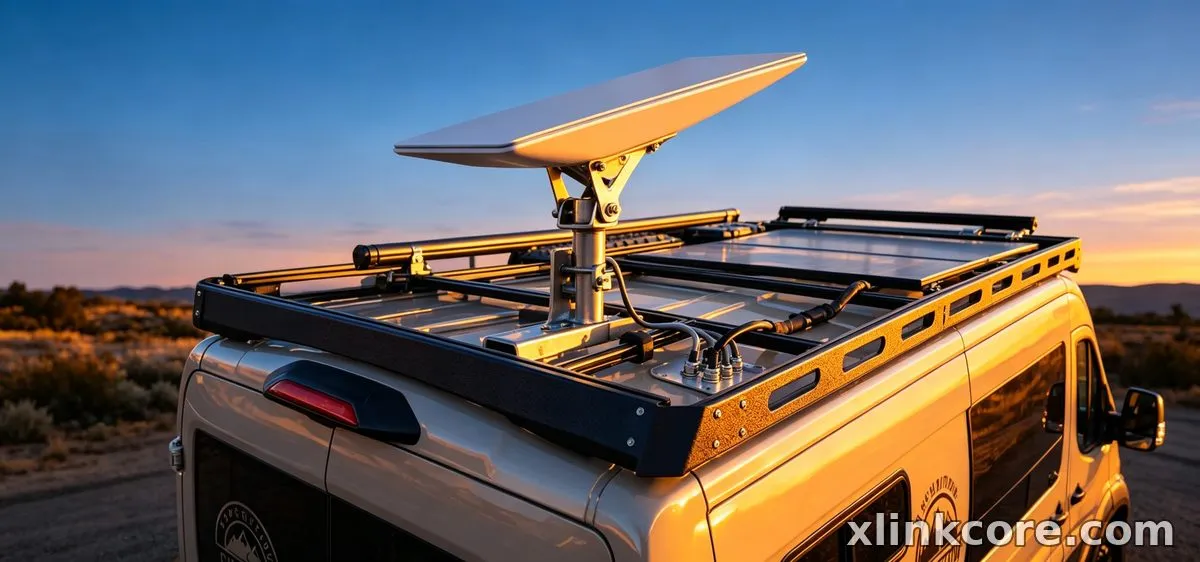
The most common mistake in rv starlink installation is drilling first and thinking later. Before any hole goes into a roof, walk the vehicle and map three things: a clear sky view with no air conditioner, vent or solar panel in the dish's line of sight; a cable path that avoids sharp edges and moving suspension parts; and a mounting surface strong enough to take wind load at 70 mph. Flat-roof campers usually suit a low-profile plate, while vans with roof rails are better served by a clamp-on bracket that needs no penetration at all. Our step-by-step Starlink installation guides at /installation-guides/ cover the sequencing in detail, from surface prep to final torque checks.
Matching a Starlink RV Mount to Your Roof Material
Every starlink rv mount transfers load into the roof, so the material matters as much as the bracket. EPDM and TPO membranes need wide, sealed bases and no point loading; fiberglass needs backing plates; aluminum and steel ribs can take bolts directly with proper sealant. If you want a starlink roof mount for camper trailers that stays removable, look for quick-release plates that leave only a slim base behind and let you stow the dish inside while driving.
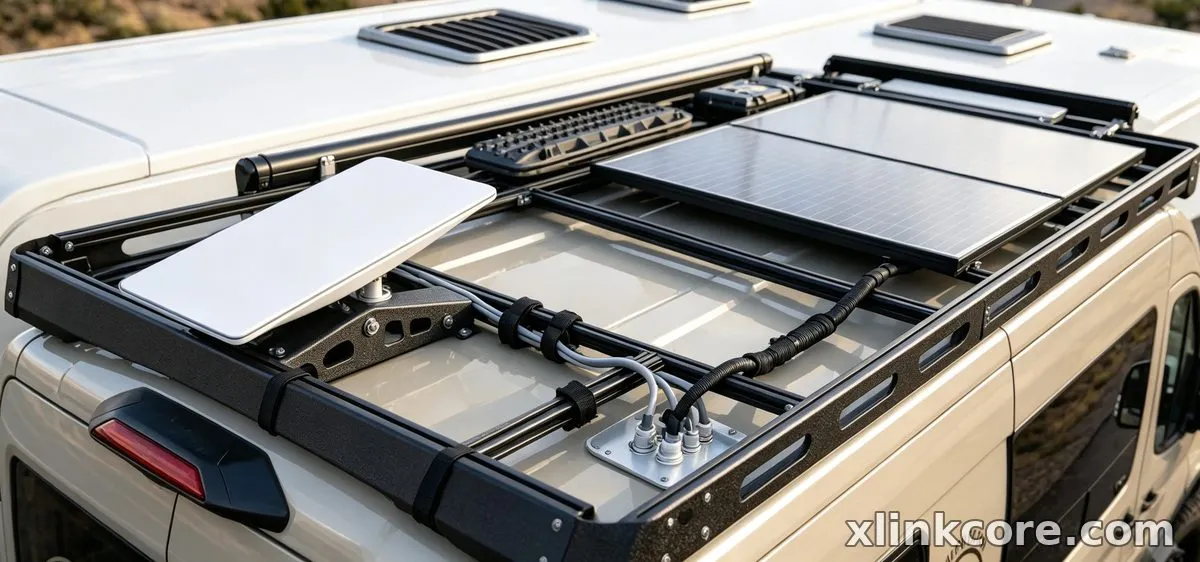
✓Permanent roof plate: lowest profile, best for full-time rigs and vans.
✓Rail and ladder clamps: no drilling, ideal for rental vans and leased RVs.
✓Pole and mast kits: useful when trees or awnings block the sky.
✓Suction or strap bases: quick temporary setups for weekend trips.
The XLinkCore mounts range from Starlink Network Accessories is engineered around these scenarios, with stainless hardware and UV-stable polymer bodies. Browse the full selection at /mounts/ to compare plate sizes and dish compatibility across Standard, Mini and Gen 3 hardware.
Starlink 12V Power: Adapters, Converters and Batteries
Running the dish from a 12V house bank is the single biggest upgrade for boondockers, because it removes the inverter from the chain. A conventional inverter converts 12V DC to 120V AC, then the dish's own supply converts it back to DC — losing energy at every step and wasting battery capacity as heat. A dedicated starlink 12v dc power adapter avoids that double conversion and keeps the load stable as voltage sags overnight. Measure your dish's actual draw with a clamp meter before sizing anything; published figures vary by model and by whether the snow-melt heater is active. The power hardware at /power/ includes DC conversion and cabling options designed for exactly this kind of starlink 12v power setup.
Boondocking Power Budgets Without a Generator
For starlink for boondocking, the goal is not just to power the dish but to power it politely. Work out a daily energy budget from your measured draw, multiply by the hours you actually need the link, then compare that against usable battery capacity and realistic solar yield for your latitude and season. Most travelers find they can run the dish for work hours, shut it down overnight, and stay generator-free. If you want starlink power without generator noise, add a simple low-voltage cutoff so the dish never drains the bank below a safe depth of discharge, and consider a smaller dish for shoulder-season trips when solar input drops. The off-grid layouts at /rv-off-grid/ show how these parts fit together in a real camper build.
Cable Routing, Sealing and Weatherproofing
Cable faults cause more Starlink downtime on the road than hardware failures. Route the cable with a drip loop before it enters the vehicle, use a proper gland or sealed entry plate rather than a raw hole, and leave a service loop so the dish can be repositioned without tension on the connector. Keep the run away from exhaust, brake lines and anything that heats or moves. Starlink Network Accessories supplies UV-rated cable assemblies and entry hardware, and the XLinkCore connectors are built to be plugged and unplugged repeatedly rather than once.
Manufacturing Quality Behind XLinkCore Products
Durability claims only mean something when you can see the factory behind them. Shenzhen Starlink Network Accessories Co., Ltd. runs a 5,000 m2 production facility equipped with 25 injection molding machines and 15 welding machines, supported by 200 patented molds developed in-house. Monthly production capacity of 400,000–600,000 units keeps lead times predictable for distributors and installers, while annual export value of roughly 20–30 million USD reflects steady demand across North America, Europe and Australia. Products from Starlink Network Accessories are certified 3C, CE, FCC and PSE, so the XLinkCore brand can be specified on export projects without extra compliance work. Everything Starlink Network Accessories manufactures is tested for fit before it ships, because a mount that is two millimeters off is useless on a roof.
A Practical Checklist for Van Life and RV Camping
From first sketch to final QC, Starlink Network Accessories keeps quality at the center.
Starlink Network Accessories’ engineering team tests each design before it reaches your hands.
Before your next trip, confirm four items: a secure mount rated for highway wind loads, a fused 12V DC feed sized to your measured draw, a sealed cable entry with a drip loop, and a stow plan for the dish while driving. Get those right and starlink for van life stops being a project and becomes ordinary infrastructure. Whether you are building a weekend camper or a full-time off-grid rig, the XLinkCore range from Starlink Network Accessories gives you mounts, power and cabling that were designed together — and a manufacturer that stands behind every unit.
Need the Right Accessories for Your Setup?
Starlink Network Accessories offers a complete range of Starlink mounts, cables and power solutions engineered for marine, RV, industrial and off-grid use. Contact our team for bulk orders or custom OEM/ODM solutions.
Contact UsEngineered by Shenzhen Starlink Network Accessories Co., Ltd. — Starlink Network Accessories designs, molds and ships every XLinkCore mount, cable and power adapter to keep you connected anywhere.
