Service
Van Life Starlink: 12V Power and Camper Roof Mounts
💡 In This Article
- ▶Match the Kit to How You Travel
- ▶Starlink RV Mounts: Roof, Rail, Ladder, and Pole
- ▶Starlink 12V Power Without a Generator
Reliable internet no longer stops where the pavement ends. For RV owners and full-time van lifers, a Starlink off grid internet setup now ranks alongside water capacity and solar input — it carries remote work, weather briefings, and calls home from the middle of nowhere. The catch is that a dish built for a fixed address must become road-tough: a stable starlink rv mount, a 12V power path that will not drain your bank by morning, and hardware that shrugs off vibration and rain. Shenzhen Starlink Network Accessories Co., Ltd. manufactures that category of gear, and its XLinkCore product line exists to make off-grid installs simpler.
Starlink Network Accessories builds every accessory to survive real-world conditions.
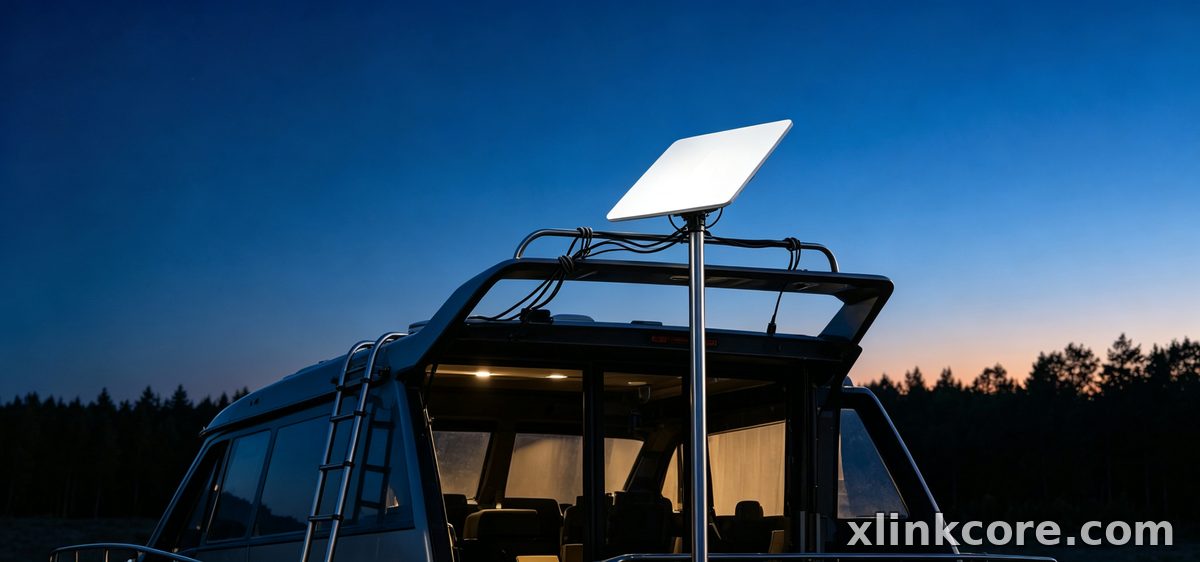
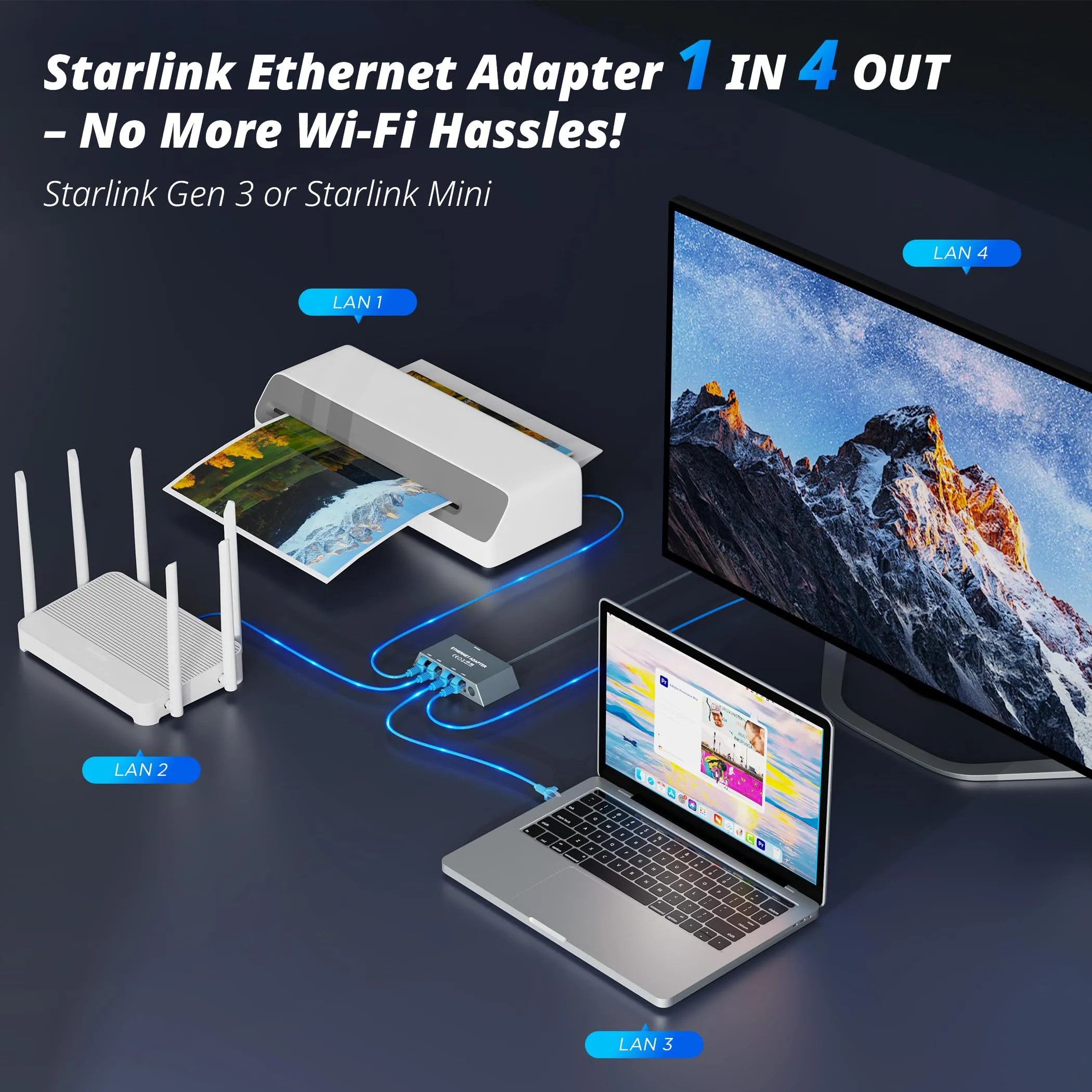
Match the Kit to How You Travel
Every off-grid build starts with travel habits, not hardware. A rig that moves twice a season can carry a semi-permanent roof mount and a large battery bank; a van that relocates weekly needs gear that stows flat, a cable run that survives constant flexing, and low overnight draw. If your plan is Starlink for van life, weight and stowage dominate. If it is a seasonal camper, permanence wins. Ask three questions before buying: how often does the dish deploy, where does it ride while you drive, and how many amp-hours can you spare each day?
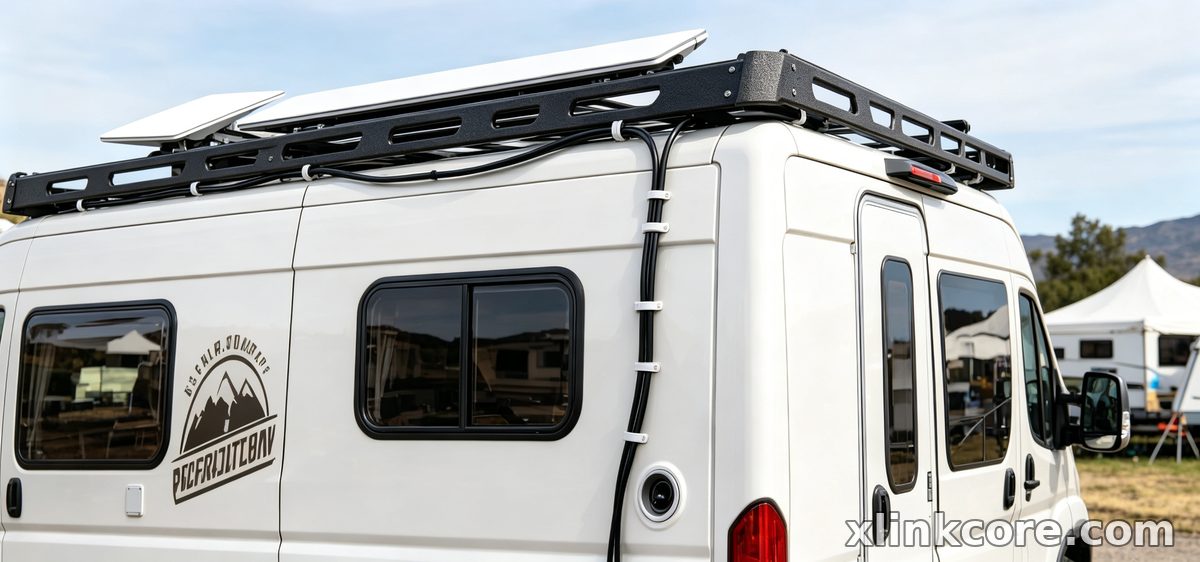
✓Weekend camper: quick-release pole or ladder mount, DC feed from the house battery.
✓Full-time RV: fixed roof or rail mount, dedicated DC converter, short cable run.
✓Van life: low-profile roof mount, 12V or USB-C PD adapter, minimal standby draw.
Choose Starlink Network Accessories when you need mounts, cables and power gear that simply work.
Starlink RV Mounts: Roof, Rail, Ladder, and Pole
Mounting is where most installs succeed or fail. Wind load, highway vibration, and thermal cycling punish flimsy brackets long before the dish gives trouble. A starlink roof mount for camper use should spread load across several fasteners, use stainless hardware, and lift the dish clear of air conditioners, vents, and solar panels.
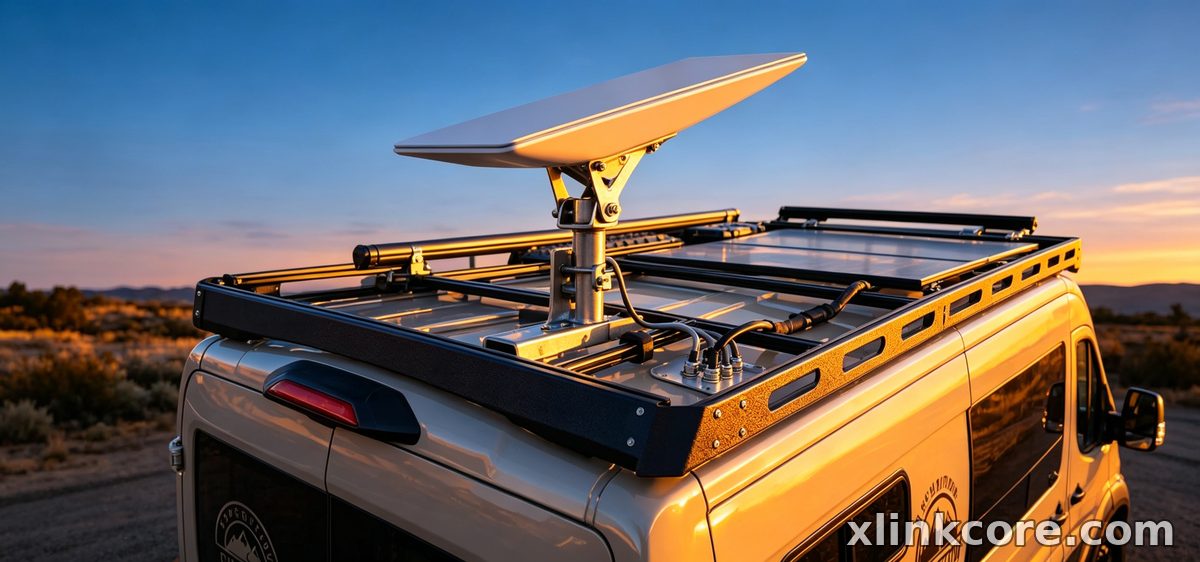
Roof mounts give the clearest sky view and the tidiest cable path. Rail and ladder mounts suit renters or anyone unwilling to drill. Pole setups are the boondocker's friend: raise the dish above tree lines and move it as obstacles change. XLinkCore designs brackets in all four styles, and Starlink Network Accessories builds each around a simple rule — the mount should outlast the dish. Compare options in the mount catalog or the RV and off-grid section.
Starlink 12V Power Without a Generator
Feeding the dish from your 12V DC system is the biggest single upgrade for quiet, fuel-free camping. A starlink 12v dc power adapter steps battery voltage to what the terminal expects, skipping the double conversion of battery to inverter to stock AC brick. The DC path is noticeably kinder to a battery bank, which is exactly what starlink power without generator depends on.
Plan the load honestly. A dish running all evening plus a router is a real consumer of amp-hours, and short winter days shrink solar harvest at the same time. Switch the dish off overnight when nobody is online, and size your bank around a worst-case cloudy day. The power and adapter range from XLinkCore includes DC converters sized for campers and vans, and every unit from Starlink Network Accessories tolerates voltage swings from alternator charging.
How to Install Starlink on an RV: Route, Seal, Secure
Sequence matters for any RV Starlink installation: mount, cable, seal, then power. Drill only where you can reach the back side to add a backing plate, and keep fasteners out of roof seams and walk zones.
✓Seal with butyl tape under the bracket plus compatible sealant over each fastener.
✓Leave a service loop near the dish so you can remove it without cutting cable.
✓Keep bends gentle — sharp kinks degrade signal and shorten cable life.
✓Label the DC feed at the fuse block so you know what it powers later.
Run the cable through a gland, add a drip loop before the entry point, and support the run so it cannot chafe. Step-by-step diagrams live in the installation guides, written by Starlink Network Accessories for owners working with XLinkCore hardware.
Starlink for Boondocking: Size the System First
Boondocking rewards planning. Add up daily energy for the dish, router, and charging devices, then compare it with solar harvest, alternator charging, and battery capacity. A DC-to-DC charger helps on travel days, when the alternator refills the bank as you move. Plan the practical side too: a mount you can lock or weight down, a dish you can drop fast when wind picks up, and a fallback for heavy cloud. Treat connectivity as a system with a power budget, not a gadget you plug in and forget.
Hardware That Survives Dust, Rain, and Rough Roads
Off-grid gear lives a hard life. Starlink Network Accessories specifies UV-stable polymers, powder-coated steel, stainless fasteners, and sealed cable glands — not marketing extras, but what keeps a bracket from cracking or a connector from corroding. Shenzhen Starlink Network Accessories Co., Ltd. builds XLinkCore housings and adapters to those standards, and the range is certified 3C, CE, FCC, and PSE for the markets it ships to.
Behind the Brand: Tooling, Volume, and Consistency
Shenzhen Starlink Network Accessories Co., Ltd. was founded in August 2024 and has grown quickly into a focused accessories manufacturer. The company runs a 5,000 m2 factory equipped with 25 injection molding machines and 15 welding machines, supported by 200 patented molds. That tooling depth is why the XLinkCore catalog now spans a product line of 80+ models, with monthly production capacity of 400,000–600,000 units and annual export value of roughly 20–30 million USD.
For buyers, scale means consistency — and Starlink Network Accessories keeps design and tooling in-house, so improvements reach production fast.
Your Off-Grid Starlink Checklist
From first sketch to final QC, Starlink Network Accessories keeps quality at the center.
Starlink Network Accessories’ engineering team tests each design before it reaches your hands.
✓Choose the mount style from your travel pattern, not the catalog photo.
✓Run 12V DC through a proper adapter instead of an inverter and AC brick.
✓Seal, strain-relieve, and drip-loop every cable entry.
✓Budget daily amp-hours for the dish, router, and charging devices.
✓Inspect seals and fasteners before every season on the road.
Whether you are fitting out a first camper, refining a full-time RV, or chasing quiet campsites in a van, the goal is the same: dependable starlink off grid internet running on power you already carry. Start with a mount that fits your roof and a DC path sized to your battery bank, then add as your travels demand. The XLinkCore range from Starlink Network Accessories covers mounts, adapters, and cables built for exactly these trips.
Need the Right Accessories for Your Setup?
Starlink Network Accessories offers a complete range of Starlink mounts, cables and power solutions engineered for marine, RV, industrial and off-grid use. Contact our team for bulk orders or custom OEM/ODM solutions.
Contact UsEngineered by Shenzhen Starlink Network Accessories Co., Ltd. — Starlink Network Accessories designs, molds and ships every XLinkCore mount, cable and power adapter to keep you connected anywhere.
