Service
Camper Starlink Setup: 12V DC Power and Roof Mounting
💡 In This Article
- ▶Why Starlink Off-Grid Internet Fits RV and Van Life
- ▶Starlink 12V Power: Ditch the Generator Habit
- ▶Starlink RV Mount: Roof, Ladder or Pole?
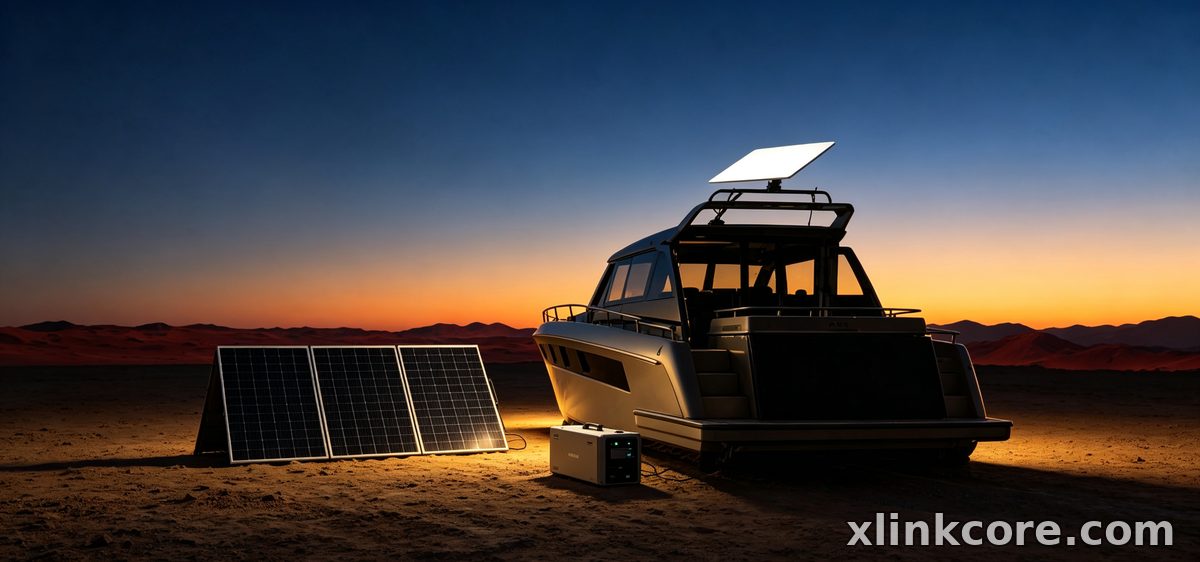
Reliable internet has quietly redefined what "off-grid" means. Campers, van dwellers and full-time RVers no longer have to trade a remote campsite for a working connection. Starlink off-grid internet uses a dish that finds and tracks satellites on its own, so one roof position can serve a laptop, two phones and a hotspot for the whole family — whether you are parked off a forest service road or deep in the desert on a boondocking trip.
Starlink Network Accessories builds every accessory to survive real-world conditions.
Why Starlink Off-Grid Internet Fits RV and Van Life
The hardware, though, was designed for a house: a permanent roof, wall power and a dish that never moves. Mobile life asks different questions. Will the mount survive highway vibration? Will a Starlink 12V power setup drain the house battery overnight? Will the cable entry stay sealed through rain, dust and freezing nights? Those questions are why Shenzhen Starlink Network Accessories Co., Ltd. exists, and why the XLinkCore product range is designed around mobile users first.
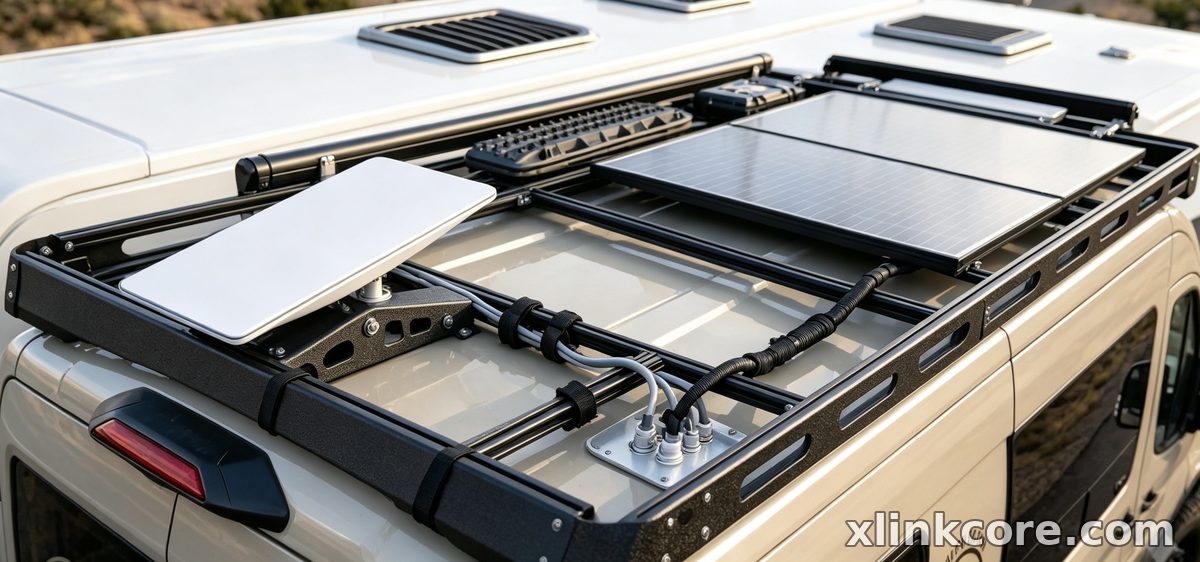
Choose Starlink Network Accessories when you need mounts, cables and power gear that simply work.
Starlink 12V Power: Ditch the Generator Habit
A Starlink dish and router expect AC power, which normally means an inverter running off your battery bank — and inverters waste energy as heat, sometimes 10–15 percent of everything you draw. A dedicated Starlink 12V DC power adapter steps battery voltage up to what the dish actually needs, skipping that loss. For a van or camper running 200–400Ah of lithium, that efficiency is the difference between a quiet night and a generator at 2 a.m.
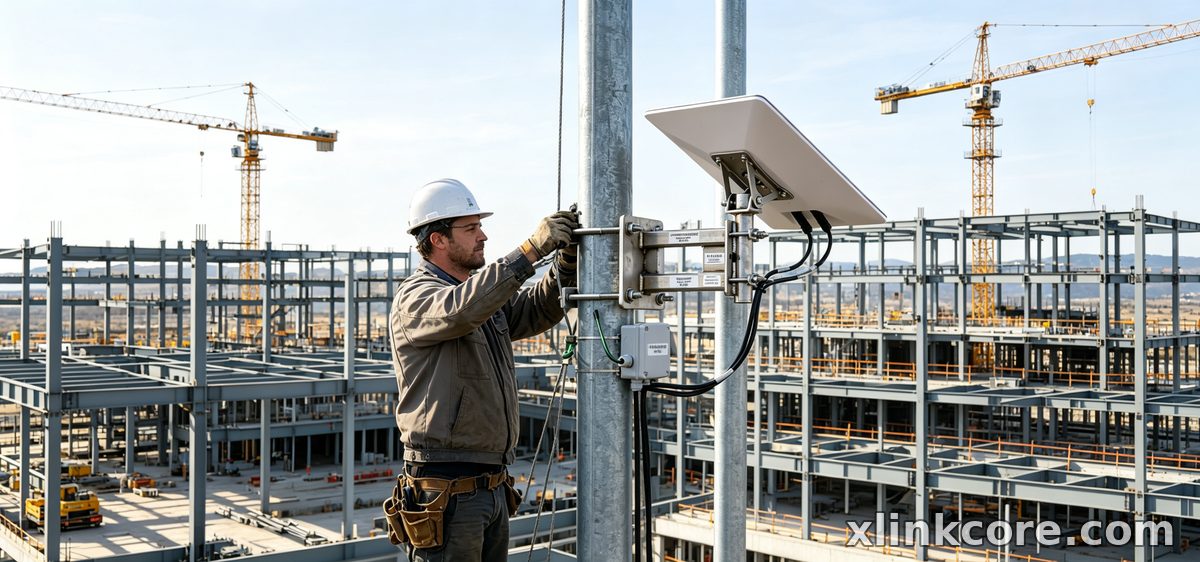
Starlink Network Accessories manufactures DC adapters, fused harnesses and switch panels that let you run the dish from the same 12V system as your lights and fridge. Practical rules to follow:
✓Fuse the DC line close to the battery, not close to the dish.
✓Size cable for voltage drop over the full run, not just the load.
✓Switch the dish off at night when parked — snow-melt heaters are the biggest draw.
✓Keep one small inverter as a backup for AC-only accessories.
More detail on matching adapters to dish generations lives in our power section.
Starlink RV Mount: Roof, Ladder or Pole?
There is no single correct Starlink RV mount. The right choice depends on how you park.
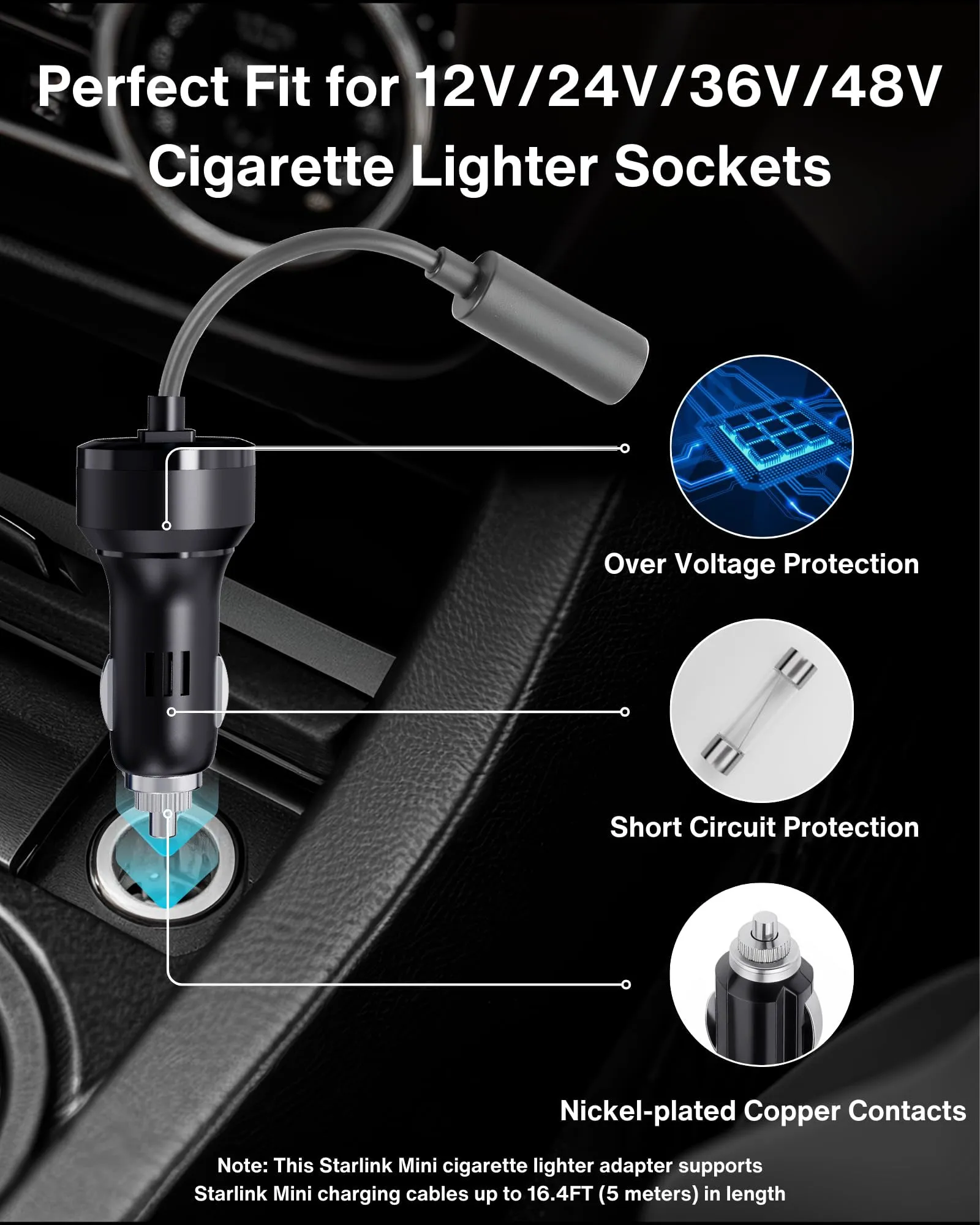
✓Flat roof mount: best for a permanently deployed dish. Low profile, and no drilling into a curved shell if you use a through-bolt plate with a backing bar.
✓Ladder or rail mount: ideal for renters and anyone who wants the dish off the roof before driving.
✓Pole or mast kit: useful when trees block the northern sky and you need to lift the dish three or four feet above the roofline.
✓Quick-release plate: the cure for daily frustration — stow the dish in seconds before a storm or a move.
Shenzhen Starlink Network Accessories Co., Ltd. produces over 80 mount models, from compact camper brackets to adjustable mast systems, so a Starlink roof mount for camper builds and a heavy-duty RV setup are not forced into the same part number. The Starlink Network Accessories catalog also covers rail clamps, suction plates and pole adapters for mixed parking situations. Browse the full selection under mounts.
RV Starlink Installation: A Practical Sequence
If you are wondering how to install Starlink on an RV without leaks or guesswork, the order of operations matters more than the tools.
✓Pick a location with a clear view of the northern sky and no shadow from the air conditioner.
✓Test the dish temporarily on the ground before drilling anything.
✓Route the cable through a dedicated gland or roof entry plate, never through a window seal.
✓Drill the entry hole slightly uphill of where the cable drops, so water runs away.
✓Seal with proper lap sealant, not silicone, and re-check after the first long drive.
✓Strain-relieve the cable every 40–60 cm so vibration never loads the connector.
Starlink Network Accessories ships roof entry kits with glands, sealant and cable clips together, so a weekend install does not stall on a missing part. The installation guides walk through roof entries, sealing and grounding in more depth.
Starlink for Boondocking: Power Budget and Weather
Boondocking rewards planning. A typical dish draws roughly 25–50W while working and much more during snow melt, so a 100W solar panel in good sun will usually keep pace — cloudy winter days will not. Track your usage for one week before trusting a setup on a two-week trip.
Weather protection matters just as much. Heat is the quiet killer of electronics in the desert; standing water at the connector is the killer along the coast. XLinkCore covers, cable boots and UV-resistant housings are built so the same hardware works in Arizona summer and coastal fog. Starlink Network Accessories tests these parts for temperature swing and water ingress rather than treating them as cosmetic add-ons.
Why the Hardware Comes from Shenzhen Starlink Network Accessories Co., Ltd.
Accessories fail at the details: a hinge that rusts, a bracket that cracks after 20,000 km, a connector that corrodes. Shenzhen Starlink Network Accessories Co., Ltd. was founded in August 2024 and runs a 5,000 m2 factory floor with 25 injection molding machines and 15 welding machines. The tooling library holds 200 patented molds, which is how a line of 80+ models stays consistent from batch to batch.
Monthly capacity runs 400,000–600,000 units, with an annual export value of roughly 20–30 million USD, and products carry 3C, CE, FCC and PSE certification. That depth is what lets the XLinkCore brand supply RV, marine and industrial parts from one source. Every XLinkCore mount, XLinkCore adapter and XLinkCore cable is produced in-house, so a replacement bracket or a second DC adapter matches the first exactly. New users can start in the RV and off-grid category.
Roll-Out Checklist for Off-Grid Connectivity
From first sketch to final QC, Starlink Network Accessories keeps quality at the center.
Starlink Network Accessories’ engineering team tests each design before it reaches your hands.
Before your next trip, confirm four things: a mount that is properly through-bolted or clamped, a fused Starlink 12V power feed, a sealed and strain-relieved cable entry, and a weather cover rated for the climate you are heading into. Nail those four and Starlink for van life or full-time RV travel becomes as dependable as shore power at a campground hookup.
XLinkCore exists to make those items simple to buy and simple to fit. Whether you need one quick-release plate or a complete Starlink power setup without a generator, Starlink Network Accessories builds the parts around how people actually travel — quietly, remotely, and without a generator humming in the background.
Need the Right Accessories for Your Setup?
Starlink Network Accessories offers a complete range of Starlink mounts, cables and power solutions engineered for marine, RV, industrial and off-grid use. Contact our team for bulk orders or custom OEM/ODM solutions.
Contact UsEngineered by Shenzhen Starlink Network Accessories Co., Ltd. — Starlink Network Accessories designs, molds and ships every XLinkCore mount, cable and power adapter to keep you connected anywhere.
