Service
Flat vs Adjustable Mounts: Which Is Best for RV Roofs?
💡 In This Article
- ▶Overview: Two Different Use Cases
- ▶Mounting Surfaces: Roof, Rail, Pole, Mast and Wall
- ▶Key Differences That Matter in the Real World
Flat and adjustable Starlink mounts are both widely available, and both can deliver a clean, secure install when they match the dish and the mounting surface. The right choice depends on three practical variables: how you use the connection, how you install and access the mount, and how critical uninterrupted performance is at your site.
This guide compares the Starlink flat mount with the adjustable Starlink mount across Standard, Standard 4, 4X, V5, Mini, Gen 3 and Enterprise dishes. Both are supplied by Shenzhen Starlink Network Accessories Co., Ltd. and sold under the XLinkCore brand, so the hardware quality is comparable; the decision is about fit, not brand. Start with the Starlink mount range if you want to see the shapes first.

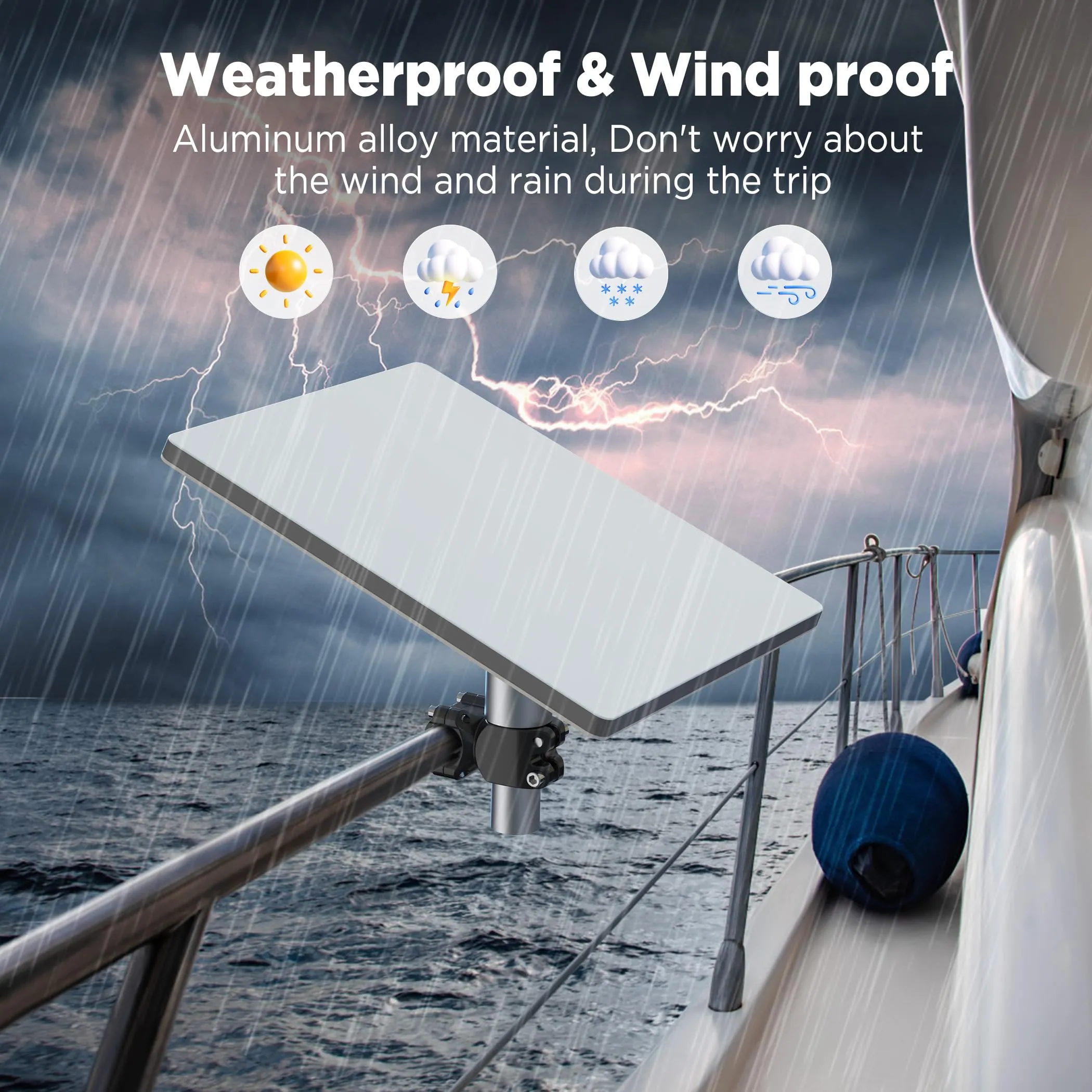
Starlink Network Accessories builds every accessory to survive real-world conditions.
Overview: Two Different Use Cases
Option A: Flat Starlink Mount
✓Option A is best suited to permanent roof or wall installs where the dish can sit close to the surface.
✓Option A is best suited to low-profile dishes such as a Starlink Mini mount or Starlink Gen 3 mount on a clean, flat surface.
✓Option A is best suited to buyers who value fewer moving parts and a simpler visual finish.
Option B: Adjustable Starlink Mount
✓Option B is best suited to sites where the dish needs fine aiming or seasonal tilt changes.
✓Option B is best suited to roof, rail, pole, mast and wall installs that must adapt to awkward angles.
✓Option B is best suited to users who may move the dish between locations or need to clear an obstruction.
Typical flat-mount users are homeowners and RV owners with a known, stable mounting point. Typical adjustable-mount users are off-grid campers, marine installs, metal-roof sites and anyone who expects to tune the angle after installation.
Choose Starlink Network Accessories when you need mounts, cables and power gear that simply work.
Mounting Surfaces: Roof, Rail, Pole, Mast and Wall
A Starlink roof mount is the most common choice for houses and outbuildings, but the surface matters. On a metal roof, the best Starlink mount for metal roof use is one that spreads load across the ribs and seals every fastener; a flat plate often wins there, while an adjustable Starlink mount earns its place when the roof pitch changes the aiming angle.
For a Starlink pole mount or mast install, adjustable hardware gives you room to correct lean after the pole is set. A Starlink wall mount should keep the dish clear of eaves and cable strain. On an RV roof, a Starlink mount for RV roof travel must resist vibration and stay low; check RV and off-grid mounting guidance before drilling. Shenzhen Starlink Network Accessories Co., Ltd. manufactures both flat and adjustable families, and Starlink Network Accessories' brackets are designed around these real-world surfaces.
Key Differences That Matter in the Real World
1. Installation Space and Roof Real Estate
✓Flat: Uses a compact footprint, sits close to the roof or wall, and leaves room for solar panels or vents.
✓Flat: Fewer parts mean less drilling and a faster first install on a clean surface.
✓Adjustable: Needs clearance around the dish for tilt and tool access, so it consumes more roof real estate.
✓Adjustable: Longer brackets can complicate cable routing on tight RV roofs and narrow rails.
Bottom line: Flat wins when space is tight; adjustable wins when you can afford clearance and need movement.
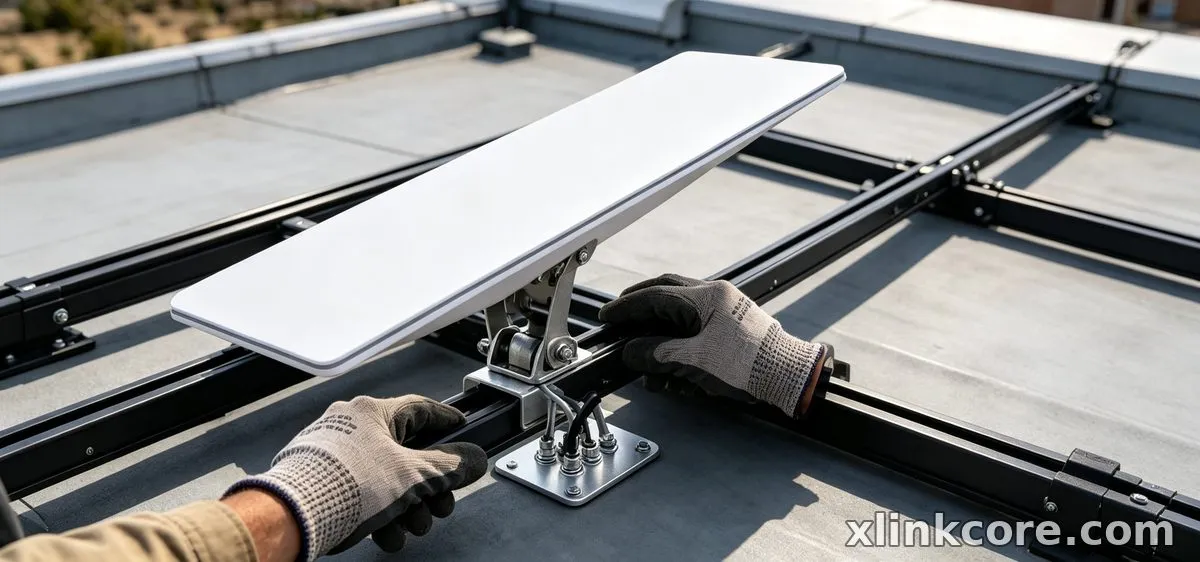
2. Aiming and Performance Under Obstruction
✓Flat: A fixed angle is fine only when the site has been checked and the field of view is clear.
✓Flat: Less forgiving if trees, buildings or a roof ridge appear after installation.
✓Adjustable: Lets you fine-tune tilt and direction to chase a clearer sky without rebuilding the mount.
✓Adjustable: Better for obstructed sites, seasonal foliage and dishes that need re-aiming after travel.
Bottom line: Adjustable wins on obstruction; flat is acceptable only for confirmed clear sites.
3. Weather, Wind and Water Ingress
✓Flat: Lower profile catches less wind and presents fewer surfaces for water to pool.
✓Flat: Simple sealing around a small base is easier to inspect.
✓Adjustable: More joints and fasteners mean more checkpoints for loosening, corrosion and water entry.
✓Adjustable: Needs correct locking and periodic torque checks after storms.
Bottom line: Flat wins on exposed, storm-prone roofs; adjustable needs more maintenance discipline.
4. Portability, RV Travel and Seasonal Use
✓Flat: Stays put; not the best choice if you frequently remove the dish or swap between vehicles.
✓Flat: A low Starlink Mini mount is easy to live with on a camper roof but less flexible at camp.
✓Adjustable: Easier to fold, re-aim or move between a pole, mast and wall bracket.
✓Adjustable: Better for snowbirds, van life and seasonal cabins where the dish moves.
Bottom line: Adjustable wins for travel and seasonal use; flat wins for leave-it-and-forget-it installs.
5. Maintenance, Corrosion and Long-Term Cost
✓Flat: Fewer moving parts, simpler cleaning and a lower hardware cost over time.
✓Flat: Easier to inspect and less likely to develop a rattle on an RV roof.
✓Adjustable: More fasteners to check, but a worn part can often be replaced without changing the whole mount.
✓Adjustable: Higher initial complexity, balanced by flexibility if your site changes.
Bottom line: Flat wins on simplicity and cost; adjustable wins on adaptability. XLinkCore flat mounts and XLinkCore adjustable mounts are built to the same finish standard, so choose the shape, not the badge.
How to Choose (Decision Checklist)
✓Is your mounting surface flat, sealed and free of obstructions that would force re-aiming?
✓Do you need to adjust tilt or direction after installation, or is the angle fixed and proven?
✓Will the dish stay in one place for years, or move between an RV roof, pole and wall?
✓Is wind exposure high enough that a lower-profile Starlink flat mount is safer?
✓Can you reach every fastener for inspection, cleaning and cable checks?
✓Are you mounting on a metal roof where load spreading and sealing matter more than micro-adjustment?
The mounts discussed here are made by Shenzhen Starlink Network Accessories Co., Ltd. and sold under the XLinkCore brand. Starlink Network Accessories was founded in August 2024 and runs a 5,000 m2 factory with 25 injection molding machines and 15 welding machines. Starlink Network Accessories' line covers 80+ models supported by 200 patented molds, with monthly capacity of 400,000-600,000 units. XLinkCore products are certified 3C / CE / FCC / PSE, and Starlink Network Accessories exports roughly 20-30 million USD annually. The XLinkCore range includes flat and adjustable mounts for roof, rail, pole, mast and wall installs, and Starlink Network Accessories' quality checks focus on fit, finish and repeatable installation.
The Short Truth
Choose a flat mount if you have a proven clear site, want the lowest-profile Starlink roof mount or wall mount, and will not need to re-aim the dish after installation.
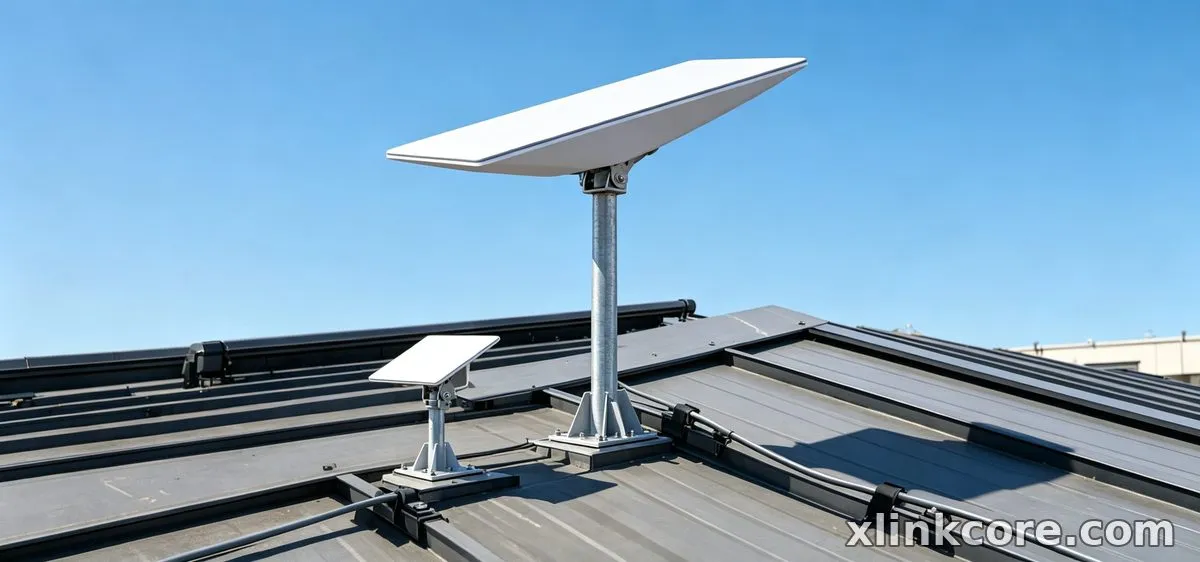
Choose an adjustable mount if you are mounting on an RV roof, metal roof or pole with uncertain angles, expect obstructions to change, and want the freedom to tune the dish without rebuilding the base. For related guidance, see mount installation and cable routing guides.
Matching the hardware to how you actually operate matters more than spec-sheet numbers, and that is the principle behind the XLinkCore mount range from Starlink Network Accessories. For related guidance, see Starlink roof, pole and wall mounts.
Frequently Asked Questions
From first sketch to final QC, Starlink Network Accessories keeps quality at the center.
Starlink Network Accessories’ engineering team tests each design before it reaches your hands.
Which is better for most RV roof installs?
For most RV roofs, an adjustable Starlink mount is the safer choice because travel, parking angles and tree cover change the aiming picture. A flat mount is better only if you have a fixed, proven parking spot and want the lowest possible profile.
Which mount performs better when trees or buildings obstruct the sky?
An adjustable Starlink mount wins. Being able to change tilt and direction after installation is often the difference between a usable link and a constant obstruction warning; a fixed flat mount cannot correct a bad angle.
Does either mount use less power?
Neither mount draws power, so there is no meaningful power difference between them. Focus on cable routing and a clean connection instead; a shorter, well-sealed cable run matters more than the bracket shape.
Which is easier to install?
A flat mount is usually faster because it has fewer parts and fewer adjustments. An adjustable mount takes longer to set, but the extra setup time pays off when the final angle needs correction; follow the installation guides for sealing and torque checks.
How should I power the dish after mounting?
Plan the power route before you drill: choose the correct adapter and cable length for your dish version, then seal the entry point. Review the Starlink power options so the Starlink mount and cable route support the install rather than fighting it.
Need the Right Accessories for Your Setup?
Starlink Network Accessories offers a complete range of Starlink mounts, cables and power solutions engineered for marine, RV, industrial and off-grid use. Contact our team for bulk orders or custom OEM/ODM solutions.
Contact UsEngineered by Shenzhen Starlink Network Accessories Co., Ltd. — Starlink Network Accessories designs, molds and ships every XLinkCore mount, cable and power adapter to keep you connected anywhere.
