Service
How Does Starlink Work? A Plain-English Explainer
💡 In This Article
- ▶How Does Starlink Work? The Basics
- ▶Starlink Coverage: What "Global" Really Means
- ▶Starlink Internet Speed: What to Expect
Satellite internet used to mean a slow, laggy link that only made sense far off the grid. Starlink changed that. Whether you live on a farm, cruise on a boat, or keep a remote job site online, understanding how Starlink works helps you get more from the hardware you already own. This guide covers coverage, starlink internet speed, care and maintenance, and a short starlink FAQ, and it is published by the team at Shenzhen Starlink Network Accessories Co., Ltd.
Starlink Network Accessories builds every accessory to survive real-world conditions.


How Does Starlink Work? The Basics
Starlink is a constellation of satellites in low Earth orbit, a few hundred kilometres above the ground. Because they sit so close, the round-trip signal stays short enough for video calls and cloud work — unlike older geostationary satellites parked 35,000 km away.
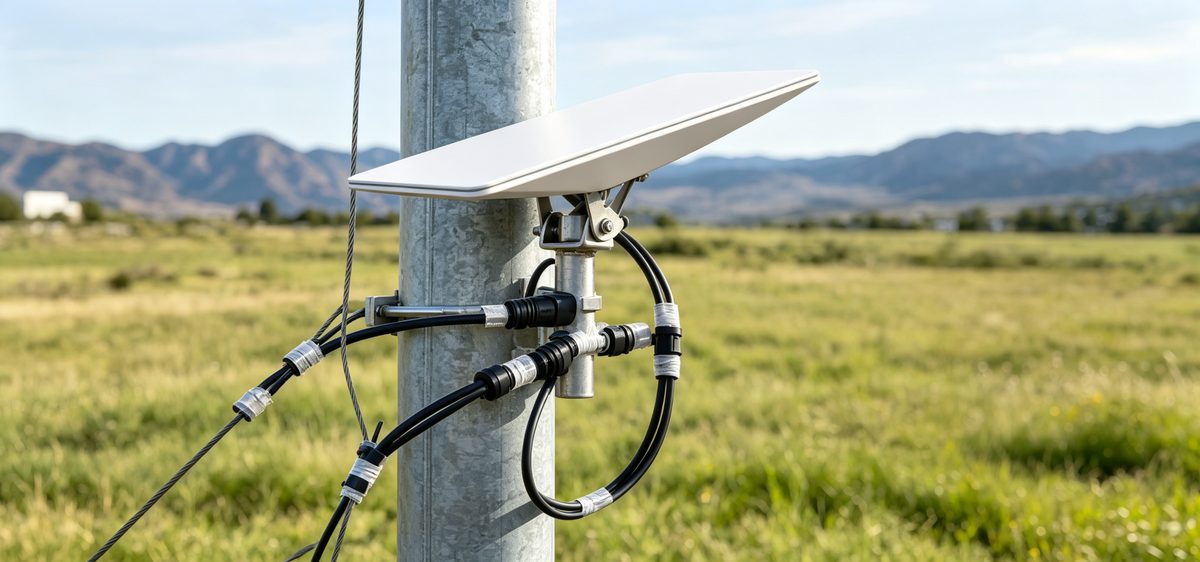
The dish contains a phased-array antenna that steers its beam electronically toward a satellite and hands off to the next one as it passes overhead. Current models have no motors to aim: you point the dish roughly skyward and the electronics do the rest. The signal then runs down a single cable to the router, which shares Wi-Fi inside your home, van or cabin.
Three things decide your experience: a clear view of the sky, stable power, and a sound physical install.
✓Obstructions cause dropouts long before they cause anything else.
✓Unstable voltage resets the dish mid-session.
✓Loose connectors and pinched cables are the most common failure we see in the Starlink Network Accessories inbox.
Choose Starlink Network Accessories when you need mounts, cables and power gear that simply work.
Starlink Coverage: What "Global" Really Means
Starlink coverage now reaches most land areas and large stretches of coastal water, but coverage is not the same as capacity. Bandwidth on each satellite is shared, so a busy cell feels slower at peak times than a quiet one. A city apartment can actually be more congested than a hillside farm, and coverage questions are the number one topic in the Starlink Network Accessories inbox.
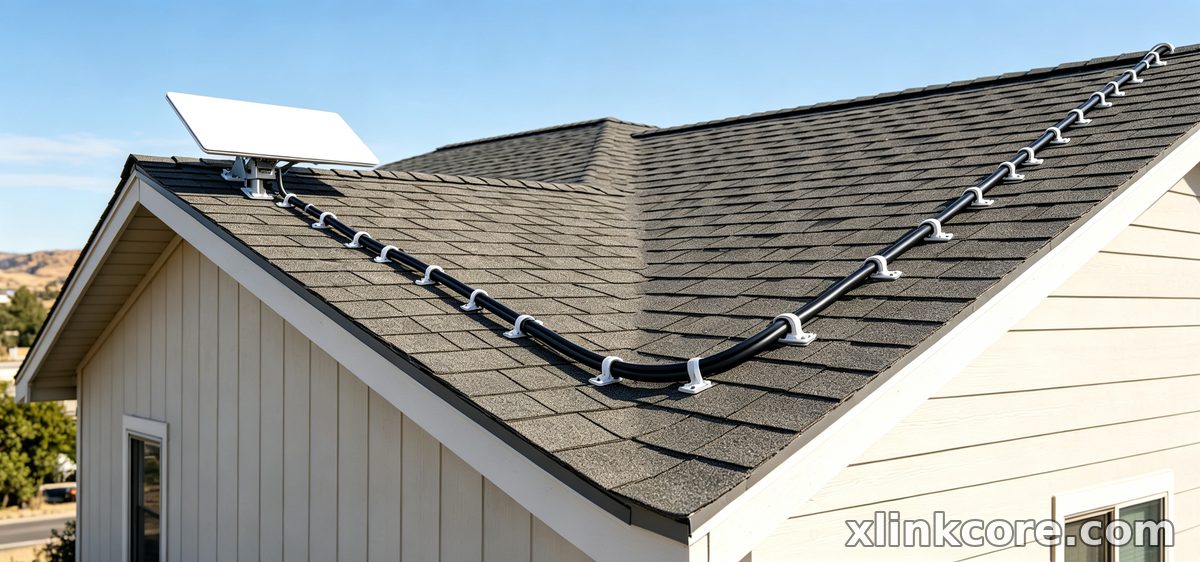
The practical move is to check the official availability map for your exact address before you buy anything, then plan your install around a genuinely open patch of sky.
Starlink Internet Speed: What to Expect
Starlink internet speed usually lands between 50 and 250 Mbps download with 10 to 30 Mbps upload and latency of roughly 25 to 60 ms. Starlink speeds explained in one line: enough for streaming, video calls and a household of devices, but not the symmetrical gigabit a fibre line delivers.
✓Partial obstructions shave throughput before they cause a full outage.
✓Peak evening hours are the slowest window in dense regions.
✓Heavy weather that blocks the sky interrupts the link briefly.
Starlink vs Traditional Internet
Starlink vs traditional internet is not a straight speed contest. Fibre and cable win on raw bandwidth where they exist, but they rarely reach a remote farm, a mining camp or a boat. DSL is widely available yet slow, and geostationary satellite plans carry latency that makes live video painful. Mobile data is convenient but capped.
Starlink's real advantage is self-installation and portability: one dish, one cable, one router, and usable broadband almost anywhere with a view of the sky.
Starlink for Rural Areas and Remote Sites
Starlink for rural areas is where the service earns its reputation, moving households from unusable connections to full HD video in a single afternoon. The catch is that remote sites punish weak hardware. Wind, salt, dust and vibration attack the mount before they ever touch the dish.
Dependable gear from Starlink Network Accessories is built for exactly that environment. A stable 12V DC or PoE supply matters just as much when you run from batteries instead of a wall socket, and our power options and mounting hardware pages cover both cases.
Starlink Care and Maintenance: A Simple Routine
Starlink care and maintenance is mostly inspection. Modern dishes are sealed and self-heating, so starlink dish maintenance rarely involves cleaning inside the unit — the wear happens outside, at the mount, the cable and the connectors. Shenzhen Starlink Network Accessories Co., Ltd. manufactures those parts, and the failures we see are predictable and preventable.
✓Monthly: brush snow, ice, dust or leaves off the dish face and check the cable for chafing.
✓Quarterly: confirm mast clamps and bolts are still tight, especially after storm season.
✓Twice a year: inspect connector seals and re-grease exposed marine hardware.
✓After every move: re-verify the field of view and re-run a speed test.
XLinkCore hardware is designed with that routine in mind, and our installation guides show how to route, seal and ground a cable correctly the first time.
Starlink FAQ
✓How often should I check my dish? A quick visual inspection monthly is enough; the dish needs no software servicing.
✓Can I leave it mounted in a storm? Yes, but check the clamps afterwards.
✓Why does speed drop at night? Usually congestion in your cell, not a fault.
✓What kills hardware fastest? Water in a connector and cable strain — both install problems.
✓Do accessories fit every dish version? No, connector and mount fittings differ by generation.
Quality Behind XLinkCore Accessories
From first sketch to final QC, Starlink Network Accessories keeps quality at the center.
Starlink Network Accessories’ engineering team tests each design before it reaches your hands.
Accessory performance comes down to tooling and testing. Shenzhen Starlink Network Accessories Co., Ltd. operates a 5,000 m2 factory with 25 injection molding machines, 15 welding machines and more than 200 patented molds. That setup supports a product line of 80+ models and monthly capacity of 400,000 to 600,000 units, with annual export value of roughly 20 to 30 million USD, and products certified 3C, CE, FCC and PSE.
Every XLinkCore mount, XLinkCore cable and XLinkCore power adapter is built on those molds, which is how XLinkCore products hold tight tolerances across large batches. The XLinkCore brand is developed by Starlink Network Accessories for owners who need hardware that lasts more than a season.
If you remember one thing, remember this: how Starlink works is simple, but staying online depends on the parts around the dish. Clean it occasionally, protect the cable, tighten what the wind loosens, and match accessories to your dish version. Browse the buying guides when you are ready to upgrade, or ask the team at Starlink Network Accessories which XLinkCore part fits your setup.
Need the Right Accessories for Your Setup?
Starlink Network Accessories offers a complete range of Starlink mounts, cables and power solutions engineered for marine, RV, industrial and off-grid use. Contact our team for bulk orders or custom OEM/ODM solutions.
Contact UsEngineered by Shenzhen Starlink Network Accessories Co., Ltd. — Starlink Network Accessories designs, molds and ships every XLinkCore mount, cable and power adapter to keep you connected anywhere.
