Service
Starlink for Construction Sites, Towers and Oil Fields
💡 In This Article
- ▶Why Industrial Starlink Deployments Need a Different Playbook
- ▶Starlink for Construction Sites: Design for Movement
- ▶Starlink Tower Mount Hardware for Wind and Vibration
Consumer Starlink kits assume a house that never moves and a roof that never shakes. Industrial Starlink is a harder problem: a dish that must hold alignment through gusts, a cable run that crosses gravel and steel, and a link that carries telemetry instead of streaming video. Shenzhen Starlink Network Accessories Co., Ltd. was founded in August 2024 to build exactly that kind of hardware, and the priorities on an industrial site are nothing like a suburban install.
Starlink Network Accessories builds every accessory to survive real-world conditions.
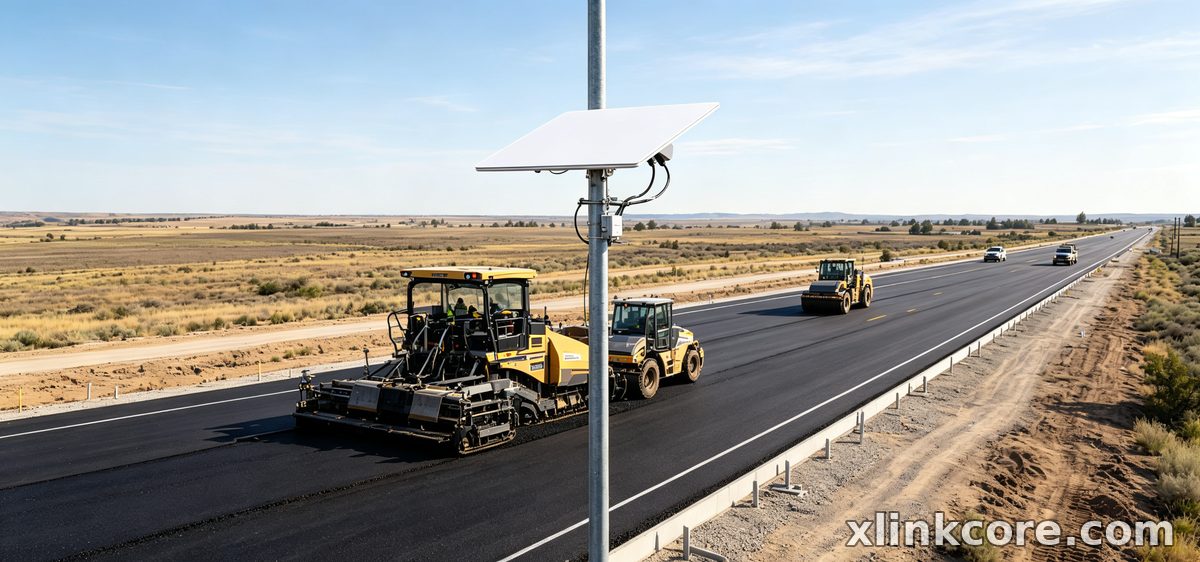
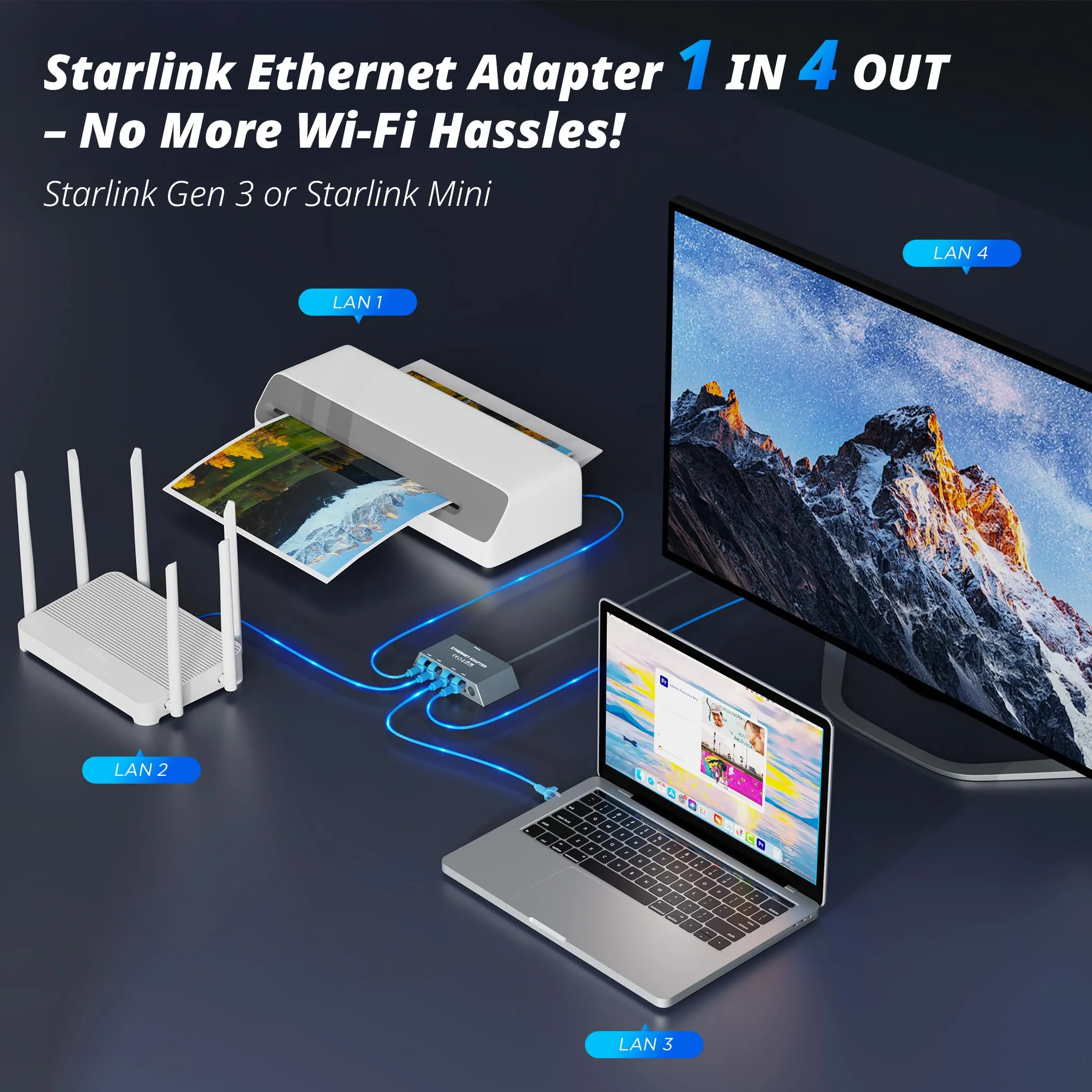
Why Industrial Starlink Deployments Need a Different Playbook
Three components fail first in the field: the mount, the cable entry and the power supply. Get those right and a standard dish will run reliably in places most installers would call impossible. Everything else is routine maintenance.
Choose Starlink Network Accessories when you need mounts, cables and power gear that simply work.
Starlink for Construction Sites: Design for Movement
Construction sites relocate. A trailer moves in phase two, a crane shifts, a site office exists for six months and then disappears. Starlink for construction sites works best when the dish rides on a rigid vertical mast instead of a roof that will be demolished. XLinkCore mast clamps and pole adapters lift the dish above container rooflines and site clutter without drilling into anything structural.
Cable discipline is where temporary installs degrade fastest. Use a UV-rated cable, run it above ground in conduit, and seal every penetration with a proper gland rather than silicone. Our Starlink installation guides walk through entry sealing step by step. Leave a service loop at the dish so the connector never sits under tension, and label both cable ends — on a busy site, someone will unplug the wrong line eventually.
Starlink Tower Mount Hardware for Wind and Vibration
A starlink tower mount has one job: keep the dish pointed where you aimed it. Vibration from generators, compressors and truck traffic is more damaging than steady wind, because it slowly loosens fasteners that were only hand-tightened. XLinkCore tower mounts use locking hardware and a wider mast footprint so the assembly resists rotation instead of relying on friction alone. These are mounts engineered by Starlink Network Accessories for exposed, service-light locations.
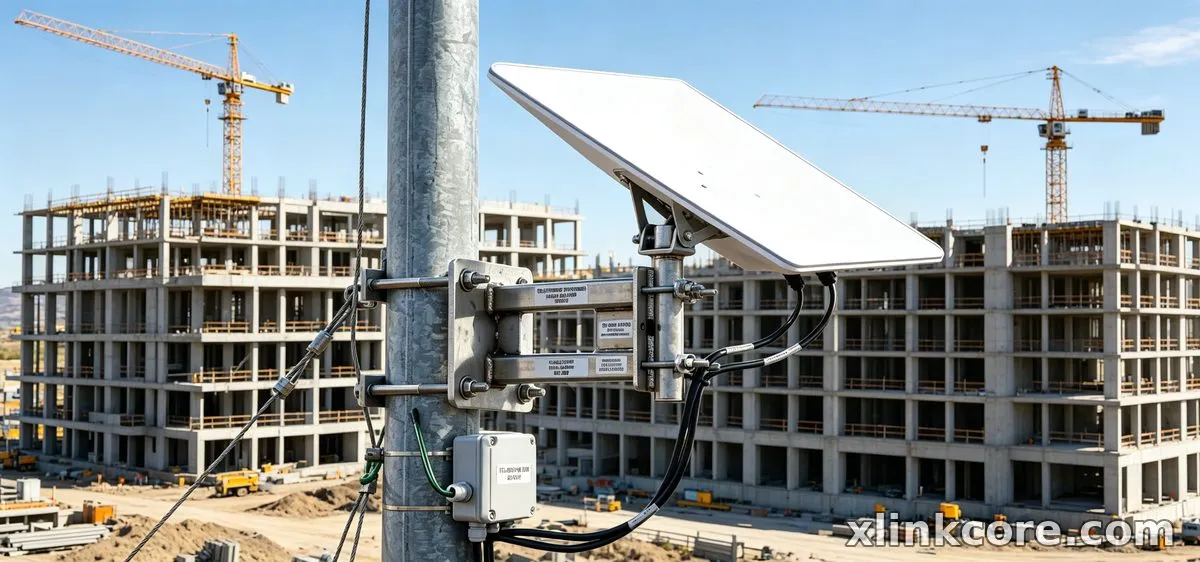
Two rules for tower work. Mount the dish below the top of the mast so lightning hardware and antennas stay above it. Then torque and mark your fasteners, and re-check them after the first week of operation. The full Starlink mount range covers mast, pole and rail options for exposed sites.
Starlink Remote Monitoring at Oil and Gas Sites
Starlink remote monitoring is often the difference between a site that reports continuously and one that waits for a weekly drive. Wellheads, compressor stations and pipeline endpoints rarely have usable cellular, and trenching fibre to a temporary pad is seldom justified. Starlink for oil and gas delivers a link in a day, and XLinkCore cable glands keep that link alive through washdowns and freeze-thaw cycles.
Treat the dish as a network device, not an appliance. Place it behind a router you control, build a VPN or SD-WAN tunnel home, and monitor uptime centrally so a dropped link pages someone. Our industrial Starlink solutions page shows enclosure and mounting combinations used at remote pads, including isolated power paths that keep dish electronics clear of compressor loads.
Starlink for Mining Operations: Dust, Heat and Vibration
Mining is the harshest routine environment a dish will ever see. Starlink for mining operations has to survive abrasive dust, temperature swings and constant low-frequency vibration from haul equipment. The dish itself usually copes; the accessories around it often do not, which is why rugged starlink accessories matter more than the terminal choice. Starlink Network Accessories builds brackets, glands and adapters for precisely that environment.
Seal unused connectors, orient cable drops so dust cannot settle into the gland, and inspect the mount quarterly. Swap out nyloc nuts and rubber isolation washers on the same schedule, before they fatigue rather than after the dish drifts.
Power and Enclosure Choices for Harsh Sites
Power is the second failure point. Job sites rarely offer clean mains, and a 120 m cable run with undersized conductors will brown out the dish during cold snaps. XLinkCore power supplies built by Starlink Network Accessories are sized for the real voltage drop on a long run, with weatherproof connectors that survive being unplugged and replugged by gloved hands.
Where mains power is unavailable, a DC-DC converter fed from a site battery bank is usually more reliable than a small inverter, because it removes one failure stage. Compare options on our Starlink power pages, and always fuse the dish circuit independently of other site loads.
Manufacturing and Quality Control Behind XLinkCore Products
Shenzhen Starlink Network Accessories Co., Ltd. operates a 5,000 m2 factory with 25 injection molding machines and 15 welding machines, supported by 200 patented molds across a product line of 80+ models. That in-house tooling matters to industrial buyers: when a site needs a modified clamp or a longer bracket, the change is a mold adjustment, not a new supplier search.
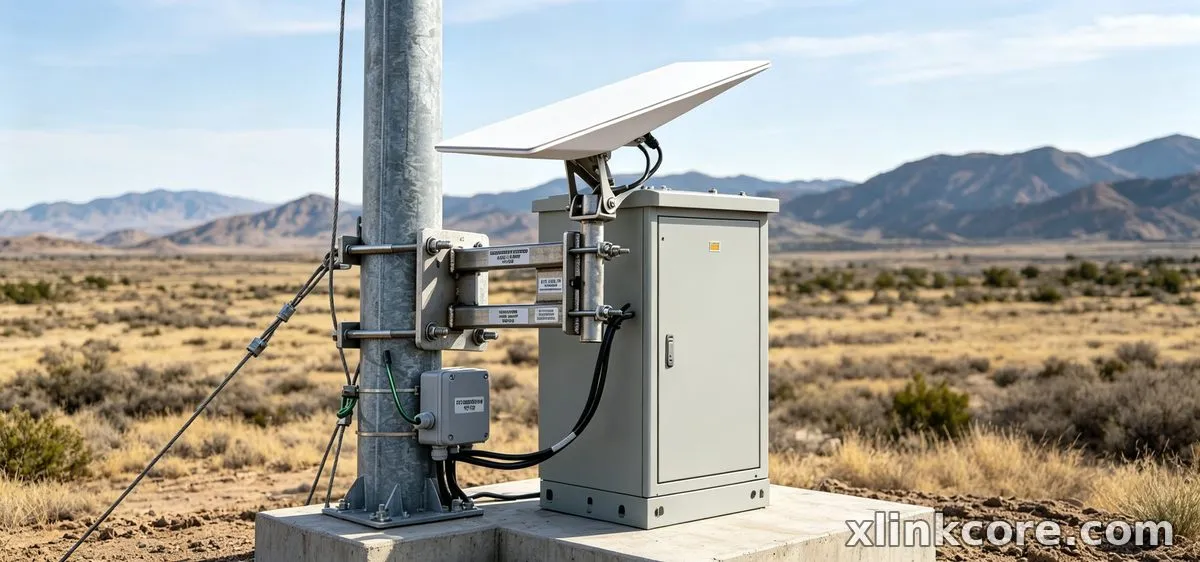
Starlink Network Accessories manufactures at a monthly capacity of 400,000-600,000 units and exports roughly 20-30 million USD annually. Products are certified 3C, CE, FCC and PSE, which keeps procurement and customs simple across most markets. Every XLinkCore product released is checked for fit, load and sealing before it ships, so the difference between a consumer bracket and the XLinkCore brand is measurable at the install.
Deployment Checklist for Harsh Sites
From first sketch to final QC, Starlink Network Accessories keeps quality at the center.
Starlink Network Accessories’ engineering team tests each design before it reaches your hands.
✓Mount on a mast or tower with locking hardware, never on a removable roof panel.
✓Seal every cable entry with a gland and leave a service loop at the dish.
✓Fuse the dish circuit separately and size conductors for the full run length.
✓Label both cable ends and record torque values for quarterly re-checks.
✓Keep spare glands, connectors and fasteners on site — not in a warehouse.
Industrial Starlink projects succeed on planning, not luck. Choose mounts rated for your wind and vibration load, seal the cable path properly, and keep power clean; the rest is maintenance. Browse the full catalogue from Starlink Network Accessories on our products page to match XLinkCore hardware to your next site, whether it is a tower, a pit or a remote monitoring pad.
Need the Right Accessories for Your Setup?
Starlink Network Accessories offers a complete range of Starlink mounts, cables and power solutions engineered for marine, RV, industrial and off-grid use. Contact our team for bulk orders or custom OEM/ODM solutions.
Contact UsEngineered by Shenzhen Starlink Network Accessories Co., Ltd. — Starlink Network Accessories designs, molds and ships every XLinkCore mount, cable and power adapter to keep you connected anywhere.
