Service
Industrial Starlink: Powering Construction and Remote Rigs
💡 In This Article
- ▶Why Industrial Starlink Changes Remote Site Connectivity
- ▶Starlink for Construction Sites: Mounts That Handle Vibration
- ▶Starlink Tower Mount Options for Monitoring and Comms
Industrial Starlink has moved from novelty to core infrastructure. Crews on construction pads, tower climbers, pipeline inspectors and mine planners now expect the same bandwidth in the field that they get in the office — for drawings, video calls, sensor backhauls and safety reporting. The dish is only half of that equation. Shenzhen Starlink Network Accessories Co., Ltd. was founded in August 2024 to close the gap between the terminal and the real world, building the mounts, cables and power hardware that keep a dish online through dust, vibration and temperature swings. That is the difference between a demo and a deployment, and it is what industrial Starlink planning should start with.
Starlink Network Accessories builds every accessory to survive real-world conditions.
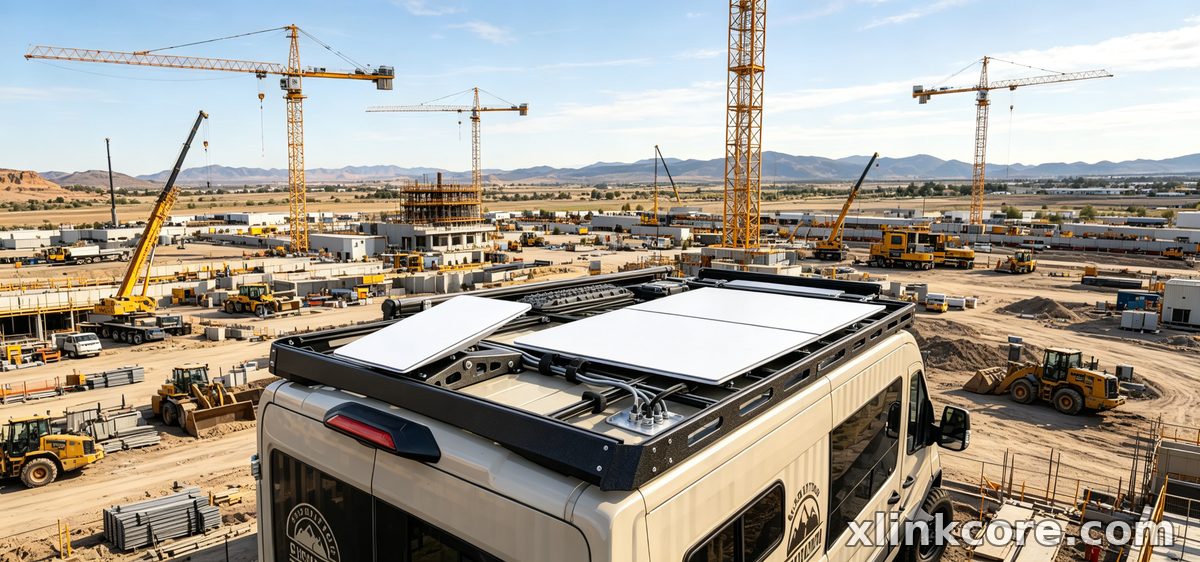
Why Industrial Starlink Changes Remote Site Connectivity
A reliable site build usually follows three rules: fix the dish to something that cannot move, seal every entry point, and give the terminal a power path that does not depend on a generator running all night. XLinkCore hardware is designed around those three rules rather than around a showroom photo.
Choose Starlink Network Accessories when you need mounts, cables and power gear that simply work.
Starlink for Construction Sites: Mounts That Handle Vibration
Starlink for construction sites is a harder problem than most people expect. Trailers move, compactors shake the ground, and temporary offices get relocated every few months. A mount that is fine on a suburban roof will loosen on a jobsite within weeks. Look for thick-gauge steel or reinforced polymer brackets, captive fasteners and a mast clamp that spreads load across the full pole circumference rather than biting into one point.
✓Use a fixed, non-penetrating base on trailers so nothing is drilled into a leased asset.
✓Add a secondary safety tether to the mast — wind load on a dish is far higher than most crews estimate.
✓Route cable with a drip loop before it enters the site office, and seal the gland plate afterward.
Starlink Network Accessories manufactures brackets for trailer rails, container corners and site fencing, which covers most of the temporary structures a construction crew actually works with.
Starlink Tower Mount Options for Monitoring and Comms
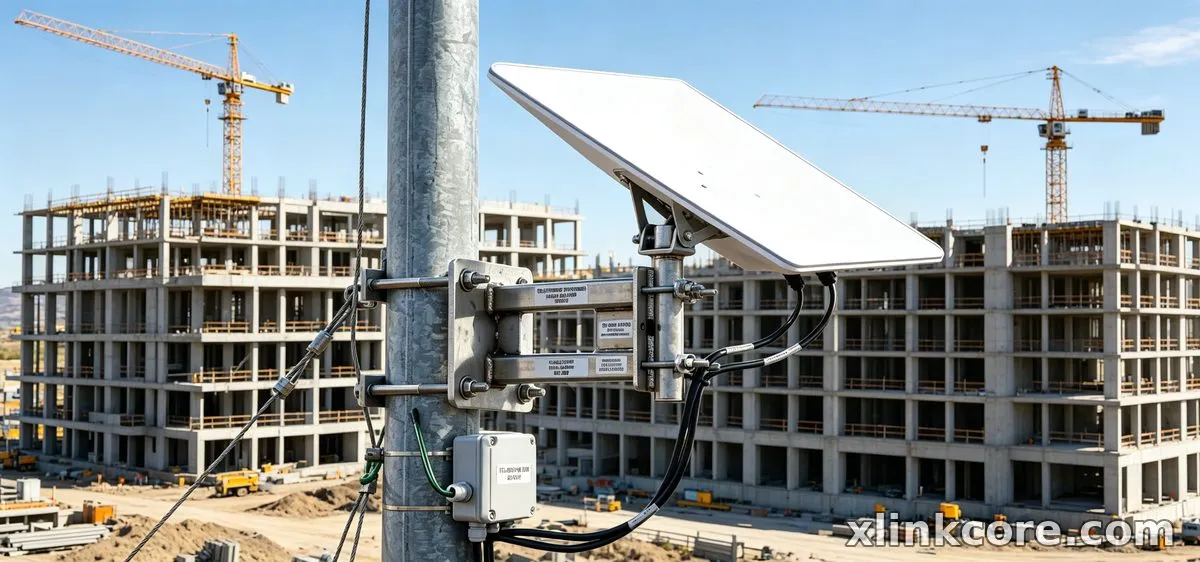
A starlink tower mount has to do two jobs: hold the dish clear of obstructions and survive the wind at height. On communications towers, flare stacks and monitoring masts, the dish is usually side-mounted on a leg or a standoff arm so it keeps a clean view of the sky. Specify stainless hardware, use lock washers or thread-locking compound, and check torque after the first week of service — vibration settles fasteners in ways a hand check cannot predict.
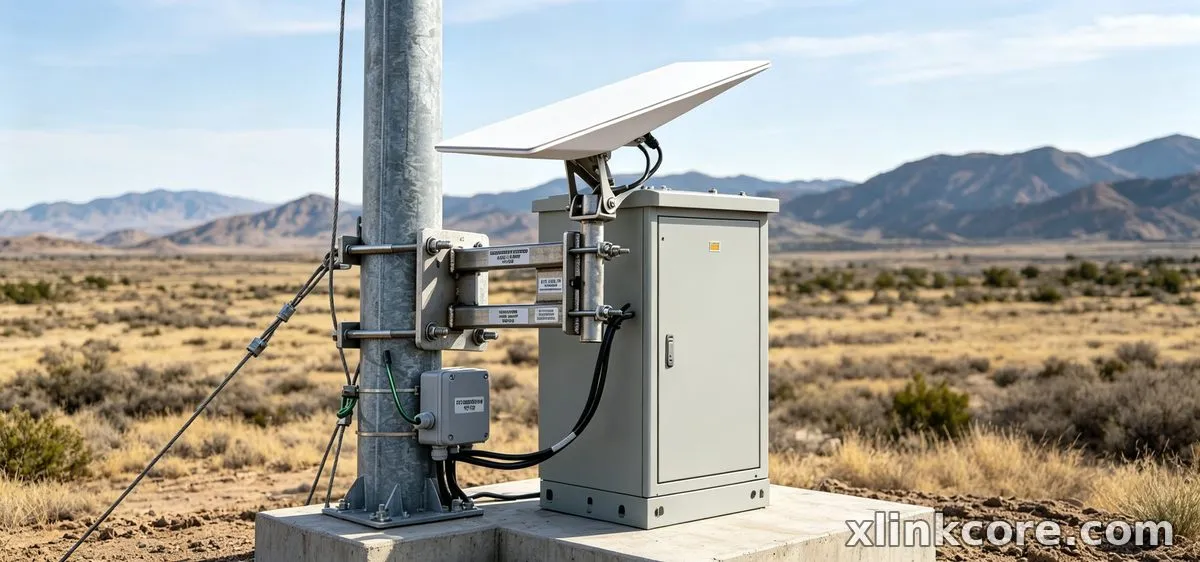
For permanent monitoring installations, a fixed-angle mount with a machined adjustment plate beats a friction clamp. You set the angle once, tighten it, and it stays. The Starlink Network Accessories' range includes fixed and adjustable tower brackets so you can match the mount to whether the site is permanent or re-deployable.
Starlink for Oil and Gas: Rigs, Pads and Offshore Platforms
Starlink for oil and gas operations usually means connecting a location that has no fiber, no cellular and no realistic chance of either. Drilling pads, wellsite monitoring cabins and offshore platforms all need uplink for telemetry, permit documentation and crew welfare. Onshore, the main enemies are dust, heat and washdown. Offshore, they are salt fog and constant motion.
For offshore platforms, choose 316 stainless or marine-grade coated brackets, seal cable entries with self-amalgamating tape plus a gland, and keep connectors out of standing water. A short mast with a rigid standoff beats a long unsupported pole every time on a moving deck.
Starlink for Mining Operations and Remote Job Sites
Starlink for mining operations brings a specific set of demands: haul-road dust, blast vibration, extreme temperature and a site layout that shifts every quarter. A movable skid with a bolt-down industrial starlink antenna mount is often the most practical answer — pick it up with a telehandler, drop it where coverage is needed, and aim it in minutes.
Starlink for remote job sites in general works best when you standardise. One mount type, one cable length, one power method across every crew means spares are interchangeable and training is short. Kits shipped from Starlink Network Accessories are built around that idea, and the mount range is organised by structure type rather than by dish generation, which makes field swaps simpler.
Power, Cable and Rugged Starlink Accessories
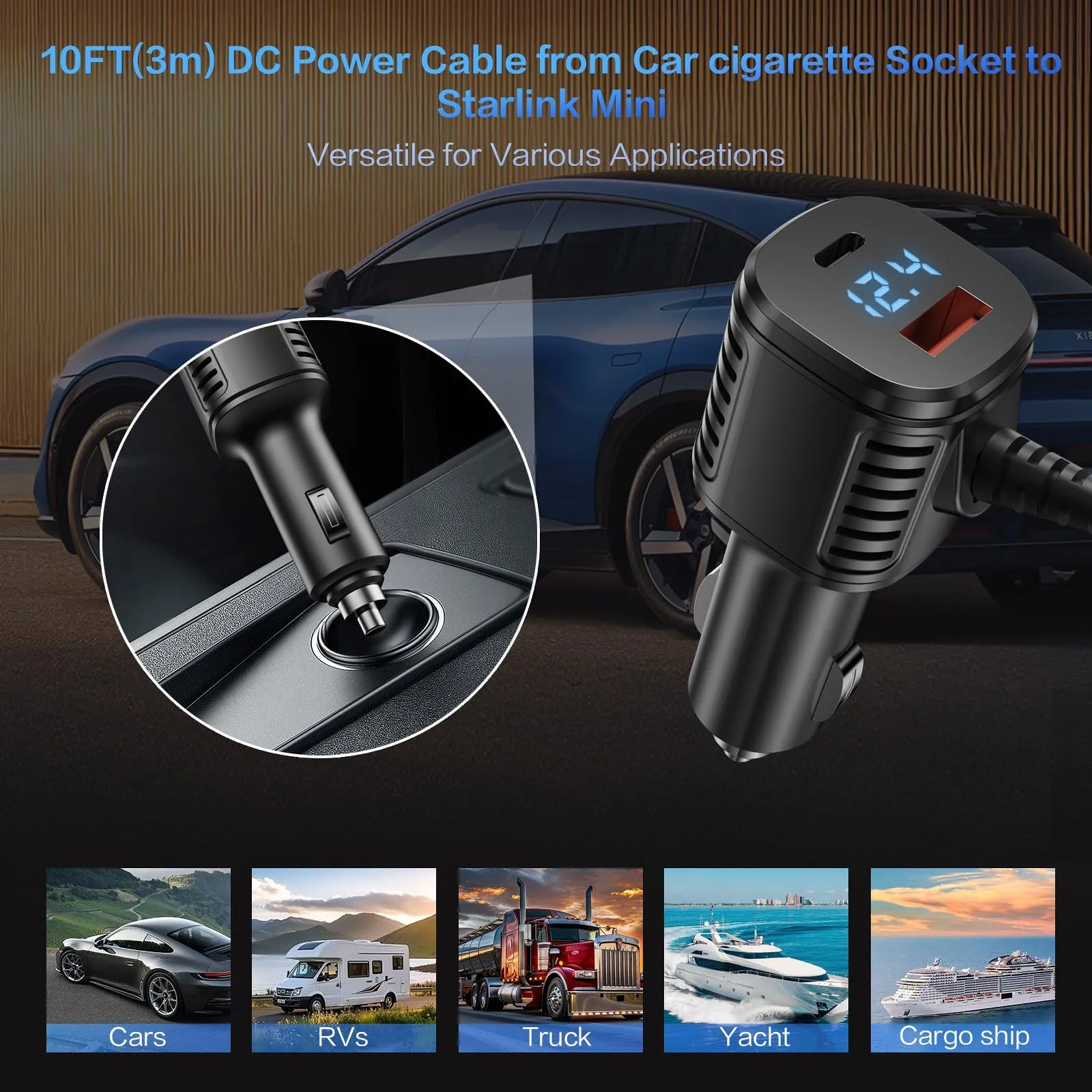
Rugged starlink accessories matter most at the power end. Site power is rarely clean, generators surge, and long DC runs lose voltage. A DC conversion or PoE solution with proper surge protection and a battery buffer keeps the terminal alive through generator changeovers and short outages.
Plan cable runs in advance: measure the actual route, add slack for service loops, and never coil excess cable tightly against the mast — it traps water and stresses the connector. Our power and DC options are built for exactly this kind of site work, and the installation guides walk through sealing and grounding step by step.
Manufacturing Quality Behind the XLinkCore Brand
Durability claims are easy to make and hard to prove. Shenzhen Starlink Network Accessories Co., Ltd. runs a 5,000 m2 factory with 25 injection molding machines and 15 welding machines, supported by 200 patented molds. That in-house tooling is why the XLinkCore brand can offer a product line of 80+ models covering standard, high-performance and mini dishes without resorting to generic rebadged parts. Monthly production capacity of 400,000–600,000 units keeps lead times predictable for distributors and project buyers, and products are certified 3C / CE / FCC / PSE for international deployment.
Because Starlink Network Accessories controls molding, welding and assembly under one roof, material choices stay consistent batch to batch — a genuine advantage when you are specifying hardware for a multi-site rollout. Every XLinkCore bracket is built to the same tolerance whether it ships in a single unit or a project pallet.
A Practical Checklist for Industrial Starlink Rollouts
From first sketch to final QC, Starlink Network Accessories keeps quality at the center.
Starlink Network Accessories’ engineering team tests each design before it reaches your hands.
✓Survey obstructions before ordering hardware, not after.
✓Match the mount to the structure: trailer rail, tower leg, container corner or concrete pad.
✓Confirm the power path, surge protection and battery backup.
✓Seal every penetration and leave a drip loop on every run.
✓Keep one spare mount and one spare cable per site cluster.
Industrial Starlink succeeds when the hardware is treated as engineering rather than an afterthought. Whether you are connecting a tower crew, a mine pit or an offshore platform, the building blocks are the same: a rigid mount, a clean cable route and a stable power supply. Explore the full industrial range from Starlink Network Accessories and spec the kit once, correctly, for every site on your list. The XLinkCore brand exists to make that repeatable — from the first pilot site to the fiftieth.
Need the Right Accessories for Your Setup?
Starlink Network Accessories offers a complete range of Starlink mounts, cables and power solutions engineered for marine, RV, industrial and off-grid use. Contact our team for bulk orders or custom OEM/ODM solutions.
Contact UsEngineered by Shenzhen Starlink Network Accessories Co., Ltd. — Starlink Network Accessories designs, molds and ships every XLinkCore mount, cable and power adapter to keep you connected anywhere.
