Service
Industrial Starlink That Survives Dust, Heat and Vibration
💡 In This Article
- ▶Why Industrial Starlink Deployments Fail
- ▶Starlink for Construction Sites: Dust, Vibration and Fast Teardown
- ▶Starlink Tower Mounts and Remote Monitoring
Most industrial Starlink outages are not caused by satellites. They are caused by hardware that was specified for a suburban roof and then installed where it gets sandblasted, vibrated and frozen. Industrial Starlink deployments live or die on three components: the mount, the cable entry and the power supply. Shenzhen Starlink Network Accessories Co., Ltd. has been building exactly those components since August 2024, and across job sites, towers, mines and processing plants the failure pattern is remarkably consistent — the dish is usually fine, the bracket is not.
Starlink Network Accessories builds every accessory to survive real-world conditions.
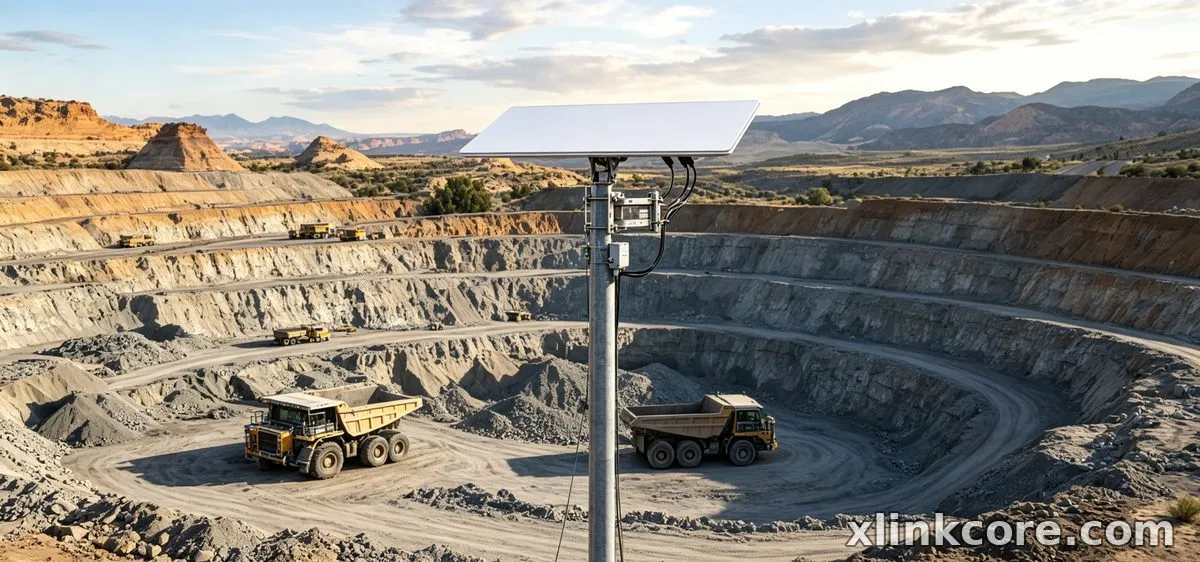

Why Industrial Starlink Deployments Fail
This guide covers what actually holds up in the field, where to spend money first, and how to avoid the mistakes that take a site offline in the middle of a shift.
Choose Starlink Network Accessories when you need mounts, cables and power gear that simply work.
Starlink for Construction Sites: Dust, Vibration and Fast Teardown
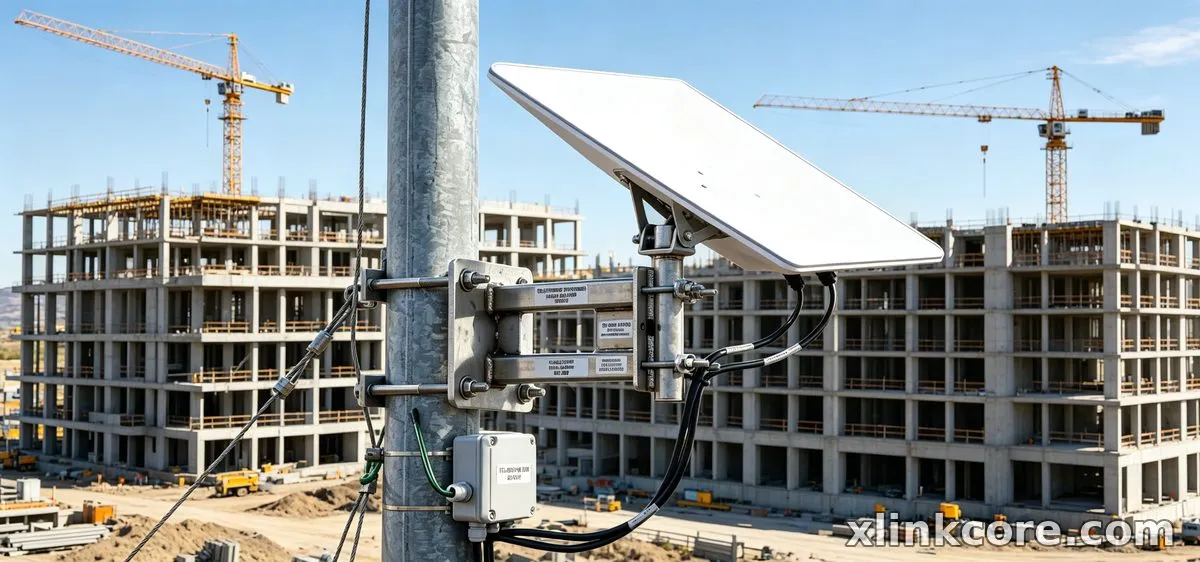
A construction site is the harshest normal environment a dish will ever see. Starlink for construction sites has to survive concrete dust, generator voltage swings, impact from equipment, and being relocated every few weeks as the build progresses. A permanent roof mount is the wrong answer here.
✓Clamp to scaffolding, a pipe mast or a site container rail instead of drilling into anything permanent.
✓Keep the dish above the dust line and out of the path of crane swings and delivery trucks.
✓Use a quick-release bracket so the terminal can come down at the end of a phase in minutes.
✓Run cable through conduit or a protected chase — loose cable is the number one field failure.
✓Seal every connector, then re-check it after each relocation.
Starlink Network Accessories manufactures clamp-style and mast-style brackets designed for exactly this kind of repeated install and teardown.
Starlink Tower Mounts and Remote Monitoring
A starlink tower mount has two jobs: hold the dish rigid in wind, and keep ice and cable load off the connectors. On a tower or rooftop, wind loading is the dominant force, so a mount that flexes will produce constant micro-outages. Bolt to structural steel where possible, use a backing plate on thin-walled sections, and add a drip loop so water runs off the cable before it reaches the dish.
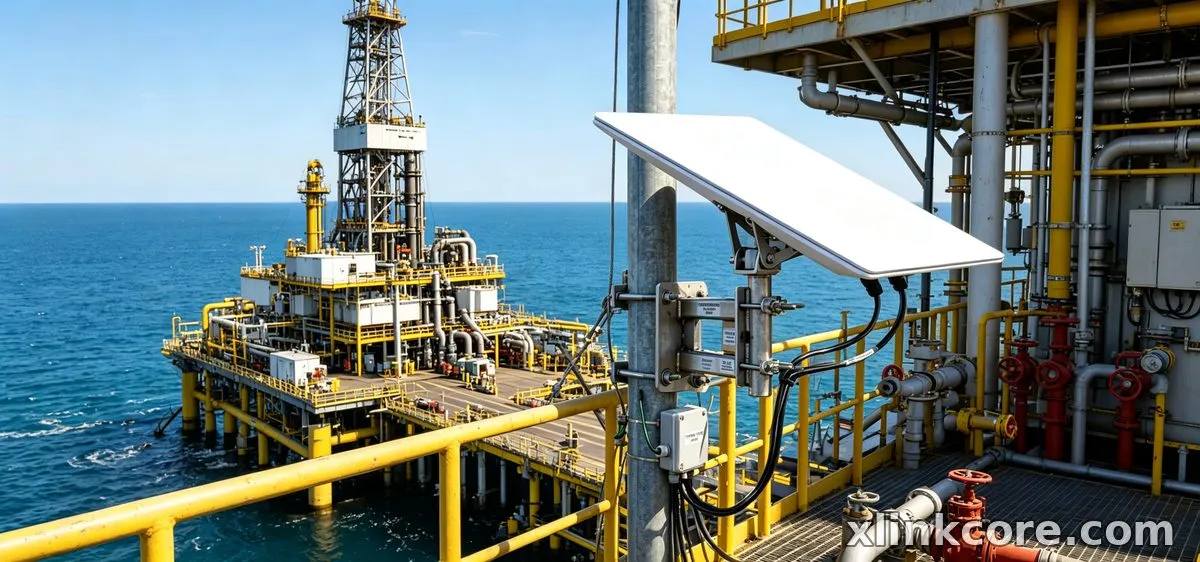
Starlink remote monitoring is where the payoff shows up. Camera sites, RTUs, pump controllers and security trailers all depend on an uplink that stays up when nobody is on site. That means a mount you can inspect from the ground, a cable route you can trace, and a power design that survives a mains failure. Our industrial deployment notes cover the full checklist for unattended sites.
Starlink for Oil and Gas, and Mining Operations
Starlink for oil and gas work brings a different problem set: hydrocarbon vapour, salt spray from coastal pads, washdowns, and vibration from compressors and pumps. Starlink for mining operations adds blasting shock, haul-truck traffic and abrasive dust that finds every thread. An industrial Starlink antenna mount in these environments should use stainless hardware throughout, a powder-coated or marine-grade finish, and no moving parts that can seize.
On the coast or offshore, treat the install as a marine job and use saltwater-rated hardware; inland, clean and re-torque fasteners on a scheduled interval rather than waiting for corrosion to announce itself.
Power: The Weakest Link on a Remote Job Site
More industrial Starlink incidents trace back to power than to mounting. Generator drop-outs, brownouts during welding, and undersized 12V runs all cause reboots and re-acquisition delays that look like a network problem. Where mains is unreliable, put the terminal on a dedicated supply with battery backup, keep DC cable runs short and correctly gauged, and test the whole path under load. The full comparison of options sits in our Starlink power guides, including DC conversion and battery sizing.
✓Isolate the dish from welding and motor loads.
✓Size battery backup for a full shift, not a few minutes.
✓Label and weatherproof every DC joint.
Rugged Starlink Accessories and Cable Discipline
Rugged Starlink accessories are not cosmetic upgrades — they are the difference between a two-year service life and one storm season. Look for strain relief at the dish end, UV-stable jackets on exposed cable, sealed glands at every penetration, and connectors that are properly potted rather than wrapped. XLinkCore rugged accessories are built with these details in mind, and the XLinkCore range of adapters, cable assemblies and enclosures is sized to match common industrial enclosure layouts.
For entry-point detail, our installation guides walk through sealing, drip loops and grounding step by step.
Manufacturing, Testing and Supply
Consistency is what matters when you are fitting the same bracket to fifty sites. Shenzhen Starlink Network Accessories Co., Ltd. operates a 5,000 m2 factory with 25 injection molding machines and 15 welding machines, supported by 200 patented molds. The product line covers 80+ models, from pole and tower brackets to power adapters, with monthly production capacity of 400,000–600,000 units and an annual export value of roughly 20–30 million USD. Products are certified 3C / CE / FCC / PSE.
Every XLinkCore product leaves that line, and Starlink Network Accessories supports integrators who need consistent parts across repeat deployments rather than a single one-off order.
Specifying an Industrial Starlink Kit
From first sketch to final QC, Starlink Network Accessories keeps quality at the center.
Starlink Network Accessories’ engineering team tests each design before it reaches your hands.
Start with the environment, not the catalogue. Decide whether the site is attended or unattended, whether the dish will be fixed or moved, and what the wind and chemical exposure look like. Then choose an XLinkCore mount matched to the surface, XLinkCore cable hardware matched to the route, and a power path matched to the local grid. Compare options in our buying guides before you order.
Shenzhen Starlink Network Accessories Co., Ltd. builds for that specification process, and the XLinkCore brand exists to make it easier to standardise. Pick hardware once, install it properly, and your industrial Starlink link will keep working long after the site trailers have moved on.
Need the Right Accessories for Your Setup?
Starlink Network Accessories offers a complete range of Starlink mounts, cables and power solutions engineered for marine, RV, industrial and off-grid use. Contact our team for bulk orders or custom OEM/ODM solutions.
Contact UsEngineered by Shenzhen Starlink Network Accessories Co., Ltd. — Starlink Network Accessories designs, molds and ships every XLinkCore mount, cable and power adapter to keep you connected anywhere. For related guidance, see heavy-duty Starlink mounting options.
