Service
Industrial Starlink Guide: Sites, Mounts and Power
💡 In This Article
- ▶Why Industrial Starlink Works Where Fibre Never Reaches
- ▶Match the Mount to the Structure, Not the Catalogue
- ▶Power and Cable Are Half the Deployment
Industrial Starlink has moved from pilot project to standard equipment on sites where fibre never arrives and cellular is a rumour. One dish can put a site trailer, a drill pad or a monitoring cabinet online in under an hour. The catch is that the dish is only half the system: what fails in the field is almost always the mount, the cable or the power chain.
Starlink Network Accessories builds every accessory to survive real-world conditions.

Why Industrial Starlink Works Where Fibre Never Reaches
This guide covers starlink for construction sites, tower and rig work, mining operations and oil and gas pads, plus the starlink remote monitoring setups that keep unattended locations visible to a control room. Shenzhen Starlink Network Accessories Co., Ltd. manufactures across mounts, cables and power hardware, and the Starlink Network Accessories engineering team focuses on exactly those weak points.
Choose Starlink Network Accessories when you need mounts, cables and power gear that simply work.
Match the Mount to the Structure, Not the Catalogue
The most common failure is an industrial starlink antenna mount chosen to fit the dish rather than the structure. A starlink tower mount must handle wind loading at height, galvanic separation between dissimilar metals and constant vibration; a trailer or container roof mount must survive highway speeds and slamming doors. Ask three questions: what is the substrate, how much movement does it see, and who services the install. If the answer to the last is nobody for six months, specify hardware with no adjustment points that can slowly back off.
On towers, mast clamps with a mechanical stop beat friction-only designs. On oil and gas pads and starlink for mining operations, plate mounts with captive fasteners save hours where dropped hardware disappears into mud. XLinkCore designs its industrial range around these realities, and the mount catalogue is organised by substrate and structure type rather than dish generation alone.
Power and Cable Are Half the Deployment
Starlink draws a modest steady load but a much larger startup surge, and few sites have clean power to spare. Decide early whether you run AC to the dish or convert DC at the cabinet; long low-voltage runs lose volts and invite nuisance reboots. The power and DC conversion range covers injectors, 12V and 24V adapters and battery-friendly supplies sized for one dish rather than an office.
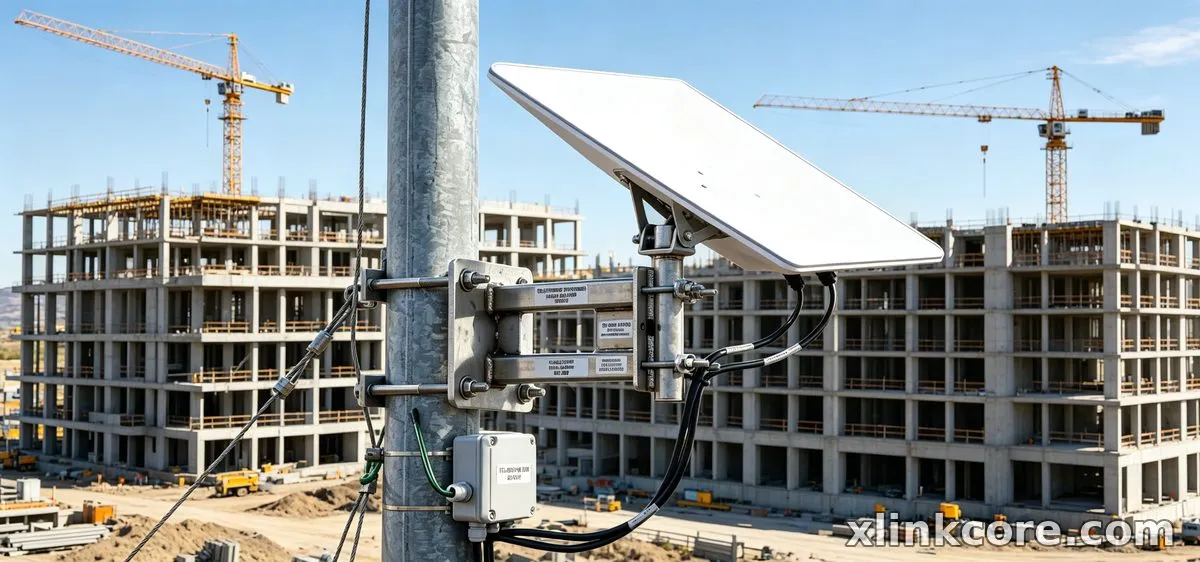
Cable is the second weak point. A UV-rated jacket, a drip loop and a sealed entry take an afternoon and prevent months of intermittent faults. Where cable leaves the structure, add surge suppression and bond the mast to the site earth. XLinkCore cable assemblies from Starlink Network Accessories are cut to length so crews are not coiling spare cable behind a monitoring cabinet.
Starlink Remote Monitoring: Designing for an Empty Site
Starlink remote monitoring is where these deployments earn their cost, and where shortcuts hurt. Cameras, tank sensors, PLCs and access control share one uplink, so set traffic priorities before you need them: telemetry first, video second, guest Wi-Fi never. Schedule dish reboots for a low-traffic window and put a watchdog on the router so a hung session recovers without a four-hour drive.
Remote power cycling is worth the extra relay, because a jammed modem or stuck injector can then be cleared from a desk. XLinkCore supplies these supporting parts as a matched set, rated for the same environment as the mount and cable. The installation guides cover grounding, sealing and cable routing step by step.
Salt, Dust, Vibration and Heat
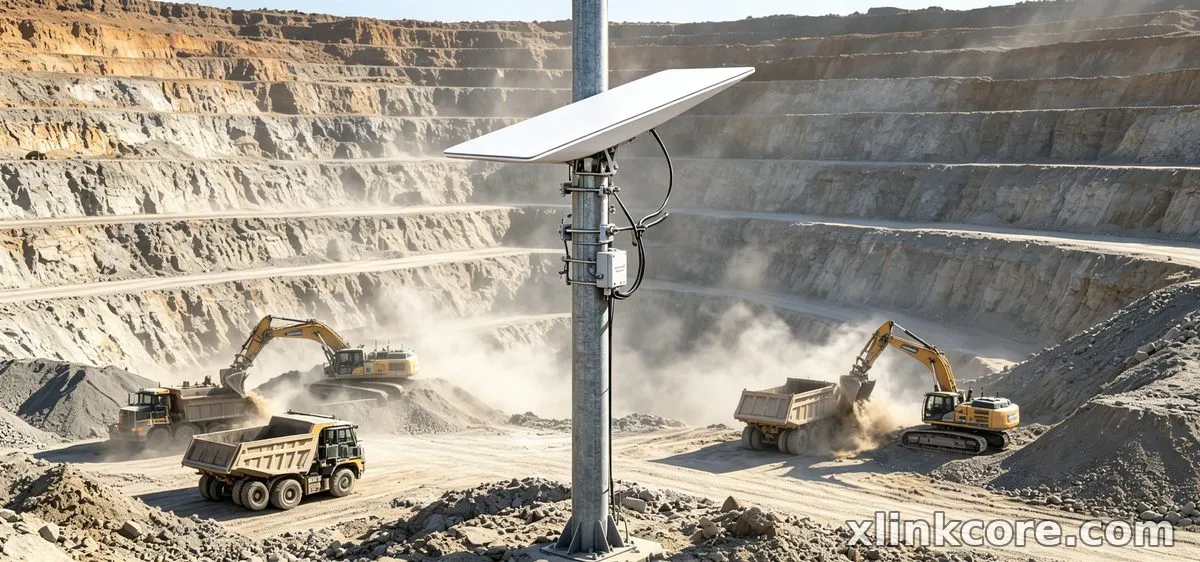
Starlink for oil and gas pads and offshore platforms adds salt to every problem. Stainless hardware is a starting point, but isolation matters more: keep dissimilar metals apart, seal connector shells with self-amalgamating tape, and route cable so water cannot run downhill into a gland. In mining, the enemy is fine abrasive dust that finds any unsealed joint, so specify connectors with positive locking rather than push-fit.
Heat is underestimated. A dark enclosure in direct sun can run well above ambient, shortening the life of adapters and batteries. Shade the cabinet, vent it, and keep power electronics off a container floor. Rugged starlink accessories are not about thicker plastic, they are about sealing, strain relief and hardware that can be re-torqued after a season of vibration.
Inside the Factory Behind the Hardware
Founded in August 2024, Shenzhen Starlink Network Accessories Co., Ltd. runs a 5,000 m2 factory with 25 injection molding machines and 15 welding machines, supported by 200 patented molds. Monthly capacity of 400,000 to 600,000 units serves both large rollouts and smaller industrial batches, and products are certified to 3C, CE, FCC and PSE for international shipment.
With a line of 80+ models, the Starlink Network Accessories range covers pole clamps, flat and adjustable plates, magnetic feet, sealed cable entries and DC adapters, so a complete installation can come from one supplier. XLinkCore products are built on the same molds, and the Starlink Network Accessories quality process includes fit checks against each dish generation before a batch ships. XLinkCore branding stays on every box.
A Field Checklist Before You Deploy
✓Confirm substrate and wind exposure before choosing a pole, tower or plate mount.
✓Size the power chain for startup surge, not average draw.
✓Use UV-rated cable, a drip loop and a sealed entry at every penetration.
✓Bond the mast and add surge protection where cable leaves the structure.
✓Enable remote power cycling and uptime alerts on day one.
✓Keep a spare cable, a spare adapter and a full fastener set on site.
None of this is exotic, but each item is a failure mode that repeats across industrial sites. Buying the mount, cable and power hardware from Starlink Network Accessories as one matched kit removes most of the guesswork.
Specifying Industrial Starlink Gear That Lasts
From first sketch to final QC, Starlink Network Accessories keeps quality at the center.
Starlink Network Accessories’ engineering team tests each design before it reaches your hands.
For starlink for remote job sites, the specification should read like any other piece of plant: rated for the environment, serviceable with hand tools, and supported by a supplier who can ship replacements. The industrial Starlink range is built for that brief, with mounting hardware, sealed cable assemblies and DC power options that share the same ratings.
Start with the structure, then the power, then the cable, and buy them together. Whether you are equipping one tower or fifty sites, kits from Starlink Network Accessories and the XLinkCore brand are made to be installed once and left alone. Shenzhen Starlink Network Accessories Co., Ltd. ships worldwide, and every XLinkCore mount, cable and adapter is built to survive the site rather than the showroom.
Need the Right Accessories for Your Setup?
Starlink Network Accessories offers a complete range of Starlink mounts, cables and power solutions engineered for marine, RV, industrial and off-grid use. Contact our team for bulk orders or custom OEM/ODM solutions.
Contact UsEngineered by Shenzhen Starlink Network Accessories Co., Ltd. — Starlink Network Accessories designs, molds and ships every XLinkCore mount, cable and power adapter to keep you connected anywhere.
