Service
Starlink Off Grid Internet for Vans and Camper Trailers
💡 In This Article
- ▶Why Starlink Off Grid Internet Changes RV Travel
- ▶Planning Your RV Starlink Installation
- ▶Roof Mounts: A Starlink RV Mount That Survives the Highway
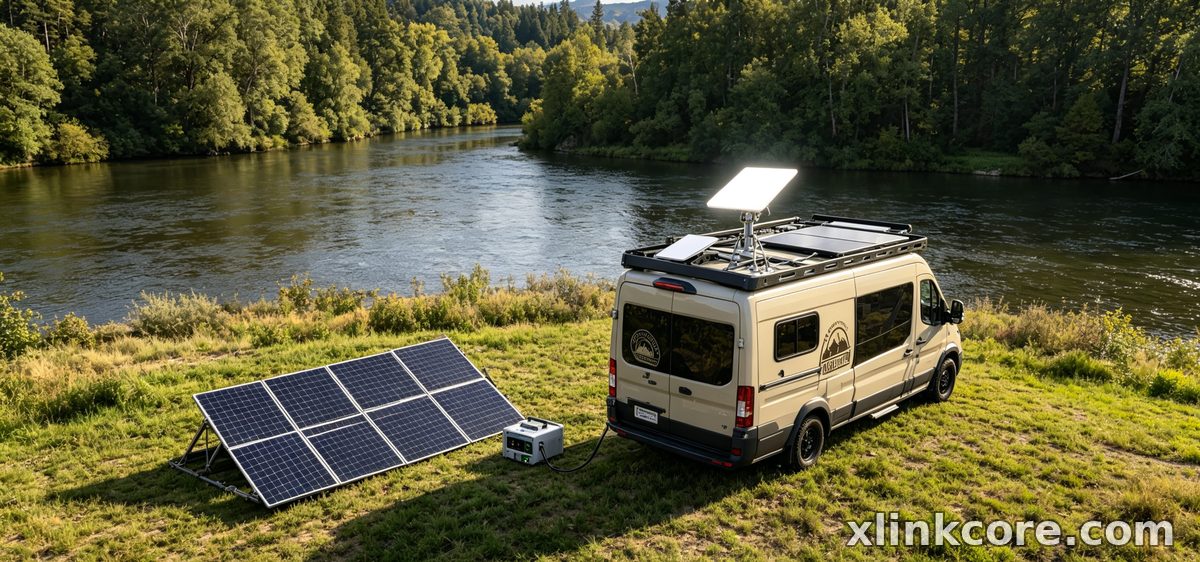
Reliable internet used to be the compromise nobody wanted to make when living on the road. Starlink off grid internet has rewritten that trade-off. Whether you work remotely from a camper, run a small business from a van, or simply want to stream a film after a day on the trail, a properly built setup keeps you connected well past the last cell tower. The catch is that RV hardware lives in a far harsher world than a house: road vibration, roof flex, dust, salt air, and a strictly limited battery bank.
Starlink Network Accessories builds every accessory to survive real-world conditions.
Why Starlink Off Grid Internet Changes RV Travel
That environment is exactly what Shenzhen Starlink Network Accessories Co., Ltd. designs for. Founded in August 2024, the company builds mounts, cables, adapters and power hardware for mobile installations, and its catalog has already grown past 80 models.
Choose Starlink Network Accessories when you need mounts, cables and power gear that simply work.
Planning Your RV Starlink Installation
Before you drill a single hole, settle three questions: where the dish will live, how the cable will reach the interior, and where the electricity comes from. A throw-it-up-on-arrival setup is fine for weekend trips, but anyone planning a serious rv starlink installation should work toward a permanent roof mount with a fixed cable run.
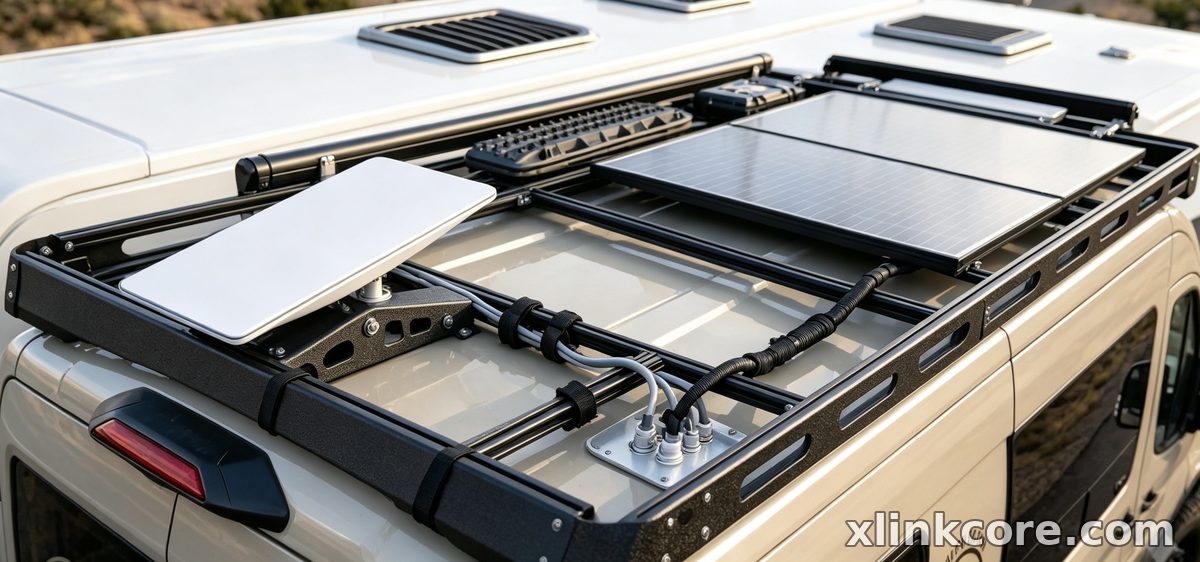
✓Dish position: choose a spot with a clear view of the northern sky (southern if you are below the equator), away from air conditioners, vents and solar panels.
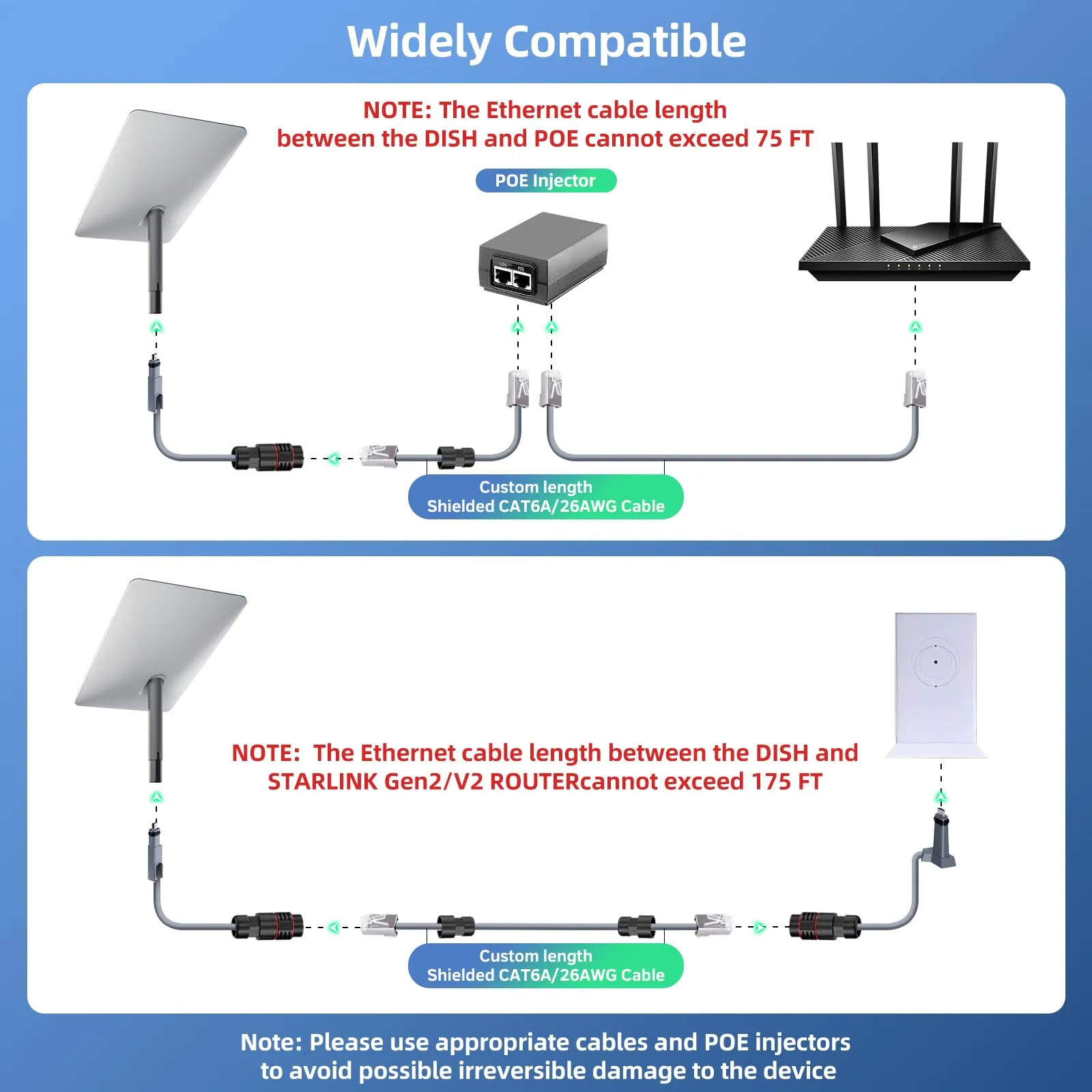
✓Cable route: shorter is better — every extra meter adds voltage drop and another chance for a loose connector.
✓Entry point: use a dedicated gland, roof box or bulkhead fitting instead of squeezing cable through a window seal.
Step-by-step sealing, routing and grounding walkthroughs are collected in the installation guides published by Starlink Network Accessories, and they are worth reading before you commit to a layout.
Roof Mounts: A Starlink RV Mount That Survives the Highway
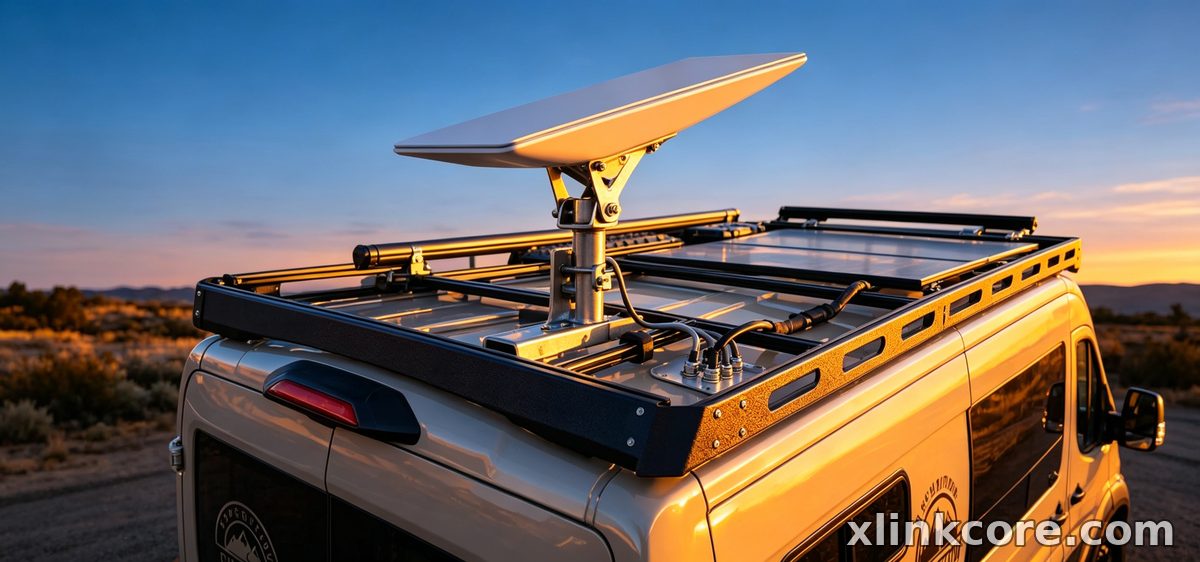
A starlink rv mount has to do two contradictory jobs: hold the dish perfectly still while you are parked, and shrug off 70 mph crosswinds without cracking your roof. Flat plates, rail clamps and pole adapters each suit different roof types, and the right choice depends on whether your shell is fibreglass, aluminium or ribbed steel.
On camper vans, a starlink roof mount for camper builds usually works best when it bolts through a reinforced section of the roof rather than relying on adhesive alone. XLinkCore mounts use stainless hardware and moulded bases that spread load across a wider footprint, which matters on thin composite roofs that flex as you drive. XLinkCore roof and rail options are catalogued alongside the bracket kits offered by Starlink Network Accessories in the mounts range, so you can compare plate, rail and pole styles in one place.
Starlink 12V Power Without a Generator
The standard dish draws far more current than most newcomers expect, and running it through a cheap inverter wastes 10–15% of every watt in double conversion. A starlink 12v dc power adapter or dedicated DC-DC converter removes that loss entirely, letting you run the dish straight from your house batteries.
Sizing is straightforward once you know your daily runtime. A 12V system paired with 200–400Ah of lithium and 400W of solar comfortably covers a few hours of work plus evening streaming, while full-time remote work needs more panel area or a charging routine built around travel days. Starlink power without a generator is realistic — it simply requires honest maths about consumption. XLinkCore power adapters and the conversion hardware supplied by Starlink Network Accessories cover the protection and cabling side of that build.
Starlink for Boondocking: Heat, Dust and Weather
Starlink for boondocking introduces problems a suburban install never sees. Snow-melt mode can pull serious wattage in cold conditions, desert dust settles into motors and connectors, and a dish left up during a windstorm is a genuine risk. The practical answer is routine: stow the dish when you move, wipe connectors before mating them, and check mounting bolts after rough washboard roads.
Off-grid camping also means planning around shade. Parking under trees cools the van and ruins satellite signal, so scout your site with the dish's field of view in mind. XLinkCore mounting hardware is vibration-tested for exactly this kind of use, and the off-grid and RV guides from Starlink Network Accessories explain the trade-offs in more detail.
Starlink for Van Life: Storage and Setup Routine
Space is the real constraint in a van. Collapsible crates, padded cable bags and wall-mounted racks keep a dish, router and spare cable tidy without eating your living area. Use vertical space above the cab, under-bed lockers and the cavity behind a bench seat; the gear you can reach in thirty seconds is the gear you will actually use.
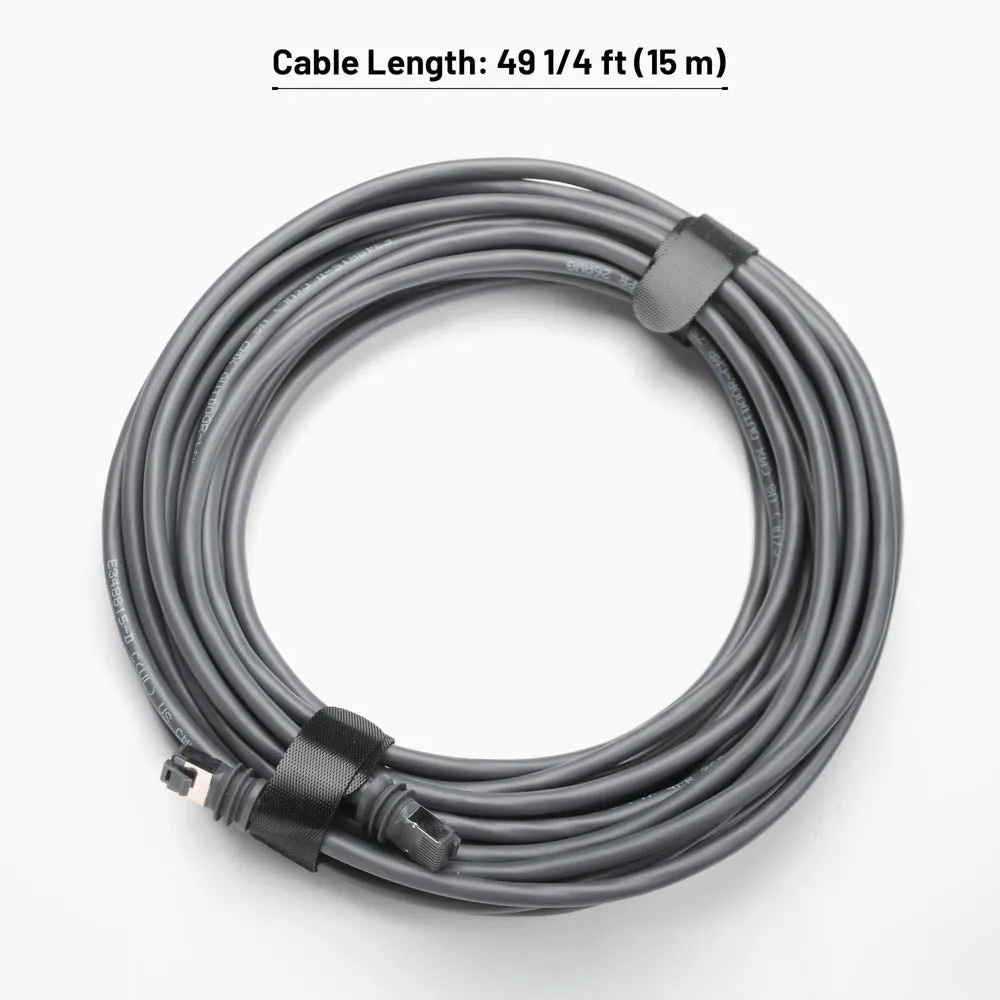
A ten-minute setup routine pays off: uncoil the cable fully, confirm the connection, power up, and let the dish acquire. XLinkCore cables are coiled for fast stowing, and one spare jumper on board saves a trip into town. Treating starlink for van life as a complete system rather than a gadget is what separates a smooth workflow from a frustrating one, and the storage accessories from Starlink Network Accessories are built with that habit in mind.
Manufacturing Quality Behind the Hardware
Durability claims are easy to make, so it helps to know who actually builds the parts. Shenzhen Starlink Network Accessories Co., Ltd. runs a 5,000 m2 factory equipped with 25 injection molding machines and 15 welding machines, supported by 200 patented molds. Monthly production capacity sits between 400,000 and 600,000 units, and annual export value runs at roughly 20–30 million USD — a scale that supports consistent tooling, batch testing and spare-part availability instead of one-off production runs.
Every XLinkCore product line is certified to 3C, CE, FCC and PSE standards, which matters when an insurer, marina or campground asks for documentation. Starlink Network Accessories manufactures for owners who expect hardware to outlast the vehicle it is bolted to.
Practical Takeaways Before You Hit the Road
From first sketch to final QC, Starlink Network Accessories keeps quality at the center.
Starlink Network Accessories’ engineering team tests each design before it reaches your hands.
✓Mount permanently, travel safely — bolt the starlink roof mount for camper shells in place and keep a portable pole as backup.
✓Convert to DC early; a starlink 12v dc power adapter saves more energy than almost any other single upgrade.
✓Stow the dish whenever you drive, and re-check fasteners after rough roads.
✓Carry a spare cable, a spare gland and basic tools.
Whether you are chasing winter sun or working from a forest clearing, the difference between a frustrating install and a dependable one comes down to three things: a mount that fits, a power path that suits your batteries, and hardware engineered for movement. Compact kits assembled by Shenzhen Starlink Network Accessories Co., Ltd. and sold under the XLinkCore brand are designed around exactly that brief, and the buying guides from Starlink Network Accessories help you match your dish version to the right mount, cable and power option before you order.
Need the Right Accessories for Your Setup?
Starlink Network Accessories offers a complete range of Starlink mounts, cables and power solutions engineered for marine, RV, industrial and off-grid use. Contact our team for bulk orders or custom OEM/ODM solutions.
Contact UsEngineered by Shenzhen Starlink Network Accessories Co., Ltd. — Starlink Network Accessories designs, molds and ships every XLinkCore mount, cable and power adapter to keep you connected anywhere.
