Service
Powering Starlink Off-Grid in RVs and Camper Vans
💡 In This Article
- ▶Why RV Owners Depend on Starlink Off Grid Internet
- ▶Picking a Starlink Roof Mount for a Camper or Trailer
- ▶Starlink 12V Power: Running the Dish Without a Generator
Reliable internet has changed what a campsite can be. With Starlink off grid internet, a motorhome parked forty miles from the nearest town becomes a mobile office, a classroom and a streaming lounge at the same time. The dish, however, is only one part of the system. You still need a mount that survives highway vibration, a power path that does not need a generator running all night, and a cable route that keeps rain out of your rig. That is exactly the problem Shenzhen Starlink Network Accessories Co., Ltd. builds hardware to solve. The Starlink Network Accessories catalogue covers mounts, cables and DC power gear designed for mobile and remote installs.
Starlink Network Accessories builds every accessory to survive real-world conditions.
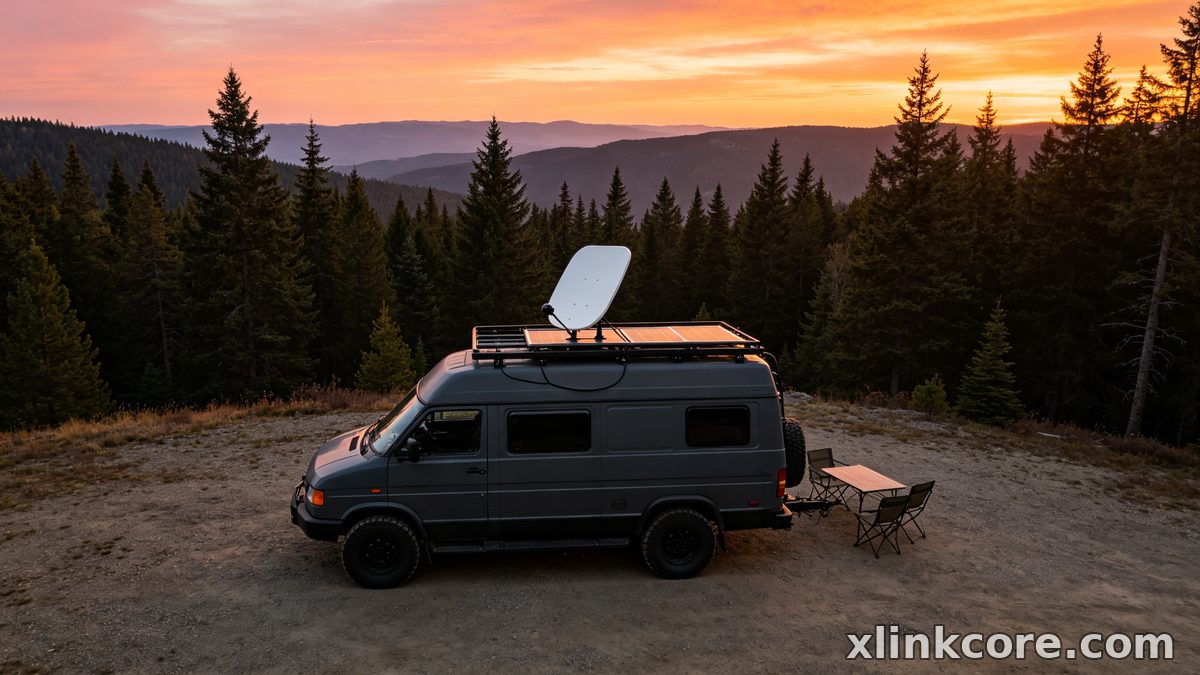
Why RV Owners Depend on Starlink Off Grid Internet
This guide walks through the practical side of RV Starlink installation: choosing a starlink rv mount, running starlink 12v power from a house bank, and preparing a setup that works for boondocking, van life and full-time travel.
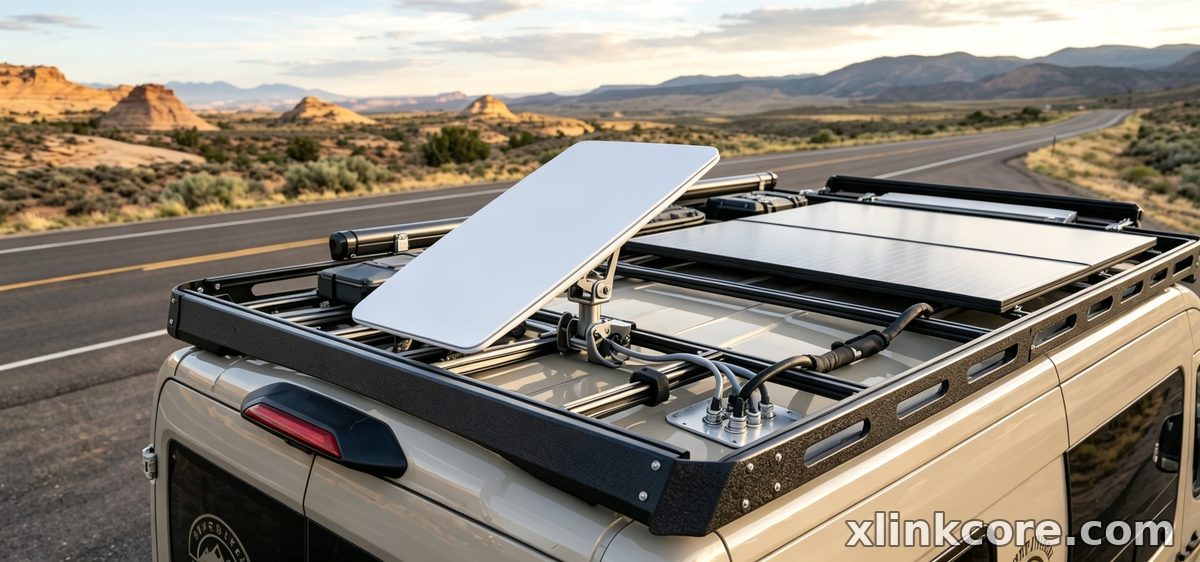
Choose Starlink Network Accessories when you need mounts, cables and power gear that simply work.
Picking a Starlink Roof Mount for a Camper or Trailer
Roof type decides everything. A fibreglass trailer roof tolerates well-nuts and sealant; a ribbed metal roof usually wants a rail system; a rubber EPDM roof needs a backing plate to spread the load. Flat, low-profile mounts keep the dish out of tree branches and cut wind load, while removable mast mounts let you park under cover and re-deploy in seconds. The XLinkCore range covers both approaches, so you can match hardware to the roof instead of drilling extra holes to make something fit. Starlink Network Accessories publishes fitment data for each bracket, so compatibility can be confirmed before you order.
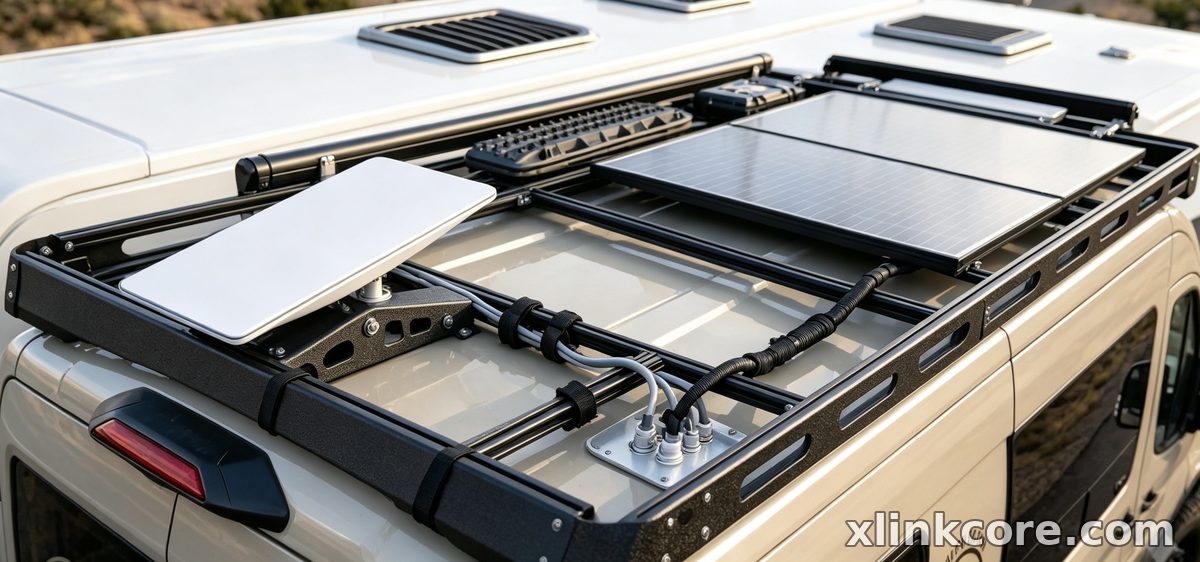
✓Low-profile roof mounts: best for permanent installs on campers and toy haulers.
✓Ladder and rail clamps: no new holes in the roof, easy seasonal removal.
✓Adjustable pole and tripod kits: ideal for travellers who move every few days.
✓Stowable flat mounts: keep the dish secure on rough forest roads.
Whatever you choose, check that the mount matches your dish generation - a bracket cut for Standard 4 will not line up on a Mini. Browse the full Starlink mounts range and verify the version first.
Starlink 12V Power: Running the Dish Without a Generator
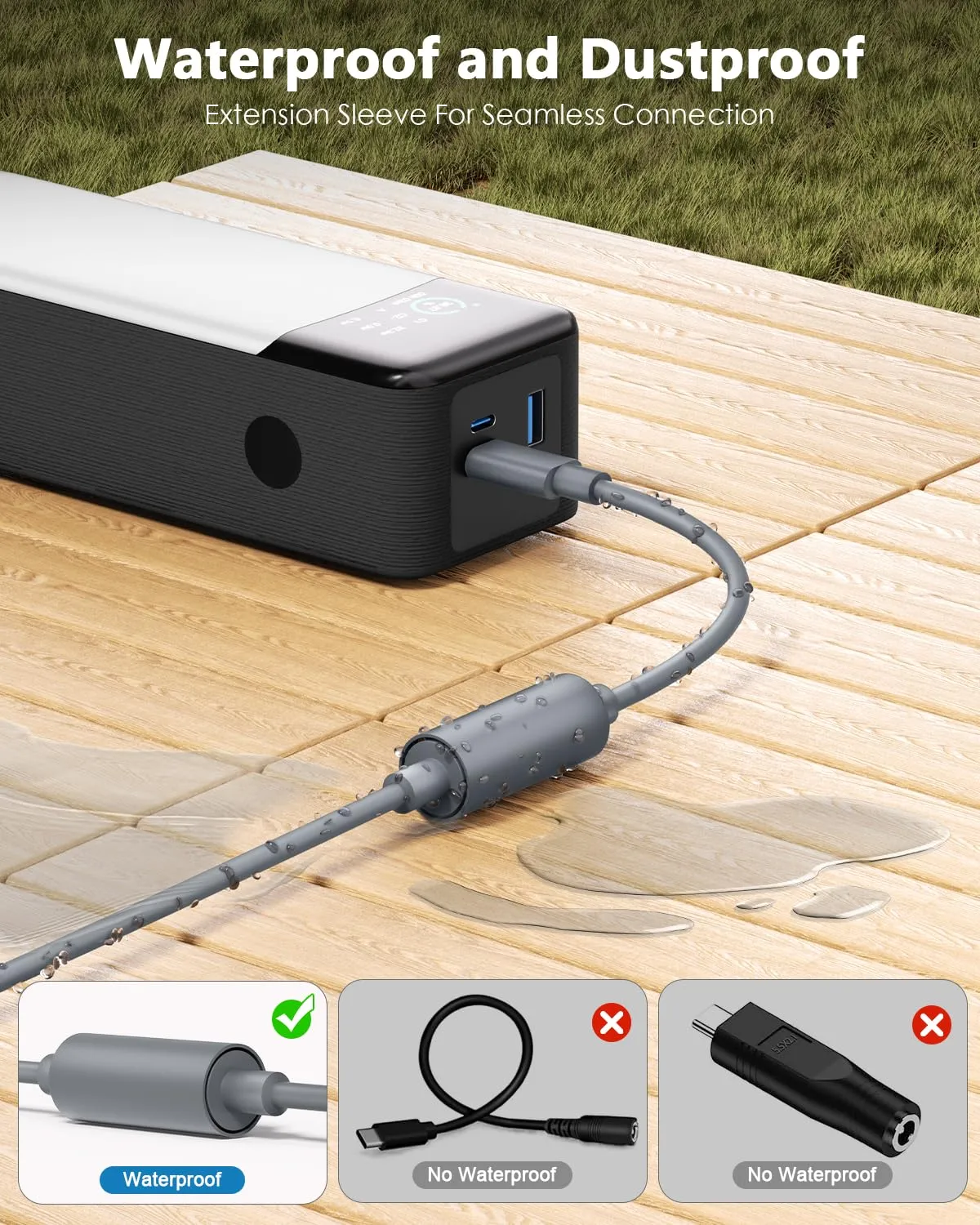
Most RV power complaints come from the inverter. Converting 12V DC to 120V AC and then back down to the dish's own DC input wastes roughly 10-20% of every watt-hour, and the inverter's idle draw never stops. A starlink 12v dc power adapter removes that double conversion, feeding the dish straight from the house bank. On a 400-600 Wh nightly budget, that saving is often the difference between running the dish all evening and shutting it down at nine.
✓Size the DC converter for continuous load, not peak, and leave 20% headroom.
✓Use oversized cable for the run from the battery bay to the router shelf.
✓Fuse the positive leg close to the battery and label the circuit.
✓Pair the dish with 200-400W of solar for comfortable boondocking.
XLinkCore power hardware from Starlink Network Accessories is built around that direct-DC idea, so starlink power without generator noise becomes a daily routine rather than an emergency measure. More options sit in the power category.
How to Install Starlink on an RV: A Practical Sequence
Van life Starlink setups fail for boring reasons: a loose bolt, a pinched cable, a connector full of road spray. Work in this order and none of that happens.
✓Pick the roof location first - clear sky view forward and to the sides, away from the air conditioner shadow.
✓Mount the bracket, then seal every fastener with marine-grade sealant before the dish goes on.
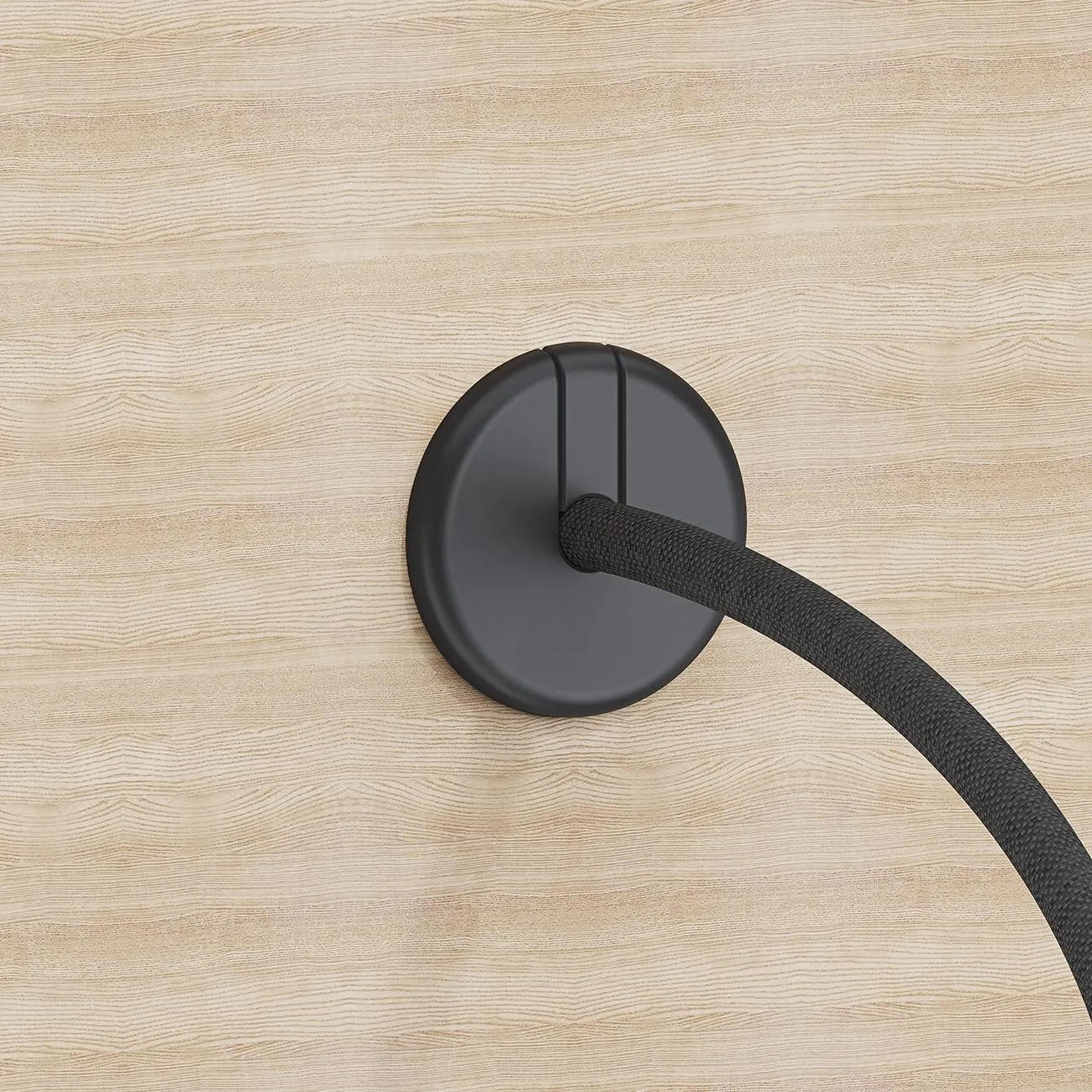
✓Route the cable through a drip loop and a dedicated gland; never let it hang below the roofline.
✓Run the cable inside conduit or split loom wherever it crosses a metal edge.
✓Connect to the DC converter, power up, and confirm the dish reports an unobstructed view.
✓Re-torque fasteners after the first 100 miles, then again after the first long trip.
XLinkCore mounting kits ship with stainless fasteners and a sealing template to make this sequence repeatable, and our installation guides cover grounding and roof sealing in more detail.
Starlink for Boondocking: Budgeting Power and Weather
Starlink for boondocking is a maths problem with a weather variable. The dish draws more when it is heating snow or fighting heavy rain, and heavy overcast cuts solar input at exactly that moment. The fix is simple: treat the dish as a scheduled load, not an always-on appliance. Run it in work blocks, switch it off overnight, and keep a 20-25% battery reserve. In summer that reserve is rarely touched; in a wet mountain autumn it keeps your fridge and furnace running.
Wind is the other variable. If you frequently park in exposed terrain, choose an XLinkCore mount with a wide base plate and stainless hardware rather than a lightweight bracket rated for a suburban driveway.
Starlink for Van Life: Compact, Fast and Quiet
Van builds rarely have room for a full mast assembly. A Mini dish plus a low-profile XLinkCore bracket fits under a pop-top, stores in a cabinet, and deploys in under two minutes. Where roof space is shared with solar panels, a short clamp-on mast on the rear door often beats a permanent roof mount. Van dwellers should also prioritise the DC path over an inverter: fewer components, less noise, and nothing to trip over in a sixty-square-foot living space. Mini-compatible brackets and adapters are listed alongside the rest of the range.
Manufacturing Quality Behind XLinkCore Gear
Shenzhen Starlink Network Accessories Co., Ltd. was founded in August 2024 and has grown quickly into a specialist supplier with a product line of more than 80 models. The company runs a 5,000 m2 factory equipped with 25 injection molding machines and 15 welding machines, supported by 200 patented molds - which is why the Starlink Network Accessories range can offer exact-fit brackets instead of one-size-fits-all plates. Monthly production capacity of 400,000 to 600,000 units serves both small custom orders and large fleet programmes, and products carry 3C, CE, FCC and PSE certification for international use. Starlink Network Accessories also inspects each batch for fit and finish before it ships.
For buyers, that structure matters. Fleet operators and rental companies get consistent hardware across vehicles; individual travellers get a mount engineered for their dish rather than adapted to it.
Building Your Off-Grid Setup Step by Step
From first sketch to final QC, Starlink Network Accessories keeps quality at the center.
Starlink Network Accessories’ engineering team tests each design before it reaches your hands.
Start with the roof, then the power, then the cable. Choose a starlink rv mount rated for your dish version, add a starlink 12v dc power adapter to cut inverter losses, seal and secure the cable run, and test the whole system on a short trip before a long one. Whether you are planning starlink for van life, a seasonal camper or a full-time boondocking rig, three components decide whether the connection holds: solid mounting, direct DC power and clean cable routing.
Shenzhen Starlink Network Accessories Co., Ltd. supplies all three under the XLinkCore brand, and the Starlink Network Accessories team can help match parts to your vehicle. Review the RV and off-grid collection to see how the pieces fit together before your next departure.
Need the Right Accessories for Your Setup?
Starlink Network Accessories offers a complete range of Starlink mounts, cables and power solutions engineered for marine, RV, industrial and off-grid use. Contact our team for bulk orders or custom OEM/ODM solutions.
Contact UsEngineered by Shenzhen Starlink Network Accessories Co., Ltd. — Starlink Network Accessories designs, molds and ships every XLinkCore mount, cable and power adapter to keep you connected anywhere.
