Service
Starlink Power Options: PoE, 12V, Solar and USB-C PD
💡 In This Article
- ▶Why Starlink Power Planning Comes First
- ▶Starlink PoE and Power Over Ethernet Explained
- ▶12V and 24V DC Conversion for Vans, Boats and Trailers
Every Starlink dish is only as reliable as the power feeding it. Whether you are running a Standard dish on a house, a Mini in a camper, or several terminals on a workboat, the chain from socket to dish decides how often the link stays up. Shenzhen Starlink Network Accessories Co., Ltd. was founded in August 2024 to address exactly that gap, building a product line of 80+ models that covers mounts, cables and the power hardware in between. Under the XLinkCore brand, the company concentrates on the parts people usually discover too late — after a stock adapter has corroded in the rain or a 12V feed has browned out mid-call.
Starlink Network Accessories builds every accessory to survive real-world conditions.


Why Starlink Power Planning Comes First
There are four common ways to power a dish: PoE injection, 12V or 24V DC conversion, battery and inverter systems, and USB-C PD for the Mini. Each has a clear place. Mixing them up without checking voltage, current and connector ratings is the fastest route to a dead terminal, so the sections below explain what each approach actually does. You can browse the full Starlink power category for hardware that matches these methods.
Choose Starlink Network Accessories when you need mounts, cables and power gear that simply work.
Starlink PoE and Power Over Ethernet Explained
Starlink PoE is often misunderstood. The dish does not accept ordinary 802.3af or 802.3at power like an office phone; it needs a proprietary higher-wattage feed delivered over the same cable that carries data. When people ask for starlink power over ethernet explained, the practical answer is this: a dedicated injector takes a DC input and pushes the correct voltage up the dish cable, while data returns to your router on a separate port. The stock Starlink router and supply do this in one box, but replacing that box with a proper injector is what lets you run the dish from a 48V battery bank or a vehicle circuit.
✓Use an injector rated for the specific dish generation — Standard, Mini and Enterprise do not share the same power profile.
✓Keep cable runs short where possible; voltage drop on long, thin runs causes reboots during cold weather when the dish draws more current.
✓Choose shielded, outdoor-rated cable with moulded connectors rather than field-terminated ends.
XLinkCore PoE hardware is built around these constraints, with weather-sealed housings and connectors that survive repeated plugging. Pair it with the right installation guide so the injector sits indoors or in a dry enclosure, not under a dripping eave.
12V and 24V DC Conversion for Vans, Boats and Trailers
For mobile setups, the most common question is how to power Starlink with 12V. A starlink 12v power supply is essentially a DC-to-DC converter that lifts a nominal 12V house bank to the voltage the dish expects, while limiting current so a cigarette-style plug does not overheat. Direct wiring to a fused bus is always better than a plug-in socket, and 24V systems on boats and trucks usually need a step-down stage instead.
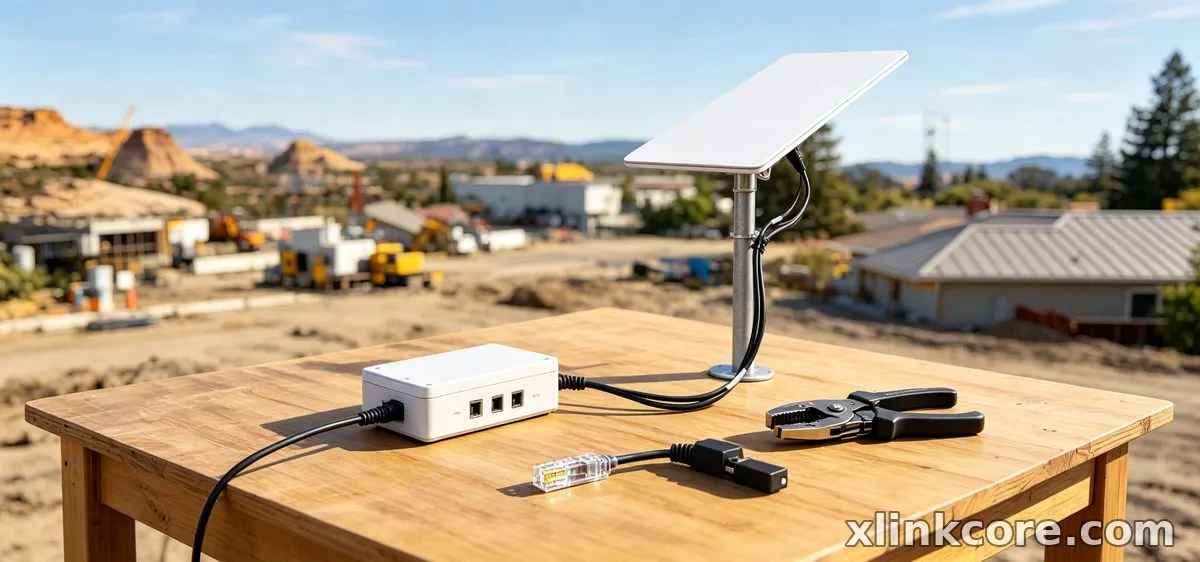
Runtime and cable gauge matter as much as the converter. A dish that pulls around 50–75W in normal operation will draw noticeably more during snow melt or heavy rain, so size fuses and wiring for the peak, not the average. Starlink Network Accessories' DC range includes fused harnesses and sealed converters designed for these loads, and the XLinkCore line adds strain relief at the connector — the point where most mobile installs fail first.
USB-C PD and the Starlink Mini
The Mini changed the conversation because it can run from a high-wattage USB-C PD source. A starlink mini 100w usb-c supply needs to genuinely deliver 100W over an EPR-capable cable; many chargers advertise the wattage but fall back to 60W or less under load, which causes dropouts. Look for clear PD 3.1 EPR labelling, short and thick cables, and a power bank or car charger that sustains the draw rather than peaking briefly.
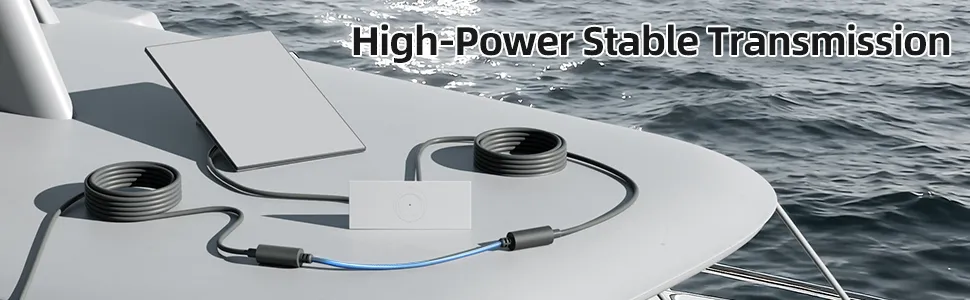
Starlink usb-c pd setups are ideal for hikers, motorcycle travellers and small boats where a full DC system is overkill. XLinkCore Mini power accessories are tested for continuous output, not just a spec-sheet burst. If you are still deciding between dish sizes, the Mini product section covers the trade-offs in range and power draw.
Starlink Backup Power: Batteries and Inverters
Starlink backup power usually means one of two designs: a DC battery bank feeding an injector directly, or a battery-plus-inverter arrangement that recreates mains power. The DC route is more efficient because it skips a double conversion, but it requires the right injector and voltage. The inverter route is simpler to wire but wastes 10–20% of stored energy as heat.
To size a starlink battery backup, multiply the dish's average draw by the hours you need it online, then add headroom for cold weather, snow melt and router consumption. A 100Ah lithium bank will comfortably carry a Standard dish through a working day, while a Mini on USB-C PD can run far longer from a much smaller pack. Shenzhen Starlink Network Accessories Co., Ltd. supplies power components for both designs, and the XLinkCore brand keeps connector types consistent so you are not hunting for adapters at the last minute.
Building a Starlink Solar Power Setup
A starlink solar power setup is only as good as its weakest stage. Panels charge a battery through an MPPT controller, the battery feeds a DC converter or inverter, and the dish draws from there. Estimate daily watt-hours first, then add 30% for cloudy days and conversion losses. A 400W panel array is a realistic starting point for year-round off-grid use with a Standard dish; Mini users can often halve that.
Keep the controller and converter in a ventilated, dry space, fuse every positive run, and monitor battery voltage rather than trusting a percentage readout. XLinkCore solar-compatible converters are built for the voltage swings that occur when a controller moves between bulk and float stages. For full van and trailer layouts, see the RV and off-grid section.
Choosing the Right Starlink Power Adapter
Not every starlink power adapter is interchangeable. Check three things before buying: the dish generation it supports, the input voltage range, and the connector type. A unit that works on a Standard dish will not necessarily run a Mini, and a 24V input model will not survive a 12V system without a converter. Weather resistance is the fourth factor — outdoor-rated housings with IP-rated glands last far longer in coastal and marine environments.
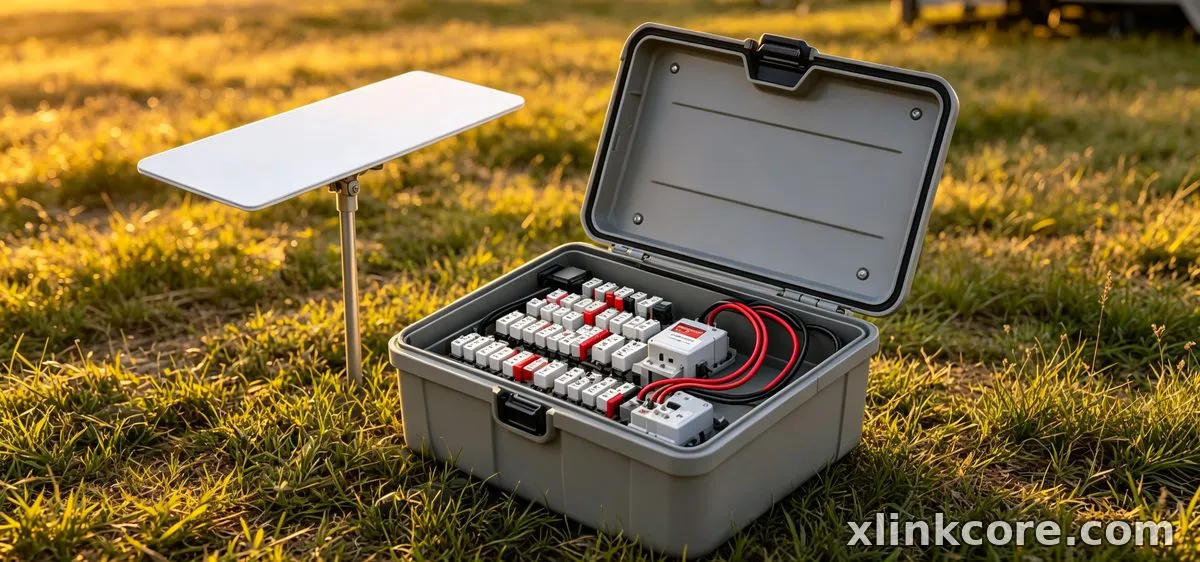
XLinkCore power adapters carry the certifications that matter for international deployment, including 3C, CE, FCC and PSE, so the same part can be shipped to different markets without rewiring. If you are comparing options across dish versions, the buying guides break down connector and voltage differences in detail.
Manufacturing Quality Behind XLinkCore Power Gear
From first sketch to final QC, Starlink Network Accessories keeps quality at the center.
Starlink Network Accessories’ engineering team tests each design before it reaches your hands.
Power accessories fail at the details: a moulded connector that cracks, a housing that lets in salt spray, a converter that overheats under continuous load. Shenzhen Starlink Network Accessories Co., Ltd. runs a 5,000 m2 factory equipped with 25 injection molding machines and 15 welding machines, supported by 200 patented moulds. Monthly production capacity of 400,000–600,000 units and an annual export value of roughly 20–30 million USD give the company the volume to supply distributors and installers without long lead times.
Every XLinkCore power product goes through the same in-house tooling and assembly process, which is why connector fit stays consistent from batch to batch. Starlink Network Accessories manufactures and tests in one facility, so design changes move quickly from prototype to production. The result is a range that covers PoE injectors, DC converters, adapters and cables under a single quality system — practical hardware for anyone who needs Starlink to stay powered, wherever the install happens to be.
Need the Right Accessories for Your Setup?
Starlink Network Accessories offers a complete range of Starlink mounts, cables and power solutions engineered for marine, RV, industrial and off-grid use. Contact our team for bulk orders or custom OEM/ODM solutions.
Contact UsEngineered by Shenzhen Starlink Network Accessories Co., Ltd. — Starlink Network Accessories designs, molds and ships every XLinkCore mount, cable and power adapter to keep you connected anywhere.
