Service
Marine Starlink Mounts That Beat Salt and Spray
💡 In This Article
- ▶Why a Boat Needs a Purpose-Built Starlink Marine Mount
- ▶Choosing the Best Starlink Mount for Boats
- ▶Stainless Steel Starlink Mount Hardware
A boat is the hardest place to keep a satellite dish online. The deck flexes, masts whip, spray lands on every surface, and the dish must keep tracking a moving constellation while the hull rolls beneath it. A starlink marine mount has to do three jobs at once: hold a starlink boat antenna rigidly, resist saltwater corrosion, and keep water out of the cable path.
Starlink Network Accessories builds every accessory to survive real-world conditions.
Why a Boat Needs a Purpose-Built Starlink Marine Mount
That is the brief behind the marine range from Shenzhen Starlink Network Accessories Co., Ltd., a manufacturer founded in August 2024 that now offers a product line of more than 80 models. Its deck plates, rail clamps, mast adapters, cable glands and stainless fasteners are built for owners who want Starlink internet for sailing and coastal work rather than a fair-weather compromise.
Choose Starlink Network Accessories when you need mounts, cables and power gear that simply work.
Choosing the Best Starlink Mount for Boats
Before buying hardware, decide where the dish will live. Three positions cover most vessels:
✓Radar arch or hardtop. The highest, cleanest horizon on a powerboat, with the least chance of shadowing from rigging or crew movement.
✓Pushpit rail or stern pole. Often the best starlink mount for boats under sail, keeping the dish clear of mast, boom and sails.
✓Coach roof or cabin top. Workable on smaller boats, but check walkways, dinghy stowage and green water over the bow.
Give the dish a clear view upward and keep it at least a metre from radar scanners, VHF antennas and AIS gear. XLinkCore mounts — rail clamps, deck plates and adjustable mast brackets from Starlink Network Accessories — let you level the antenna once and leave it alone.
Stainless Steel Starlink Mount Hardware
Stainless is not one material. Grade 304 is fine inland; on saltwater you want 316 stainless steel starlink mount fasteners — bolts, washers, U-bolts and clamps — because 316 resists pitting and crevice corrosion far better where chloride sits on the metal for weeks.
Mixed metals matter too. Bolting a stainless bracket straight to an aluminium arch or mast creates a galvanic couple, and the aluminium loses. Use isolating washers, nylon bushings or bedding compound to break the contact. XLinkCore marine brackets are manufactured by Starlink Network Accessories with this in mind, and the tooling behind them — 200 patented molds plus 25 injection molding machines and 15 welding machines inside a 5,000 m2 factory — keeps plates and clamps consistent from one production run to the next.
Routing a Starlink Cable for Marine Use
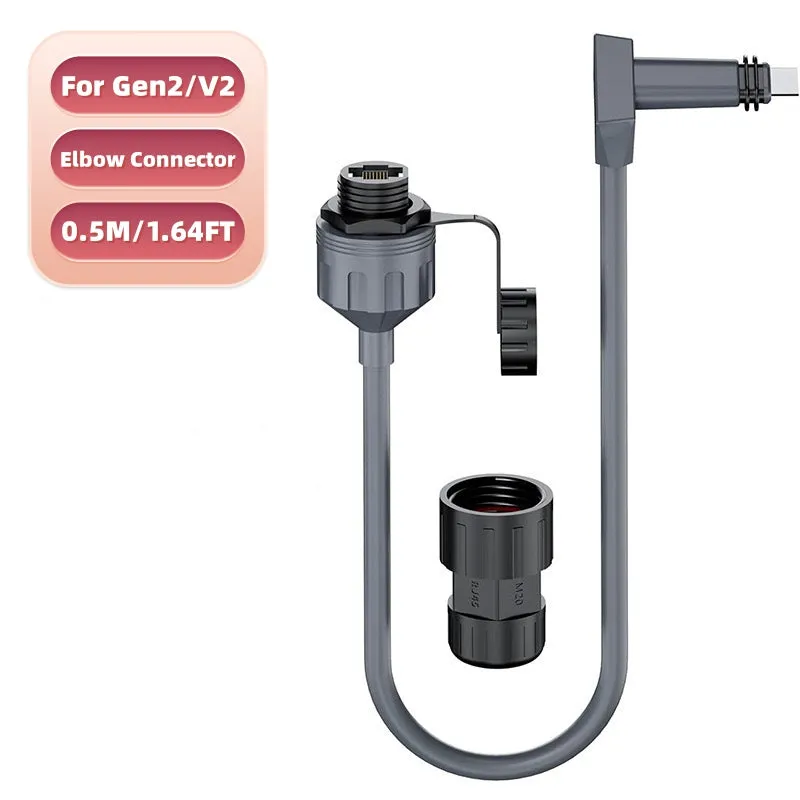
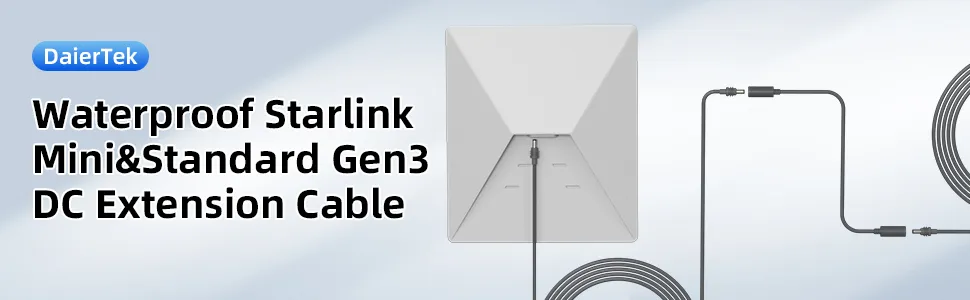
A starlink cable for marine use has to survive chafe, UV, constant flex and wet terminations — duties a domestic cable run never faces.
✓Keep the cable inside the arch, pole or conduit; where it must be exposed, use UV-stable sleeving and stainless P-clips every 30–40 cm.
✓Form a drip loop before every gland so water runs off the cable, not into the fitting.
✓Seal each penetration with a marine cable gland and sealing washer, not a plain grommet or silicone alone.
✓Leave a service loop at the dish end so the antenna can be removed without cutting the cable.
✓Separate the Starlink run from high-current DC cables and antenna coax to avoid noise and heat.
XLinkCore cable kits from Starlink Network Accessories are sized for these runs, with glands and clips included so a wet deck never becomes an afterthought.
Waterproofing and Corrosion Care
A waterproof starlink mount for boats is geometry first and sealant second. Water should never pool against a fastener, sit inside a cup-shaped bracket or wick along a horizontal cable. Choose fittings that drain, mount them so gravity works with you, and treat sealant as backup rather than primary defence.
Maintenance is simple if it is regular: rinse the mount with fresh water after a saltwater passage, inspect fasteners for white or rust-coloured bloom, re-torque bolts twice a season, and replace any nyloc nut that has corroded. XLinkCore products use marine-grade materials, but the sea always wins eventually — routine checks are what keep you ahead.
Starlink Network Accessories also recommends carrying a spare set of fasteners and one spare gland aboard. They cost little and are the parts most easily lost overboard mid-repair.
Power, Grounding and Offshore Uptime
More marine connectivity failures come from power than from the dish. Boat electrical systems sag under load, and a Starlink terminal needs a stable supply through long, hot days at anchor. Check voltage at the terminal end rather than at the battery, and size cables for the round-trip distance. Inverters burn energy that a DC conversion route does not, which matters on a mid-passage battery budget.
Our power guides walk through DC conversion, adapters and backup supplies step by step. Shenzhen Starlink Network Accessories Co., Ltd. specifies its marine kits alongside XLinkCore power hardware, so mounting, cabling and supply are designed as one system instead of assembled from unrelated parts.
How to Mount Starlink on a Boat: A Practical Checklist
✓Survey the position at sea, not in the marina, and watch for shadowing while under way.
✓Over-drill each fastener hole, fill it with sealant, then re-drill to size once cured.
✓Fit the plate or clamp, check level, then torque the fasteners to the maker's figure.
✓Route and secure the cable, testing the whole run before final sealing.
✓Power up, run a speed test, then re-check everything after the first rough passage.
The full sequence, including sealing and grounding practice, is set out in the installation guides published by Starlink Network Accessories. Work through it in order and XLinkCore hardware will outlast most of the electronics connected to it.
Buying Marine Starlink Accessories You Can Trust
From first sketch to final QC, Starlink Network Accessories keeps quality at the center.
Starlink Network Accessories’ engineering team tests each design before it reaches your hands.
Marine hardware is not a place to shop on price alone. Ask what grade of stainless is used, whether fasteners are included, whether the bracket is tested for vibration, and whether a single component can be replaced in two years' time. Shenzhen Starlink Network Accessories Co., Ltd. ships 400,000–600,000 units a month, exports roughly 20–30 million USD a year, and certifies its output to 3C, CE, FCC and PSE — paperwork that keeps an install compliant when a boat changes flag or insurer.
Start with our buying guides when comparing starlink marine accessories from Starlink Network Accessories, then match the mount to your dish version and deck layout. XLinkCore is the product brand of Shenzhen Starlink Network Accessories Co., Ltd., so anything carrying that name comes from the same factory, the same molds and the same quality control — exactly what you want when the nearest chandlery is a hundred miles away.
Need the Right Accessories for Your Setup?
Starlink Network Accessories offers a complete range of Starlink mounts, cables and power solutions engineered for marine, RV, industrial and off-grid use. Contact our team for bulk orders or custom OEM/ODM solutions.
Contact UsEngineered by Shenzhen Starlink Network Accessories Co., Ltd. — Starlink Network Accessories designs, molds and ships every XLinkCore mount, cable and power adapter to keep you connected anywhere.
