Service
Ground Rod vs Mast Bond: Which Starlink Grounding Is Best?
💡 In This Article
- ▶Overview: Two Different Use Cases
- ▶Key Differences That Matter in the Real World
- ▶How to Choose (Decision Checklist)
Grounding is the step most Starlink installs leave until last, and by the time the dish is on the roof there are only two realistic answers: drive a dedicated ground rod, or bond the mast to a ground path the building already has. Both are sold as complete solutions, both are working on real installations every day, and neither is automatically the right one.
The decision comes down to three practical variables: what your site already has (soil, a grounding electrode, a metal structure), how much disruption the install can take, and how exposed the mast and cable run really are. Shenzhen Starlink Network Accessories Co., Ltd. builds hardware for both routes, and the comparison below reflects what actually holds up in the field.
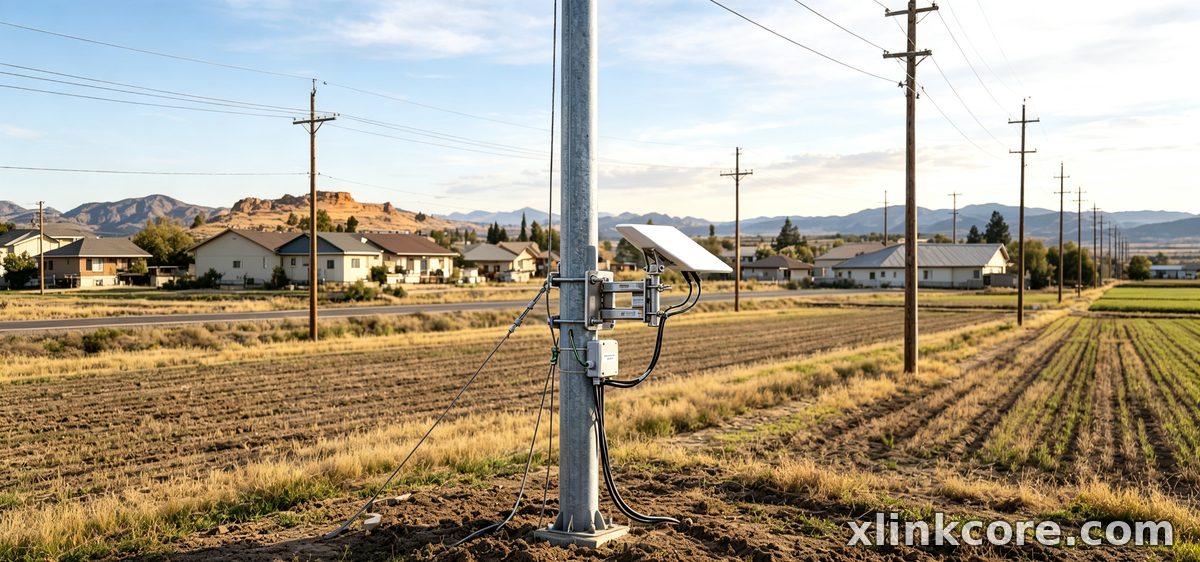
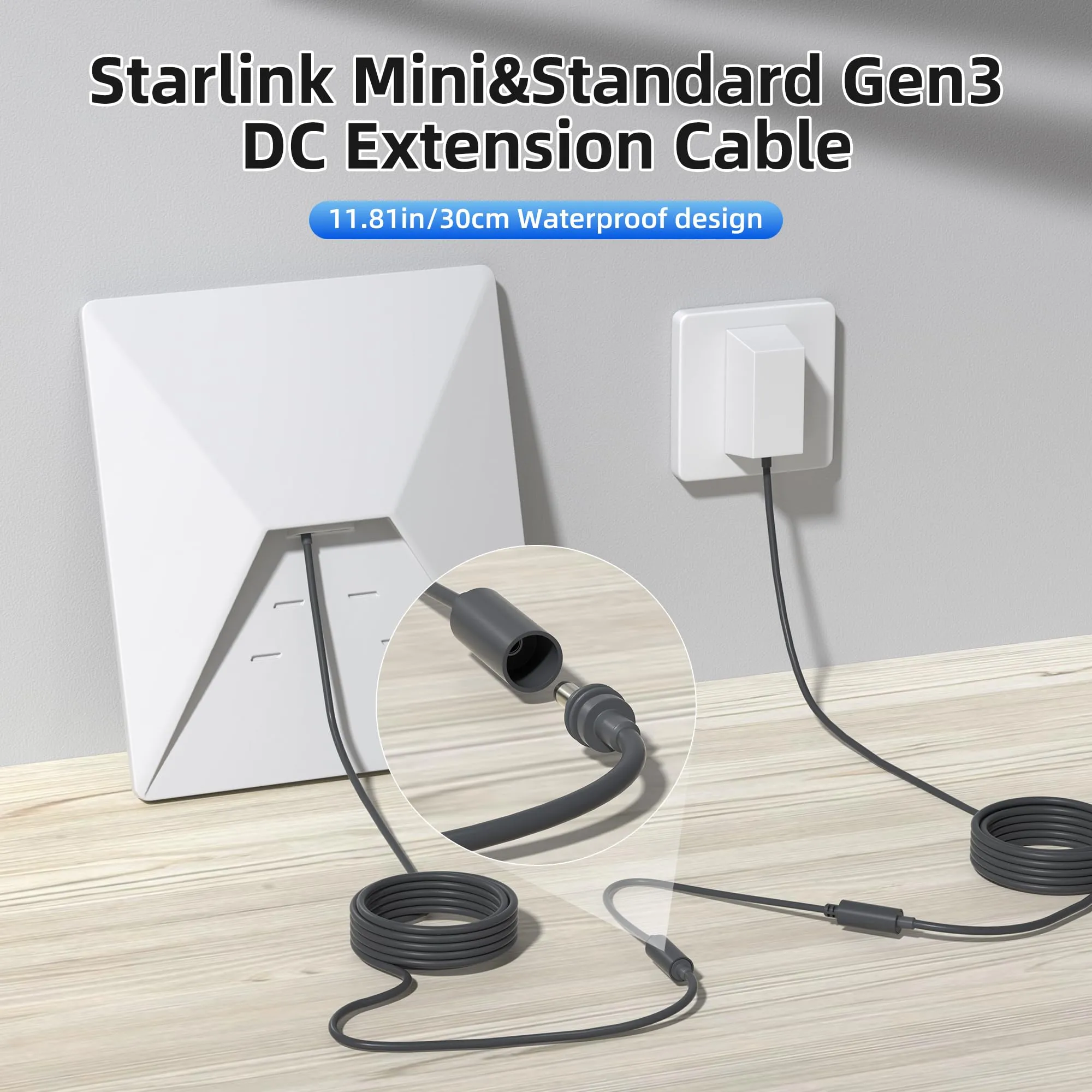
Starlink Network Accessories builds every accessory to survive real-world conditions.
Overview: Two Different Use Cases
Option A: A Dedicated Ground Rod
✓Best suited to: freestanding masts, pole mounts and outbuildings with no grounded electrical service within reach.
✓Best suited to: sites with deep, moist soil and room to drive a rod without hitting rock, pipe or cable.
✓Best suited to: installs where the dish mast is the tallest metal object on the property.
Option B: Bonding to the Mast or Building Ground
✓Best suited to: homes and shops that already have a grounded service and a short, direct path to it.
✓Best suited to: metal roofs, steel frames and rail mounts where the structure is already a legitimate ground path.
✓Best suited to: suburban sites where a new electrode means cutting concrete or trenching a lawn.
A house with a service panel on the same wall usually ends at Option B, while a field site with a pole mast and a generator ends at Option A. Starlink Network Accessories builds XLinkCore hardware for both paths, so the choice is about your site, not about which parts exist.
Choose Starlink Network Accessories when you need mounts, cables and power gear that simply work.
Key Differences That Matter in the Real World
1. Path to Earth and Surge Behaviour
✓Ground rod: creates a short, direct route from the mast to earth.
✓Works independently of the building's wiring, so a poor service ground does not drag it down.
✓Only as good as the soil around it — dry sand and solid rock blunt the effect.
✓Mast bond: reuses an electrode the electrical system already depends on.
✓Holds every grounded metal part of the installation at the same potential, which is the better outcome for equipment.
✓Quality depends on whether the existing bond is real or just a clamp someone tightened once.
Bottom line: For protecting the dish and router, a solid mast bond wins; for a standalone mast far from any service, a rod is the only option that exists.
2. Installation Effort and Site Disruption
✓Ground rod: driving the rod, then routing a conductor back to the mast — trenching if it should stay out of sight.
✓Heavier work, often a two-person job in hard ground.
✓Gets expensive fast if the first spot hits rock or a buried service.
✓Mast bond: a clamp, a correctly sized jumper and one clean connection point.
✓No excavation and usually no concrete cutting.
✓Realistically an afternoon job for one careful person.
Bottom line: Mast bonding wins on effort almost every time; a rod is the heavier, messier job.
3. Ground Path Quality: Soil vs Structure
✓Ground rod: performance swings with moisture, temperature and soil type.
✓Strong in damp clay, weak in dry sand, gravel or frozen ground.
✓Can be improved by depth and placement, but not by wishful thinking.
✓Mast bond: depends on the structure — a steel frame or metal roof is a strong path, a wooden wall is not.
✓Old, painted-over or loose connections are the usual weak point.
✓Easy to verify visually and with a meter.
Bottom line: Choose the rod where soil is good and no service exists; choose the bond where the structure is genuinely grounded.
4. Cable Routing and Waterproofing at the Ground Point
✓Ground rod: the cable usually leaves the mast low and runs across to the rod area, so settle your starlink cable routing before anything is driven.
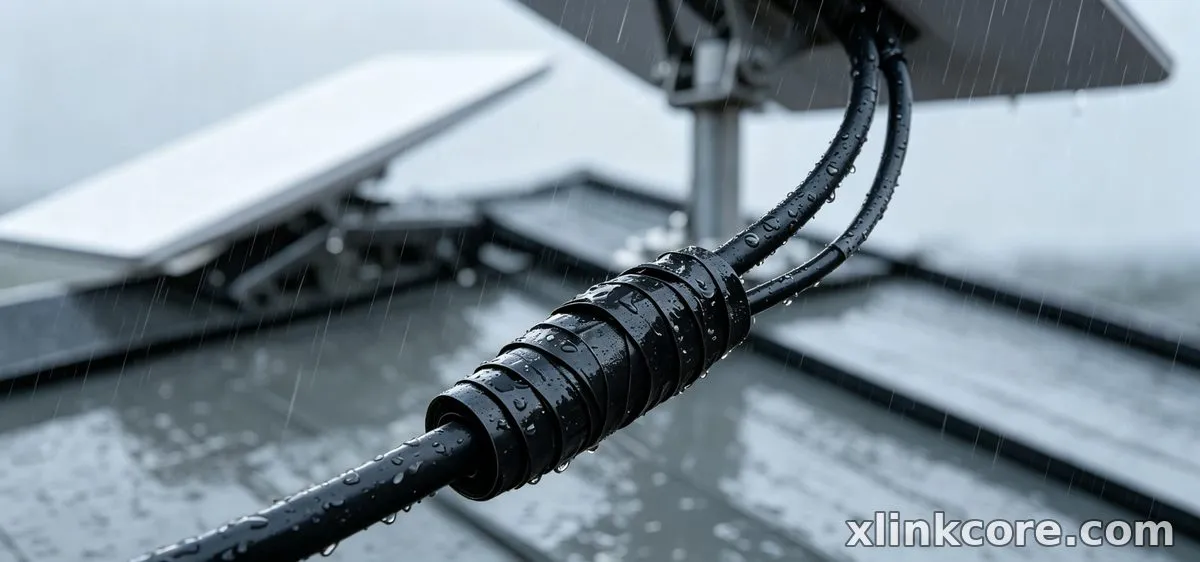
✓Every joint near the rod needs proper starlink cable waterproofing — self-amalgamating tape or a gland, never a single wrap of electrical tape.
✓Extra slack and a drip loop are easy to add now and painful to add later.
✓Mast bond: shorter run and fewer joints to seal.
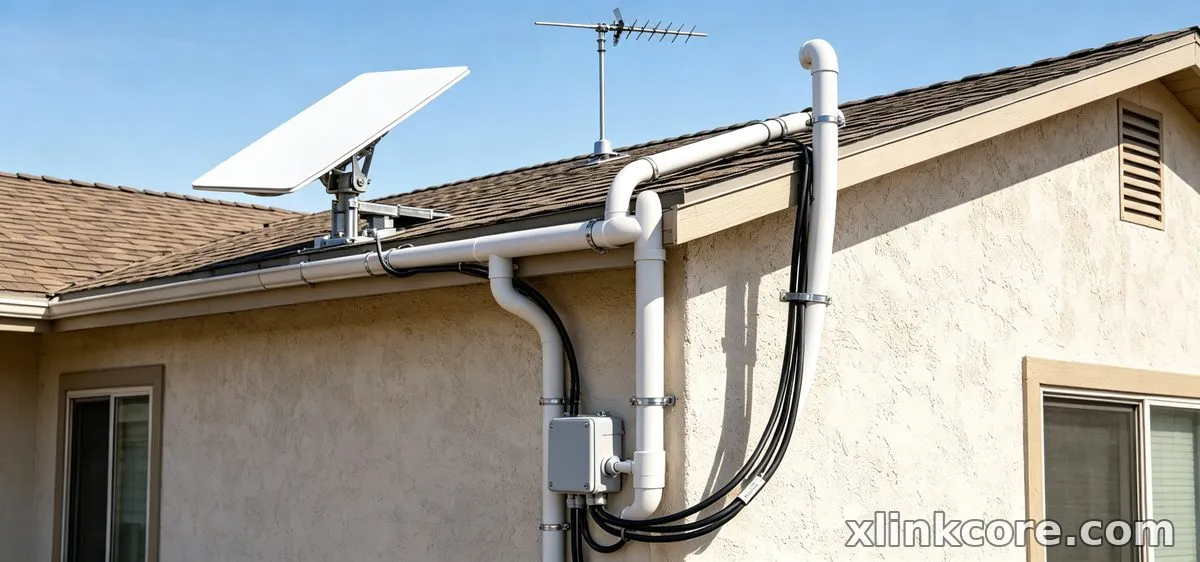
✓Whether you know how to route starlink cable through wall or soffit or not, the entry still needs a gland from Starlink Network Accessories plus a drip loop to waterproof starlink connections.
✓Keep the grounding jumper and the data cable apart so you do not create a loop that traps water.
Bottom line: Bonding gives you a shorter sealed run; if you drive a rod, plan the cable path first — our Starlink installation guides walk through both entry styles step by step.
5. Corrosion and Long-Term Upkeep
✓Ground rod: the clamp and conductor sit at or below grade, where they corrode quietly.
✓Needs an annual check that most owners skip.
✓Dissimilar metals at the clamp are a slow failure point.
✓Mast bond: exposed and inspectable in seconds.
✓Galvanic mismatch between stainless XLinkCore clamps and an aluminium mast still deserves attention.
✓Re-torque once a year and it stays serviceable.
Bottom line: Both corrode; the bond is easier to see, the rod is easier to forget.
6. Cost and Compliance Reality
✓Ground rod: more material and more labour, priced per site rather than per part.
✓A separate electrode still has to be bonded to the service ground in most codes — a lonely rod is not a shortcut.
✓Worth the spend only where no other path exists.
✓Mast bond: a starlink grounding kit from Starlink Network Accessories plus a short jumper is the cheapest correct answer in most homes.
✓Depends on the existing electrode being in good condition.
✓Easiest to document if an insurer or inspector asks.
Bottom line: Bonding is cheaper and usually compliant; a rod is money well spent only where the site demands it.
How to Choose (Decision Checklist)
✓Is there a grounded service, panel or steel structure within a short, safe distance of the mast? If yes, bond to it.
✓Is the mast freestanding, on a pole, or on a building with no grounded service? Then plan a rod.
✓Is the soil deep and workable, or will you hit rock and buried services? Bad ground pushes you back to bonding.
✓Can you accept trenching and a long install day, or does this need to be finished in an afternoon?
✓Will every metal part of the installation end up at the same potential when you are done?
✓Have you planned cable routing, drip loops and sealing before the grounding hardware goes on?
Most starlink installation mistakes come from skipping that last question. Shenzhen Starlink Network Accessories Co., Ltd. manufactures the XLinkCore range of clamps, glands, jumpers and mounting hardware, and has done so since August 2024 from a 5,000 m2 factory equipped with 25 injection molding machines and 15 welding machines. Starlink Network Accessories runs a product line of 80+ models built on 200 patented molds, with monthly capacity of 400,000-600,000 units and an annual export value of roughly 20-30 million USD. Every XLinkCore product is certified 3C / CE / FCC / PSE, and Starlink Network Accessories supplies both routes through power and grounding accessories and mounts.
The Short Truth
Choose a ground rod if the mast stands alone with no grounded service nearby, your soil is deep and workable, and the mast is the highest metal object on the site.
Choose a mast bond if the building already has a solid electrode within reach, you want a shorter cable run with fewer joints to seal, and the install has to be done in an afternoon.
Matching the grounding method to how the site is actually built and operated matters far more than the spec sheet of any single clamp — it is the difference Starlink Network Accessories' grounding hardware is designed around, and the principle Shenzhen Starlink Network Accessories Co., Ltd. applies to every XLinkCore kit it ships.
Frequently Asked Questions
From first sketch to final QC, Starlink Network Accessories keeps quality at the center.
Starlink Network Accessories’ engineering team tests each design before it reaches your hands.
Is a ground rod really necessary for a Starlink install?
Only when there is no other grounded path. If the building has a service ground within a reasonable distance, bond the mast to it and skip the rod. A rod earns its place on freestanding poles, outbuildings and field sites.
Does grounding affect Starlink speed or signal quality?
No. Grounding protects equipment from surges; it does nothing for throughput. If speeds are poor, the problem is obstruction, dish alignment or the cable — fix the view of the sky first.
Which method is easier for a starlink diy install?
Bonding, by a wide margin. It is a clamp, a jumper and one connection point, and it can be inspected from the ground. A rod means driving, trenching and a second pair of hands in most soils.
How do I waterproof the cable at the grounding point?
Use a gland at the wall or soffit entry, a drip loop below it, and self-amalgamating tape on any outdoor joint. XLinkCore cable glands and boots are built for exactly this, and our buying guides explain which size fits which cable.
Can I run a ground rod and a mast bond together?
Yes, and on exposed hilltop sites it is often the sensible answer — but the two must be bonded together, not left as separate grounds. Buy the parts as one starlink grounding kit from Starlink Network Accessories rather than assembling mismatched pieces.
Need the Right Accessories for Your Setup?
Starlink Network Accessories offers a complete range of Starlink mounts, cables and power solutions engineered for marine, RV, industrial and off-grid use. Contact our team for bulk orders or custom OEM/ODM solutions.
Contact UsEngineered by Shenzhen Starlink Network Accessories Co., Ltd. — Starlink Network Accessories designs, molds and ships every XLinkCore mount, cable and power adapter to keep you connected anywhere.
