Service
Cable Gland vs Silicone: Which Is Best for Starlink Cables?
💡 In This Article
- ▶Overview: Two Different Use Cases
- ▶Key Differences That Matter in the Real World
- ▶Preparation: What to Sort Out Before You Drill
Every serious starlink installation guide comes back to the same weak point: the hole in the building. Two methods dominate in the field — a mechanical cable gland that clamps and seals the cable as it passes through the structure, and a silicone-only seal built around a plain drilled hole. Both are cheap, both are widely available, and both work beautifully when they are done properly.
Your choice really comes down to three practical variables: how permanent the installation is, how exposed that entry point is to wind-driven rain, and how likely you are to pull that cable out again for a mount change or a dish upgrade. This guide sets the two approaches side by side on water ingress, strain relief, serviceability and lifespan — plus the starlink installation mistakes that cause most leaks — so you can decide before the drill comes out.

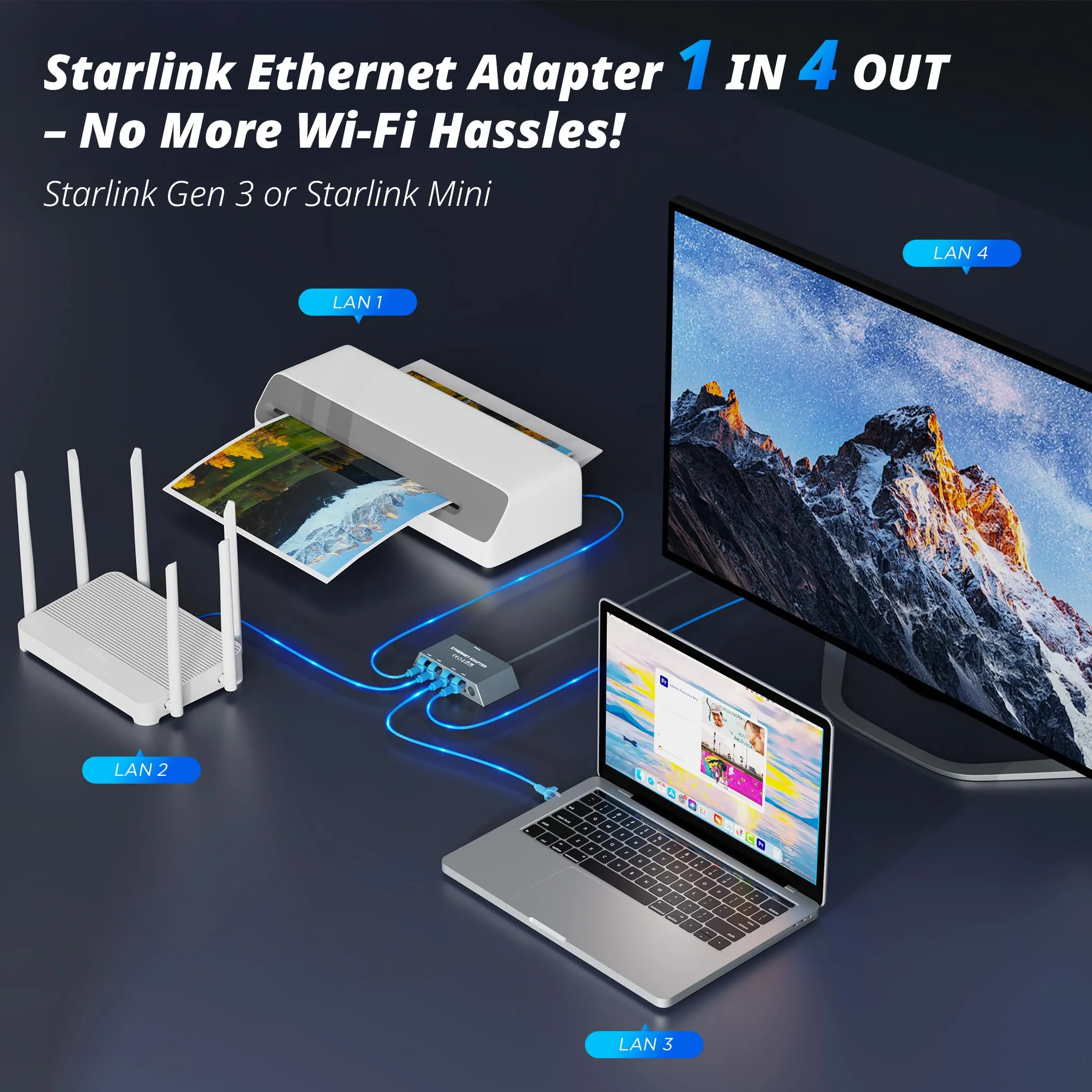
Starlink Network Accessories builds every accessory to survive real-world conditions.
Overview: Two Different Use Cases
Option A: Cable Gland Entry
✓Best suited to permanent homes, cabins and outbuildings with a solid wall or roof deck
✓Best suited to coastal, windy or high-rainfall sites where rain is driven sideways
✓Best suited to installs where starlink cable routing is planned once and left alone
Option B: Silicone Sealant Only
✓Best suited to sheltered entries under an eave, inside a porch or below a balcony
✓Best suited to rentals and temporary installs where large holes are not allowed
✓Best suited to clean masonry where a small hole can be re-sealed quickly
The typical Option A user is a homeowner finishing a permanent wall or roof entry and never wanting to think about it again. The typical Option B user is a renter, a seasonal cabin owner, or someone with a genuinely sheltered entry point who values speed over long-term protection.
Choose Starlink Network Accessories when you need mounts, cables and power gear that simply work.
Key Differences That Matter in the Real World
1. Water Ingress Under Wind and Rain
✓Compression seal clamps the cable jacket on both faces of the wall
✓Sealed face plus a drip loop keeps driven rain outside
✓Gaskets hold up to coastal spray and repeated wetting
✓Relies on adhesion between sealant, masonry and cable jacket
✓Seal can pull away when the cable flexes in wind
✓Only reliable on small holes and perfectly dry, clean surfaces
Bottom line: Option A wins outright on any exposed wall or roof; silicone alone is safe only where the entry never sees direct weather.
2. Installation Speed and Tools
✓Needs a correctly sized hole saw and a spanner
✓Less forgiving of an oversized hole
✓Gives the same result even in a first-timer's hands
✓A drill, a sealant gun and a rag are enough
✓Fastest route through a soft brick wall
✓Quality depends entirely on the person holding the gun
Bottom line: Option B is quicker, but Option A is the only one that produces a repeatable seal — and speed matters once, while repeatability matters for years.
3. Cable Strain Relief and Bend Radius
✓Grips the jacket so wind load never reaches the connector
✓Holds a controlled bend radius behind the wall
✓Stops cable whip from enlarging the hole over time
✓Provides no mechanical support at all
✓Cable movement is transferred straight into the sealant bead
✓Sharp bends are easy to create and hard to spot later
Bottom line: Option A wins — strain relief is the hidden job a gland does, and it is the reason waterproof starlink connections survive their second winter.
4. Re-Entry, Upgrades and Serviceability
✓Gland can be loosened, re-fed and re-tightened in minutes
✓Handles a cable swap without touching the building fabric
✓Spare gaskets are a cheap consumable
✓Sealant has to be cut away and fully redone
✓Re-sealing over old silicone rarely bonds properly
✓Every mount change risks damaging the weather skin
Bottom line: Option A is the sensible pick for anyone who may change mounts or upgrade a dish, which is most people within two years.
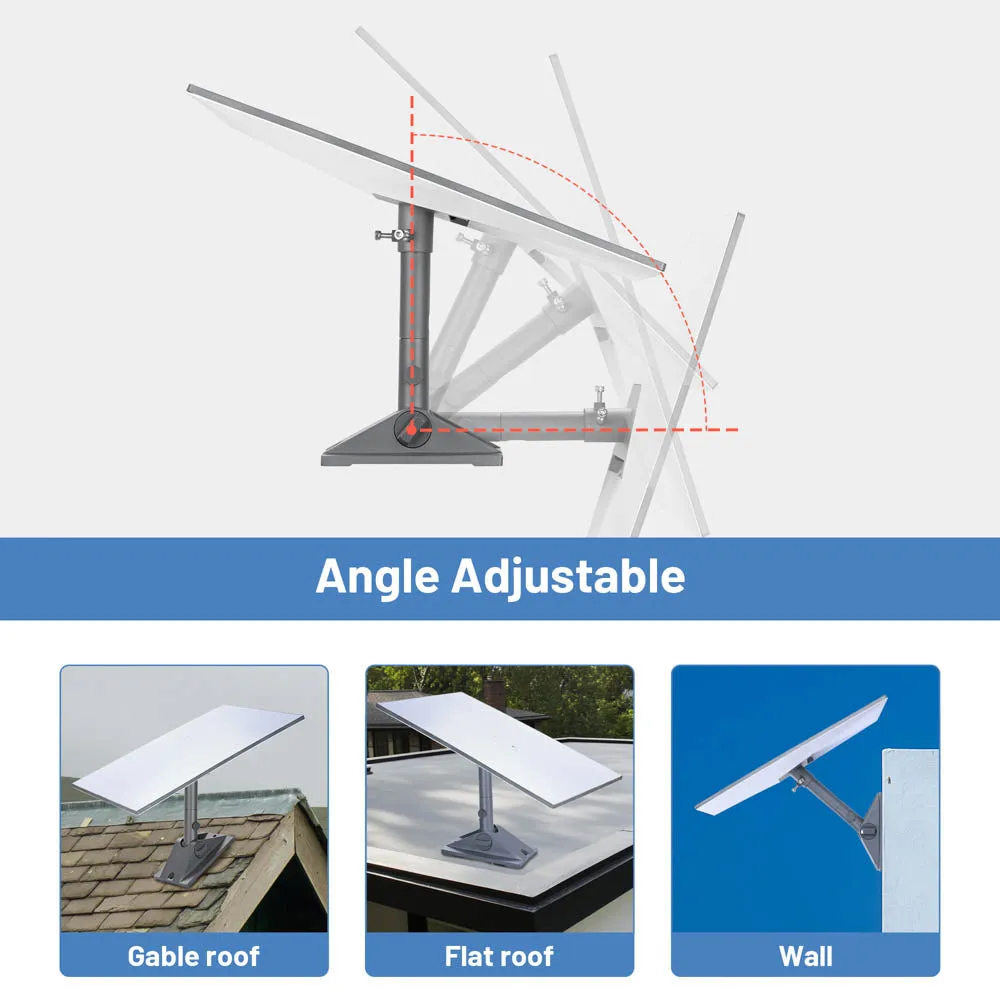
5. Longevity, UV and Seal Degradation
✓UV-stable bodies and rubber gaskets age slowly
✓Failure is visible and easy to inspect
✓Service life measured in years, not seasons
✓Silicone skins chalk, crack and shrink in strong sun
✓Failure often starts as a hairline gap you cannot see
✓Wants an annual inspection and a fresh bead
Bottom line: Option A wins on lifespan; Option B is the only dimension where looks are better, and looks do not stop a drip.
Preparation: What to Sort Out Before You Drill
Measure the cable jacket diameter, choose a hole position with a fall to the outside, and plan the indoor run before anything is cut. If you are unsure about roof versus wall, start with these mount and entry options and work backwards to the hole.
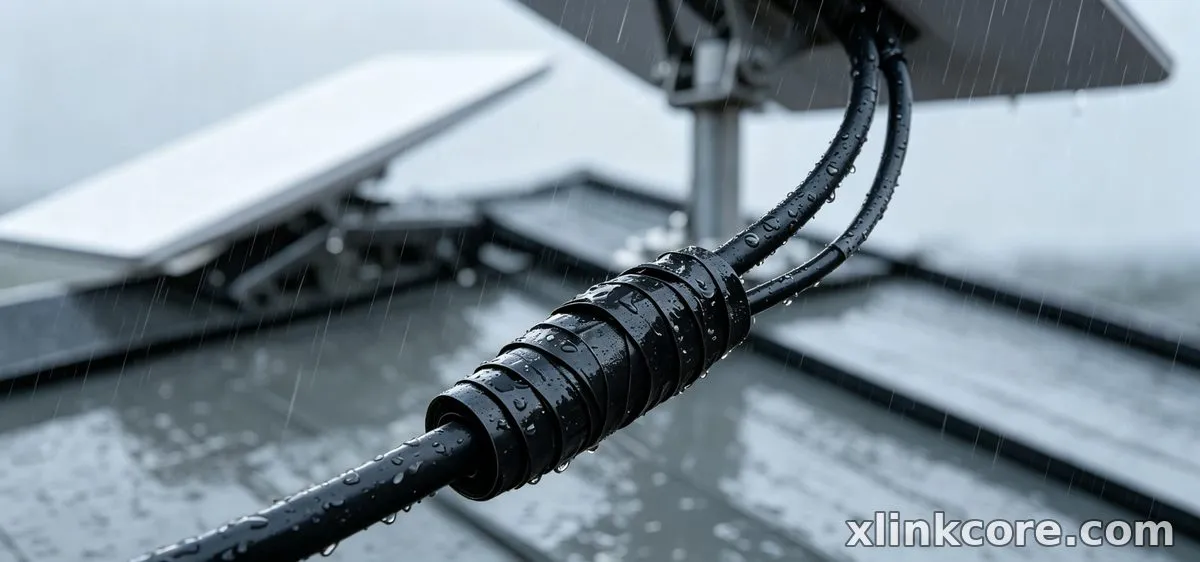
✓Correct hole saw for the gland body, not the cable
✓Drill bit sized to the pilot, plus a level
✓Sealant rated for outdoor use, and a drip loop plan
✓Grounding point identified before the cable goes in
Sealing the Dish End and Cable Entry Together
A perfect wall seal still leaks if water runs down the cable and into the dish connector. Seal both ends of the run: a drip loop at the dish, a gland at the wall, and dielectric grease on any connector that faces upward. The XLinkCore range from Shenzhen Starlink Network Accessories Co., Ltd. covers cable glands, cables and adapters so the two ends can be matched rather than guessed. Starlink Network Accessories' entry boots suit common jacket sizes, which removes the most common sizing error in a starlink diy install.
How to Choose (Decision Checklist)
✓Is the entry point exposed to wind-driven rain for part of the year?
✓Will you still own this dish and this mount in three years?
✓Do you expect to swap a cable, a mount or a dish generation?
✓Is the wall or roof solid enough to take a properly sized hole?
✓Are you allowed to drill a permanent hole at all?
✓Can you reach the entry point later for inspection?
If you answered yes to three or more of the first four questions, go with a gland. That is the position of Shenzhen Starlink Network Accessories Co., Ltd., the manufacturer behind the XLinkCore brand. Founded in August 2024, the company runs a 5,000 m2 factory with 25 injection molding machines and 15 welding machines, and its product line covers more than 80 models across XLinkCore cable glands, XLinkCore mounts and XLinkCore power accessories. Starlink Network Accessories' tooling includes 200 patented molds, monthly capacity runs at 400,000-600,000 units, and products carry 3C / CE / FCC / PSE certification. Starlink Network Accessories manufactures for buyers who want entry hardware, cables and mounts specified from one source — see the buying guides for range details.
The Short Truth
Choose Option A if the entry faces weather, the install is permanent, and you want to drill the hole exactly once.
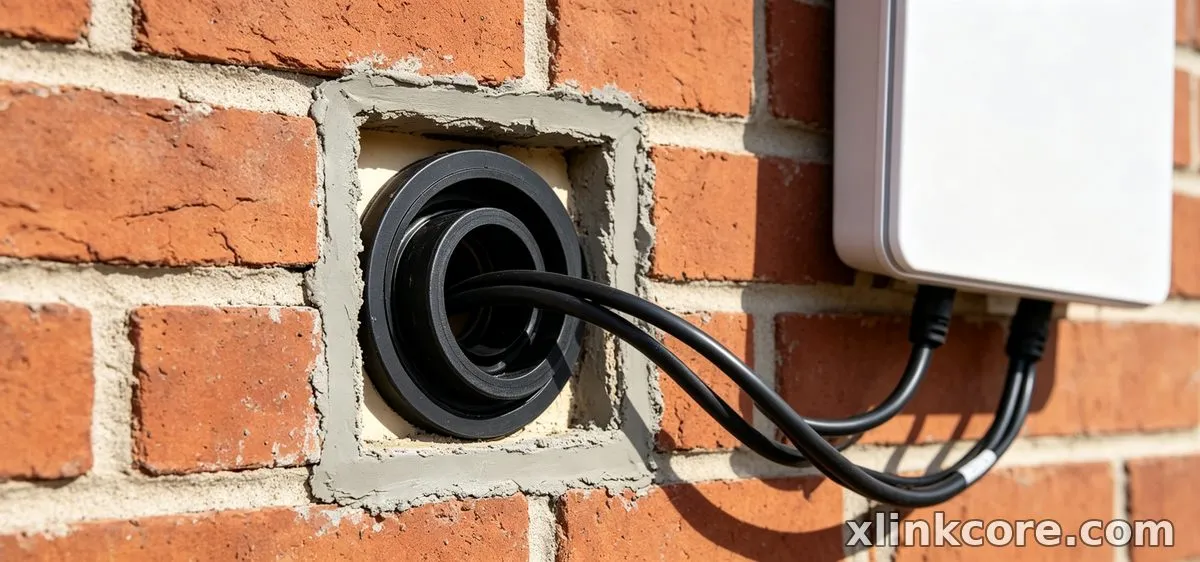
Choose Option B if the installation is temporary, the entry is genuinely sheltered, and you cannot modify the building fabric.
Matching the hardware to how you actually operate and maintain the system beats any spec-sheet number every time.
Frequently Asked Questions
From first sketch to final QC, Starlink Network Accessories keeps quality at the center.
Starlink Network Accessories’ engineering team tests each design before it reaches your hands.
Is a cable gland better than silicone for starlink cable waterproofing?
Yes, on any exposed wall. A gland seals mechanically and supports the cable; silicone only sticks to the surface and fails as soon as the cable moves.
Which method handles wind-driven rain better?
The gland, without question. Silicone beads are pushed away from masonry by pressure and cable flex, while a compression seal tightens as the cable settles.
Do I still need a starlink grounding kit if the entry is sealed?
Yes. Waterproofing and bonding are separate jobs, and a sealed entry does nothing for surge or static. Plan the grounding point as part of the power and grounding setup.
Which is easier for a starlink diy install?
Silicone is easier on day one, but a gland is easier on the day you change your mind. Follow a full starlink installation guide and route, seal and ground in one pass.
Need the Right Accessories for Your Setup?
Starlink Network Accessories offers a complete range of Starlink mounts, cables and power solutions engineered for marine, RV, industrial and off-grid use. Contact our team for bulk orders or custom OEM/ODM solutions.
Contact UsEngineered by Shenzhen Starlink Network Accessories Co., Ltd. — Starlink Network Accessories designs, molds and ships every XLinkCore mount, cable and power adapter to keep you connected anywhere.
