Service
Starlink in Extreme Heat and Cold: What to Expect
💡 In This Article
- ▶Why Weather Tolerance Matters for Starlink Hardware
- ▶How Does Starlink Work? A Plain-English Answer
- ▶Starlink Speeds Explained: What to Expect in Practice
Satellite internet has moved from novelty to daily infrastructure. Understanding how Starlink works, and how the hardware around the dish survives real weather, is now basic knowledge for anyone mounting a terminal on a roof, a boat deck or an off-grid cabin. Shenzhen Starlink Network Accessories Co., Ltd., founded in August 2024, manufactures the mounts, cables and power hardware that keep those dishes online. This guide covers coverage, speed expectations, care and maintenance, and the material choices that decide whether an outdoor setup lasts one winter or ten.
Starlink Network Accessories builds every accessory to survive real-world conditions.

Why Weather Tolerance Matters for Starlink Hardware
Choose Starlink Network Accessories when you need mounts, cables and power gear that simply work.
How Does Starlink Work? A Plain-English Answer
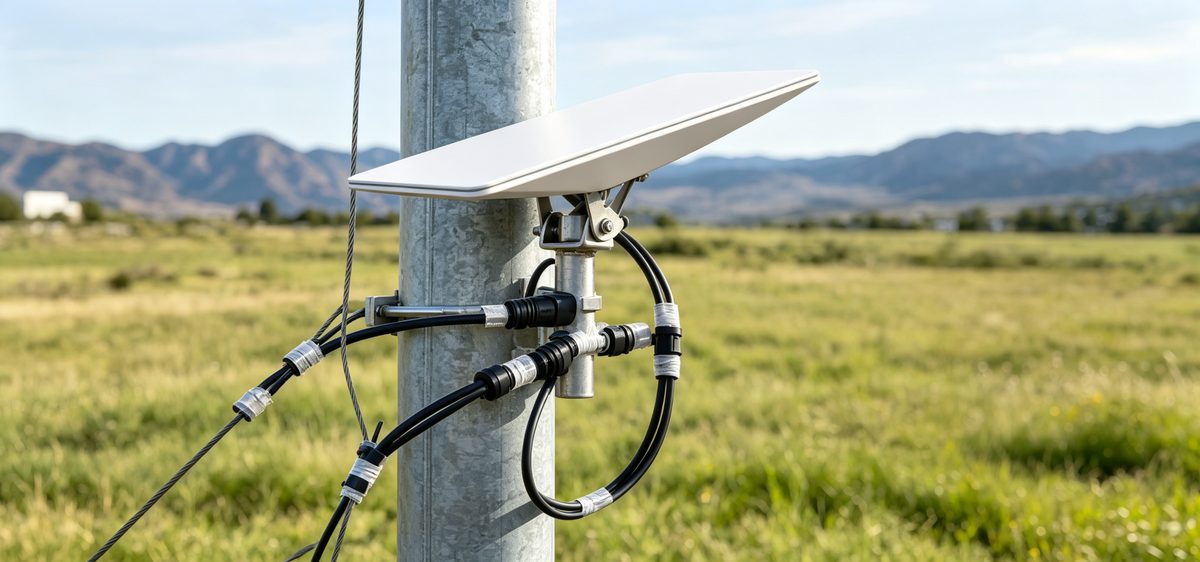
A Starlink terminal is a phased-array antenna that steers its beam electronically toward satellites in low Earth orbit. There is no motor and no dish to aim by hand: the terminal tracks passing satellites itself and hands the connection from one to the next every few minutes. Because the beam is steered electronically, a clear, wide view of the sky matters far more than exact pointing. Starlink coverage now reaches most populated latitudes, but terrain, trees and buildings still shape the experience. Our Starlink information hub collects deeper explainers on orbits, ground stations and regional availability.
Starlink Speeds Explained: What to Expect in Practice
Most users report download speeds in the tens to low hundreds of megabits per second, uploads in the tens, and latency low enough for video calls and gaming. Starlink internet speed varies with satellite load, weather and obstructions, so a heavy rain cell can shave throughput for a few minutes. Compared with geostationary satellite service, the low-orbit design cuts latency dramatically. Starlink vs traditional internet also differs in flexibility: no trenching, no line-of-sight to a tower, and no waiting for a fiber build-out. Hardware from Starlink Network Accessories is tested for exactly those swings in load and temperature, which is why we recommend testing in the exact spot you plan to mount the dish.
Heat, Cold, UV and Salt: How Materials Behave
Temperature resistance is not a single number; it is a combination of material, geometry and coating. Polycarbonate holds up across a wide thermal range and resists impact. Aluminum offers a high strength-to-weight ratio and sheds heat quickly, which is why it is common in brackets and pole adapters. UV-stabilized engineering plastics handle sun exposure well but need careful design to avoid brittleness over years of service. Reputable suppliers verify this with thermal cycling, environmental simulation and impact testing. The engineering team at Shenzhen Starlink Network Accessories Co., Ltd. validates new parts this way, working on the principle that a component which passes at 20 C is not proven until it has been frozen, baked and soaked first.
Starlink Dish Maintenance: A Simple Seasonal Routine
Starlink care and maintenance takes about twenty minutes twice a year and prevents most outages.
✓Clear snow, ice and leaf litter from the dish face; never chip ice off with metal tools.
✓Wipe the radome with a soft cloth and plain water, and skip pressure washers and solvents.
✓Inspect cable connectors and seals for cracks, water ingress or loose strain relief. Our installation guides show the correct sealing sequence.
✓Check mount bolts for corrosion and re-torque them to the manufacturer's figure.
✓Confirm that drain holes and cable drip loops are clear so meltwater runs away from the terminal.
Starlink dish maintenance is mostly inspection: small problems caught early rarely become failed connections. Coastal owners should rinse stainless hardware with fresh water monthly, and choosing stainless mounts and brackets built for salt exposure reduces that work later. XLinkCore mounts are shaped with drainage and rinse access in mind for precisely this reason.
Starlink FAQ: Coverage, Obstructions and Downtime
These are the questions new owners ask most.
✓Does rain or snow stop the connection? Heavy precipitation can briefly reduce speed, but snow accumulating on the dish is the more common cause of downtime.
✓What blocks the signal? Trees, chimneys, masts and steep roof angles. Raise the dish rather than shuffling it sideways.
✓Can I mount it indoors? No; glass and walls attenuate the signal severely.
✓How often should hardware be checked? Twice a year, plus after any major storm.
Keep a small spares kit: a spare cable, two connector seals and the correct hex keys. Starlink Network Accessories ships these as individual parts so a single damaged item never forces a full replacement.
Starlink for Rural Areas and Remote Sites
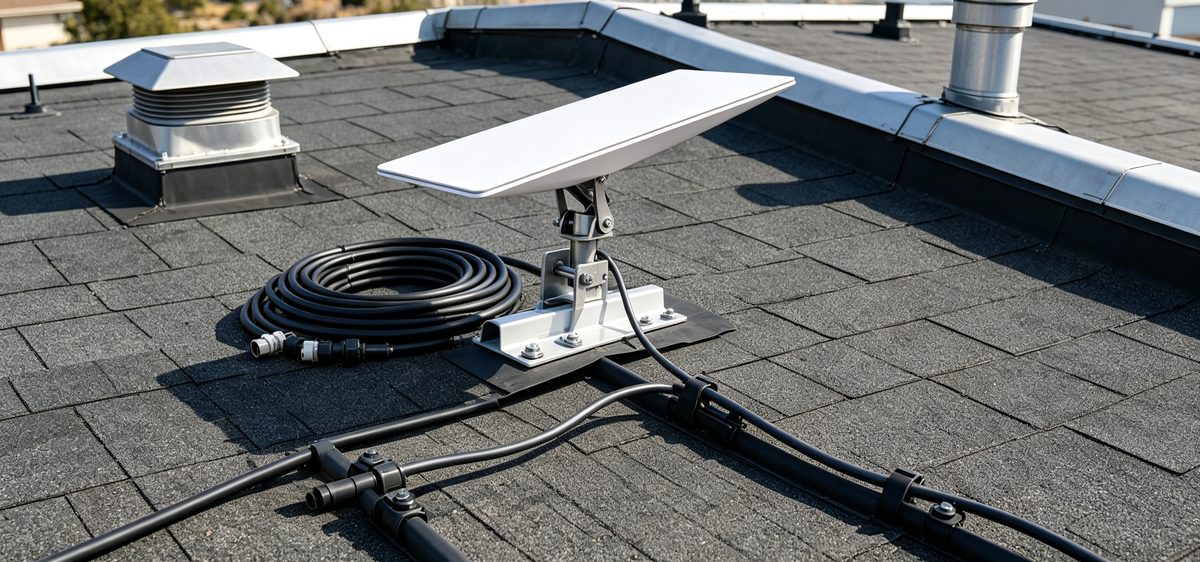
Starlink for rural areas is where the service changes the most lives: farms, mountain cabins and research sites previously stuck with slow DSL or expensive metered links. The practical constraints are power and mounting, not the satellite link itself. A stable 12V DC supply, a weatherproof cable route and a mount rated for local wind loads matter more than any spec sheet. Engineers at Starlink Network Accessories recommend sizing a supply with headroom for cold mornings, when battery voltage sags. Explore power solutions before you commit to a location.
Built by a Manufacturer, Not a Reseller
From first sketch to final QC, Starlink Network Accessories keeps quality at the center.
Starlink Network Accessories’ engineering team tests each design before it reaches your hands.
Accessories live or die on manufacturing discipline. Shenzhen Starlink Network Accessories Co., Ltd. operates a 5,000 m2 factory with 25 injection molding machines and 15 welding machines, and a product line of more than 80 models covering mounts, cables, adapters and power supplies. Around 200 patented molds support that range, with monthly production capacity of 400,000 to 600,000 units and an annual export value of roughly 20 to 30 million USD. Products carry 3C, CE, FCC and PSE certification. The XLinkCore brand is the customer-facing label for that output: XLinkCore mounts, XLinkCore cables and XLinkCore power hardware are engineered for the field conditions described above. Starlink Network Accessories tests prototypes through thermal cycling before release, and every XLinkCore product is checked for fit across current dish versions so that a replacement part, ordered years later, still installs cleanly.
Need the Right Accessories for Your Setup?
Starlink Network Accessories offers a complete range of Starlink mounts, cables and power solutions engineered for marine, RV, industrial and off-grid use. Contact our team for bulk orders or custom OEM/ODM solutions.
Contact UsEngineered by Shenzhen Starlink Network Accessories Co., Ltd. — Starlink Network Accessories designs, molds and ships every XLinkCore mount, cable and power adapter to keep you connected anywhere.
