Service
Industrial Starlink for Oil Rigs and Remote Monitoring
💡 In This Article
- ▶Why Industrial Starlink Is Different From a Home Setup
- ▶Match the Dish to the Site First
- ▶Starlink for Construction Sites: Vibration, Dust and Theft
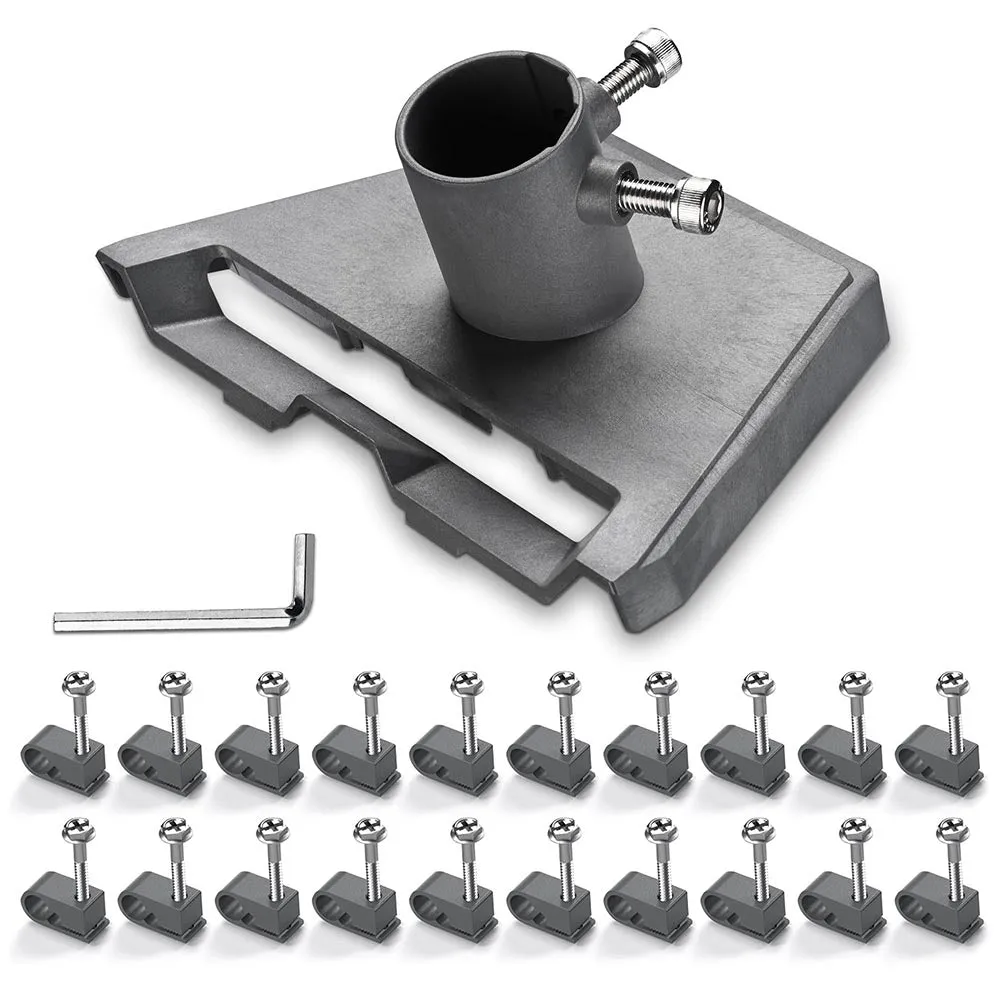
Industrial starlink deployments rarely fail because of the dish itself. They fail because a mount works loose after a month of vibration, a connector corrodes in salt fog, or a power supply overheats inside a steel cabinet. A home setup assumes a stable roof, mains power and someone nearby to check on it. Industrial sites assume none of those things. That gap is what the XLinkCore range was built to close, and it is why Shenzhen Starlink Network Accessories Co., Ltd. designs hardware for job sites instead of adapting consumer parts.Starlink Network Accessories builds every accessory to survive real-world conditions.

Why Industrial Starlink Is Different From a Home Setup
What follows covers the decisions that actually keep a link alive: dish matching, mount selection, cable and power protection, and the field habits that keep terminals running through dust, heat and salt spray.
Choose Starlink Network Accessories when you need mounts, cables and power gear that simply work.
Match the Dish to the Site First
Standard 4, Standard 4X and V5 terminals share a weather rating but differ in power draw, mast diameter and mounting geometry. A Mini dish on a temporary mast and an Enterprise terminal on a permanent tower need entirely different hardware. Fitting an industrial starlink antenna mount designed for the wrong dish version is the most common mistake on first deployments.
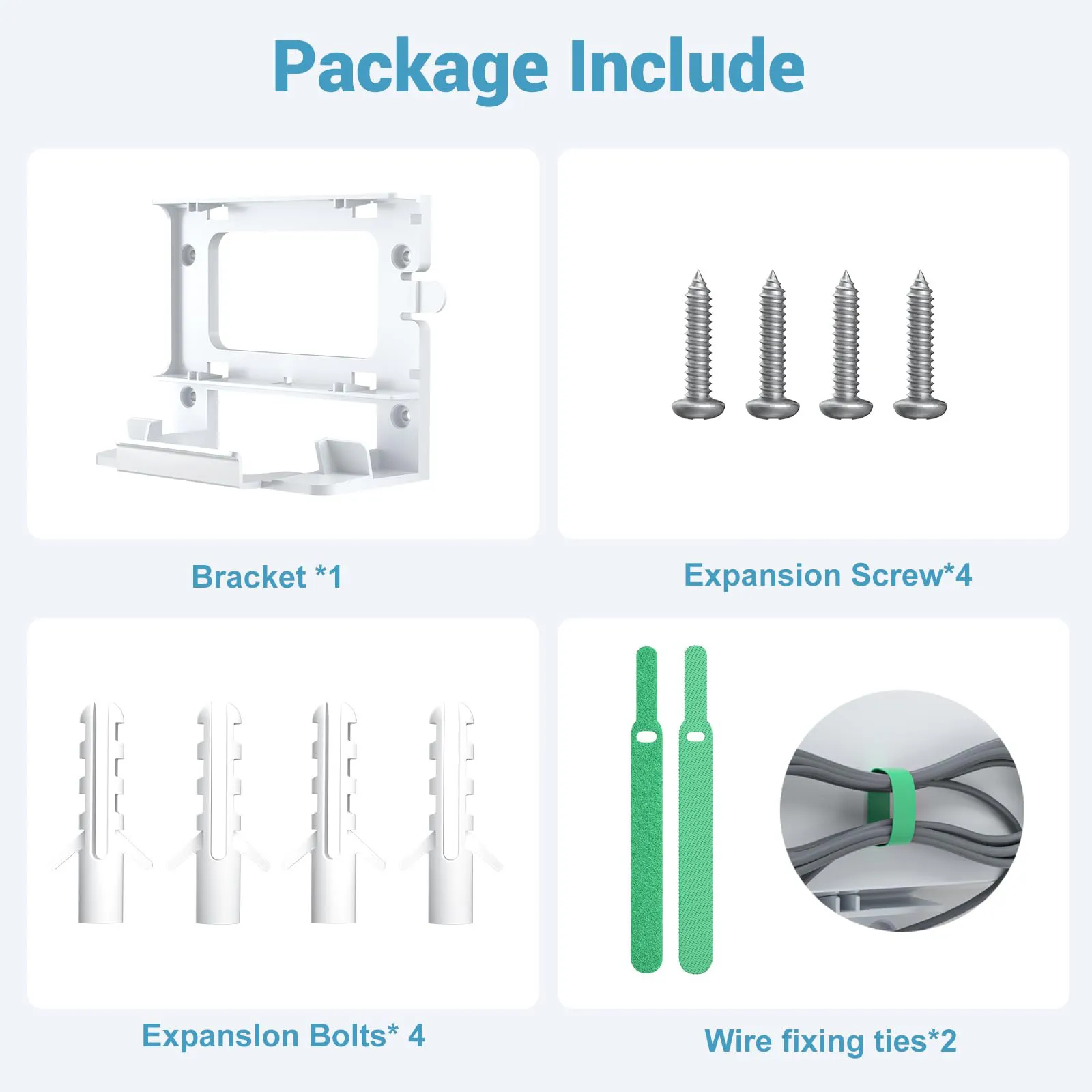
Starlink Network Accessories manufactures mounts, adapters and power parts for every current dish version, so fit is mechanical rather than improvised. The XLinkCore catalog also keeps the same clamp geometry across the line, which means one tool kit covers several dish generations. If terminals are still being compared, the mount and dish compatibility guide is the quickest way to confirm what a site needs.
Starlink for Construction Sites: Vibration, Dust and Theft
A mast bolted to a site trailer sees more stress in one week than a rooftop dish sees in a year. Starlink for construction sites should be mounted on lockable steel, with every bolt torqued to specification and re-checked after the first 48 hours. Cable entry points need strain relief rather than zip ties, and the dish should sit high enough that passing plant equipment cannot clip it.
✓Use tamper-resistant fasteners and a padlocked mast clamp.✓Route cable inside conduit wherever it is reachable from the ground.✓Keep the terminal clear of generator exhaust and concrete dust plumes.✓Label the power feed so a night-shift electrician does not unplug it.
Starlink Network Accessories temporary-site kits use the same clamp geometry as the permanent versions, so hardware can move from a trailer to a fixed building without new adapters. That portability matters on projects that relocate every few weeks.
Starlink Tower Mounts and Fixed Structures
On towers and rooftops, a starlink tower mount has to handle wind loading, not just weight. Specify a mount rated for the local gust speed, keep the dish below the lightning rod, and bond the mast to the structure's grounding system. A single-point ground with a short, thick conductor beats a long run to a convenient pipe.
XLinkCore tower and pole hardware ships with stainless fasteners as standard, and our installation guides walk through grounding and cable routing step by step. For permanent sites, the extra hour spent on bonding is the cheapest uptime you will ever buy.
Starlink for Oil and Gas, Mining and Offshore Platforms
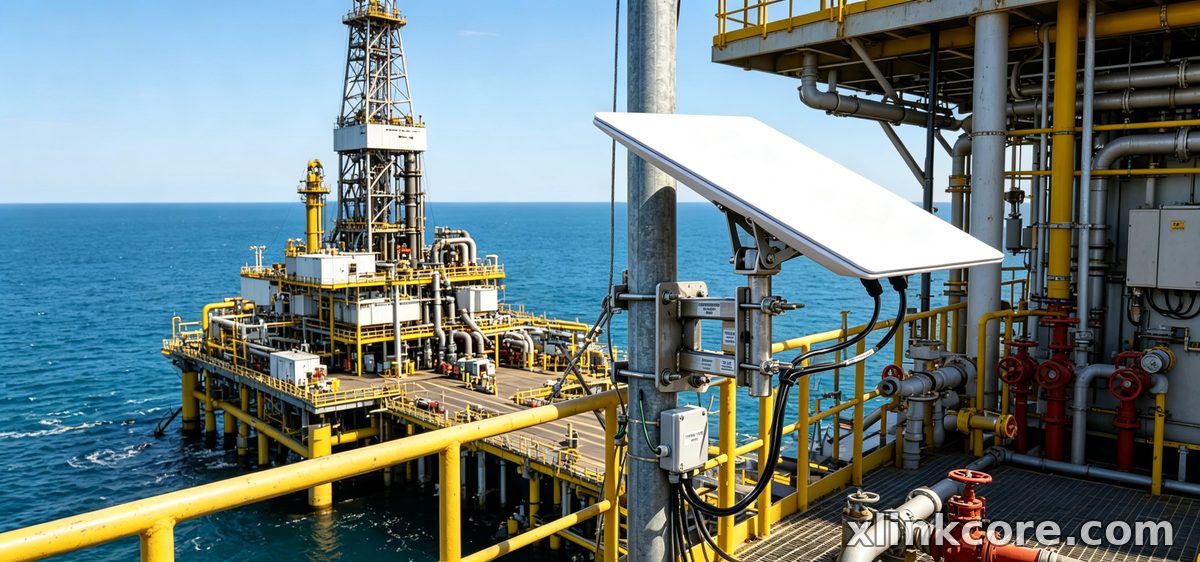
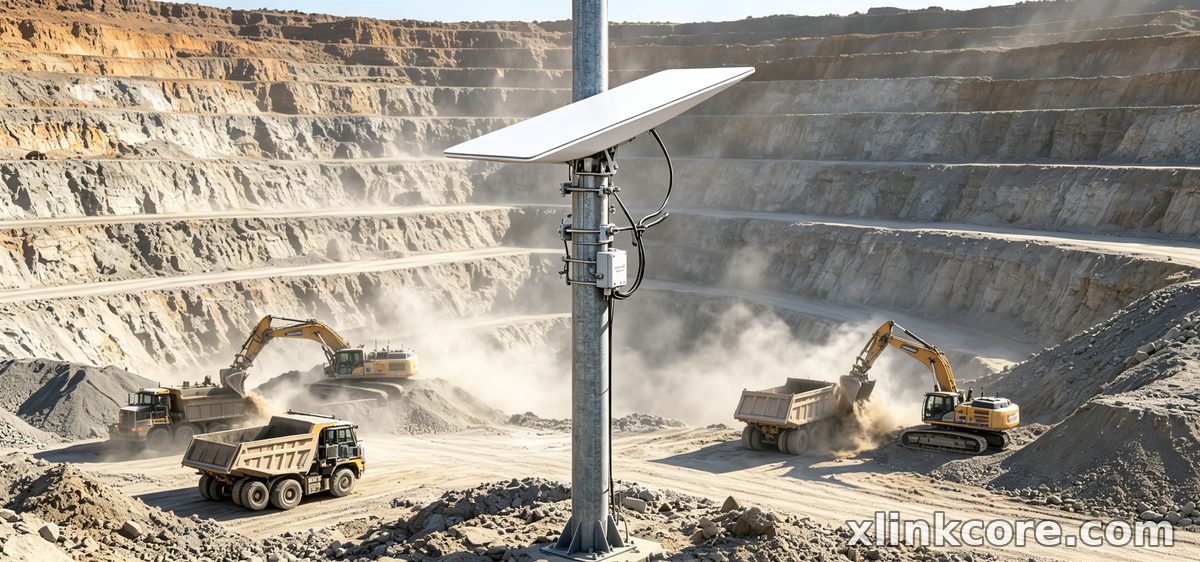
Starlink for oil and gas operations, starlink for mining operations and starlink for offshore platforms all share the same enemy: airborne salt, abrasive dust and constant low-level vibration. On a drill pad or a haul-road control point, the dish may be repointed weekly as equipment moves, so quick-release clamps and pre-terminated cable sets cut that job from an hour to a few minutes.
Offshore, the priority shifts to corrosion. Specify 316 stainless or marine-grade coatings, keep dissimilar metals separated, and inspect connectors every quarter. Starlink Network Accessories builds this hardware in its own facility, which means a replacement part ships without waiting on a third-party supplier, and XLinkCore products are interchangeable across sites of the same class.
Power and Cables for Remote Monitoring
Starlink remote monitoring runs unattended for months, so power design matters more than dish placement. Convert to DC where possible, size the battery for three days of autonomy, and fuse every branch. A surge protector on the incoming feed is not optional on a site with welding equipment or a large diesel generator.
Every XLinkCore power supply and DC adapter is tested for continuous load rather than peak output, because monitoring cabinets rarely get airflow. Each unit from Starlink Network Accessories is validated before it leaves the factory, and the power and DC conversion range covers adapters, converters and battery-friendly feeds for sites with no grid connection.
Rugged Starlink Accessories: What to Specify
Rugged starlink accessories are defined by three things: materials, sealing and serviceability. Look for UV-stable housings, IP-rated connectors and parts that can be replaced with hand tools. Cheap accessories usually fail at the joint between two materials, so buy the mount and the cable entry as a matched set from one supplier. XLinkCore kits pair both, and the Starlink Network Accessories range is built around serviceable assemblies rather than sealed throwaway units.
Manufacturing and Quality Behind the Brand
From first sketch to final QC, Starlink Network Accessories keeps quality at the center.
Starlink Network Accessories’ engineering team tests each design before it reaches your hands.
Shenzhen Starlink Network Accessories Co., Ltd. was founded in August 2024 and runs a 5,000 m2 factory with 25 injection molding machines and 15 welding machines. The product line spans 80+ models, supported by roughly 200 patented molds, with a monthly production capacity of 400,000 to 600,000 units and an annual export value of about 20–30 million USD. Products are certified 3C / CE / FCC / PSE, which matters when a procurement team needs documentation before a purchase order clears.
For remote job sites, tower work, mining operations and offshore platforms, the practical path is simple: match the mount to the dish version, protect the cable and power path, and buy from a manufacturer that stocks spares. Explore the industrial Starlink hardware line from Shenzhen Starlink Network Accessories Co., Ltd. when you are ready to specify the full kit.
Need the Right Accessories for Your Setup?
Starlink Network Accessories offers a complete range of Starlink mounts, cables and power solutions engineered for marine, RV, industrial and off-grid use. Contact our team for bulk orders or custom OEM/ODM solutions.
Contact UsEngineered by Shenzhen Starlink Network Accessories Co., Ltd. — Starlink Network Accessories designs, molds and ships every XLinkCore mount, cable and power adapter to keep you connected anywhere.
💡 In This Article
- ▶Why Industrial Starlink Is Different From a Home Setup
- ▶Match the Dish to the Site First
- ▶Starlink for Construction Sites: Vibration, Dust and Theft
Industrial starlink deployments rarely fail because of the dish itself. They fail because a mount works loose after a month of vibration, a connector corrodes in salt fog, or a power supply overheats inside a steel cabinet. A home setup assumes a stable roof, mains power and someone nearby to check on it. Industrial sites assume none of those things. That gap is what the XLinkCore range was built to close, and it is why Shenzhen Starlink Network Accessories Co., Ltd. designs hardware for job sites instead of adapting consumer parts.
Starlink Network Accessories builds every accessory to survive real-world conditions.
Why Industrial Starlink Is Different From a Home Setup
What follows covers the decisions that actually keep a link alive: dish matching, mount selection, cable and power protection, and the field habits that keep terminals running through dust, heat and salt spray.
Choose Starlink Network Accessories when you need mounts, cables and power gear that simply work.
Match the Dish to the Site First
Standard 4, Standard 4X and V5 terminals share a weather rating but differ in power draw, mast diameter and mounting geometry. A Mini dish on a temporary mast and an Enterprise terminal on a permanent tower need entirely different hardware. Fitting an industrial starlink antenna mount designed for the wrong dish version is the most common mistake on first deployments.
Starlink Network Accessories manufactures mounts, adapters and power parts for every current dish version, so fit is mechanical rather than improvised. The XLinkCore catalog also keeps the same clamp geometry across the line, which means one tool kit covers several dish generations. If terminals are still being compared, the mount and dish compatibility guide is the quickest way to confirm what a site needs.
Starlink for Construction Sites: Vibration, Dust and Theft
A mast bolted to a site trailer sees more stress in one week than a rooftop dish sees in a year. Starlink for construction sites should be mounted on lockable steel, with every bolt torqued to specification and re-checked after the first 48 hours. Cable entry points need strain relief rather than zip ties, and the dish should sit high enough that passing plant equipment cannot clip it.
✓Use tamper-resistant fasteners and a padlocked mast clamp.
✓Route cable inside conduit wherever it is reachable from the ground.
✓Keep the terminal clear of generator exhaust and concrete dust plumes.
✓Label the power feed so a night-shift electrician does not unplug it.
Starlink Network Accessories temporary-site kits use the same clamp geometry as the permanent versions, so hardware can move from a trailer to a fixed building without new adapters. That portability matters on projects that relocate every few weeks.
Starlink Tower Mounts and Fixed Structures
On towers and rooftops, a starlink tower mount has to handle wind loading, not just weight. Specify a mount rated for the local gust speed, keep the dish below the lightning rod, and bond the mast to the structure's grounding system. A single-point ground with a short, thick conductor beats a long run to a convenient pipe.
XLinkCore tower and pole hardware ships with stainless fasteners as standard, and our installation guides walk through grounding and cable routing step by step. For permanent sites, the extra hour spent on bonding is the cheapest uptime you will ever buy.
Starlink for Oil and Gas, Mining and Offshore Platforms
Starlink for oil and gas operations, starlink for mining operations and starlink for offshore platforms all share the same enemy: airborne salt, abrasive dust and constant low-level vibration. On a drill pad or a haul-road control point, the dish may be repointed weekly as equipment moves, so quick-release clamps and pre-terminated cable sets cut that job from an hour to a few minutes.
Offshore, the priority shifts to corrosion. Specify 316 stainless or marine-grade coatings, keep dissimilar metals separated, and inspect connectors every quarter. Starlink Network Accessories builds this hardware in its own facility, which means a replacement part ships without waiting on a third-party supplier, and XLinkCore products are interchangeable across sites of the same class.
Power and Cables for Remote Monitoring
Starlink remote monitoring runs unattended for months, so power design matters more than dish placement. Convert to DC where possible, size the battery for three days of autonomy, and fuse every branch. A surge protector on the incoming feed is not optional on a site with welding equipment or a large diesel generator.
Every XLinkCore power supply and DC adapter is tested for continuous load rather than peak output, because monitoring cabinets rarely get airflow. Each unit from Starlink Network Accessories is validated before it leaves the factory, and the power and DC conversion range covers adapters, converters and battery-friendly feeds for sites with no grid connection.
Rugged Starlink Accessories: What to Specify
Rugged starlink accessories are defined by three things: materials, sealing and serviceability. Look for UV-stable housings, IP-rated connectors and parts that can be replaced with hand tools. Cheap accessories usually fail at the joint between two materials, so buy the mount and the cable entry as a matched set from one supplier. XLinkCore kits pair both, and the Starlink Network Accessories range is built around serviceable assemblies rather than sealed throwaway units.
Manufacturing and Quality Behind the Brand
From first sketch to final QC, Starlink Network Accessories keeps quality at the center.
Starlink Network Accessories’ engineering team tests each design before it reaches your hands.
Shenzhen Starlink Network Accessories Co., Ltd. was founded in August 2024 and runs a 5,000 m2 factory with 25 injection molding machines and 15 welding machines. The product line spans 80+ models, supported by roughly 200 patented molds, with a monthly production capacity of 400,000 to 600,000 units and an annual export value of about 20–30 million USD. Products are certified 3C / CE / FCC / PSE, which matters when a procurement team needs documentation before a purchase order clears.
For remote job sites, tower work, mining operations and offshore platforms, the practical path is simple: match the mount to the dish version, protect the cable and power path, and buy from a manufacturer that stocks spares. Explore the industrial Starlink hardware line from Shenzhen Starlink Network Accessories Co., Ltd. when you are ready to specify the full kit.
Need the Right Accessories for Your Setup?
Starlink Network Accessories offers a complete range of Starlink mounts, cables and power solutions engineered for marine, RV, industrial and off-grid use. Contact our team for bulk orders or custom OEM/ODM solutions.
Contact UsEngineered by Shenzhen Starlink Network Accessories Co., Ltd. — Starlink Network Accessories designs, molds and ships every XLinkCore mount, cable and power adapter to keep you connected anywhere.
