Service
OEM vs Third-Party Starlink Cable: Which Is Best for Upgrades?
💡 In This Article
- ▶Overview: Two Different Use Cases
- ▶Where Mounts and Dish Generations Fit In
- ▶Key Differences That Matter in the Real World
Original Starlink cables and third-party compatible cables, including XLinkCore products, are both widely available, and both can keep a dish online. Neither is automatically the better buy: the right cable depends on the dish generation, the route it has to take, and how much punishment the installation will see. For a practical starlink cable buying guide, that means separating marketing claims from the details that actually affect uptime.
The decision comes down to three practical variables: how you use the dish (fixed home, RV, marine, or portable), how you install and mount it (roof, pole, wall, or rail), and how critical long-term reliability and service access are. This guide from Shenzhen Starlink Network Accessories Co., Ltd. breaks down the real differences between original and third-party cables so you can decide before you spend.
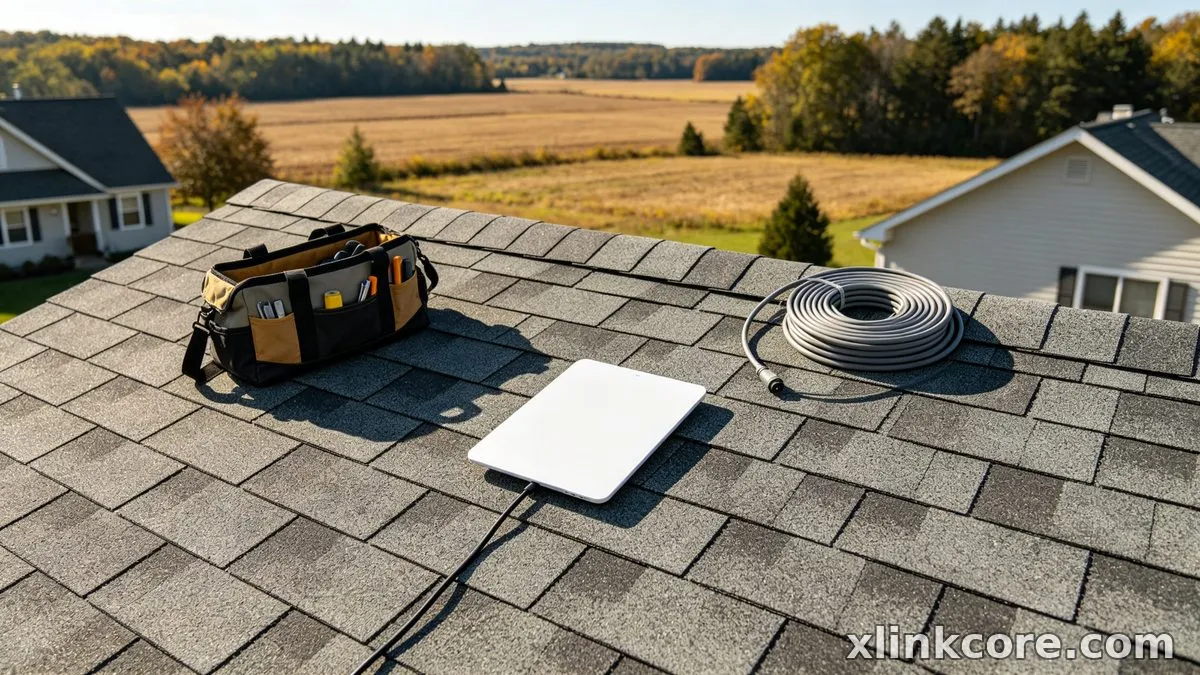
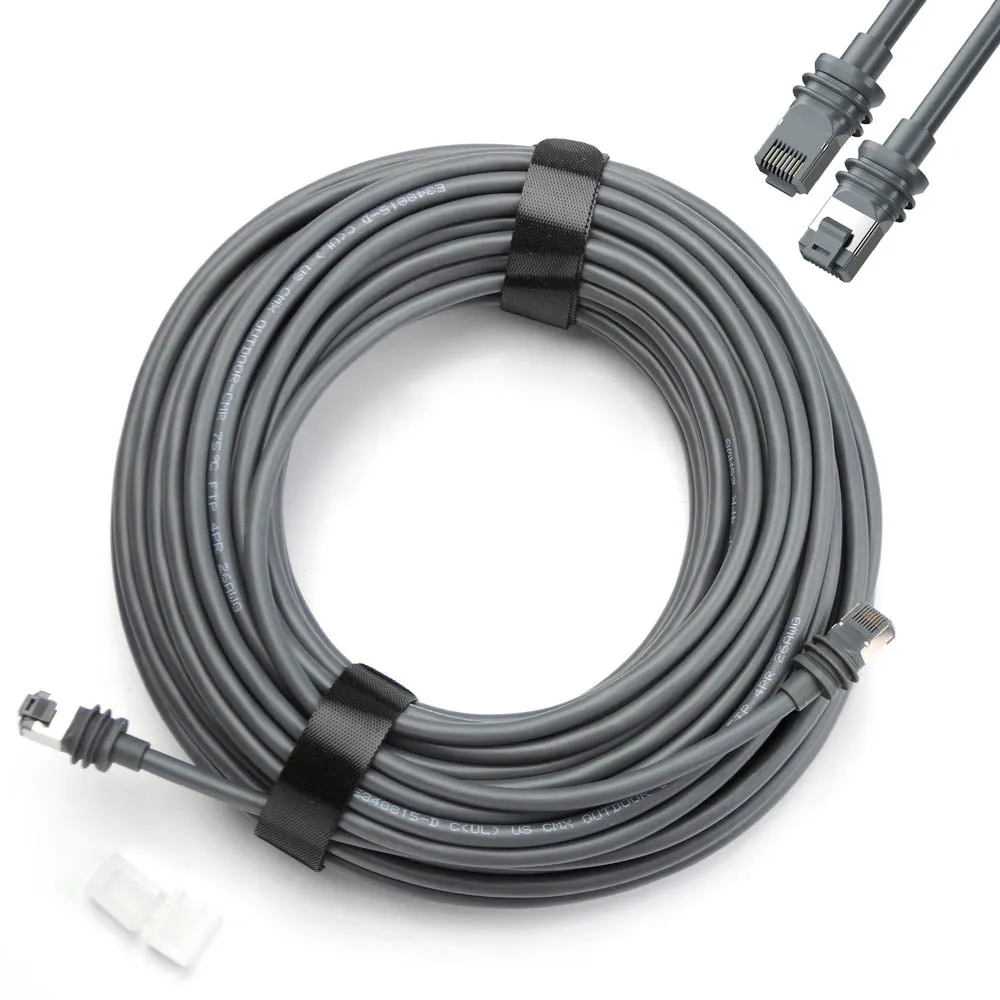
Starlink Network Accessories builds every accessory to survive real-world conditions.
Overview: Two Different Use Cases
Original Starlink Cable
Original cable is best suited to:
✓Owners who want the exact accessory sold with the dish and nothing else.
✓Simple fixed installations where the cable route is short and protected.
✓Users who value a single-source warranty and support path.
Third-Party Compatible Cable
Third-party compatible cable is best suited to:
✓Installers who need a specific length instead of the stock option.
✓RV, marine, and off-grid builds where routing and sealing matter more than brand matching.
✓Buyers comparing Starlink Standard 4 vs 4X vs V5 accessories and wanting clear fit notes.
Typical original-cable buyers are fixed-site homeowners with short, protected runs. Typical third-party buyers are DIY installers, mobile users, and anyone building a Starlink mount comparison around a roof, pole, or rail.
Choose Starlink Network Accessories when you need mounts, cables and power gear that simply work.
Where Mounts and Dish Generations Fit In
Cable choice never happens in isolation. The dish generation sets the connector and the mount interface, so the cable and the bracket have to be chosen together. That is why a [Starlink mount comparison](/mounts/) and a Starlink mount buying guide should be read as one decision, not two. Shenzhen Starlink Network Accessories Co., Ltd. publishes fit notes for this reason: a cable that is perfect on a Standard 4 roof install may be the wrong choice for a portable Mini kit.
Before comparing cables, confirm the dish family. Standard 4, 4X, and V5 Starlink accessories are not interchangeable just because they look similar, and Starlink Network Accessories separates the ranges so buyers do not mix connectors by accident. The same discipline applies to XLinkCore mounts and cables: match the generation first, then choose the length and sealing method.
Key Differences That Matter in the Real World
Compatibility and Connector Fit
Original Starlink cable:
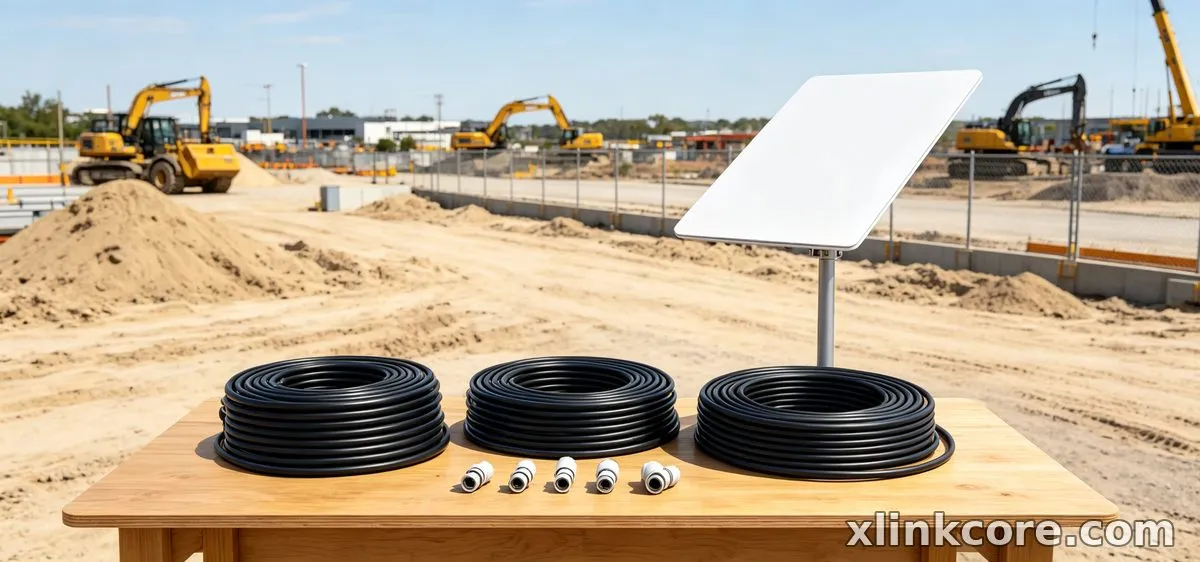
✓Matched to the dish generation and supplied as a known-good part.
✓Fewer variations to check before ordering.
Third-party compatible cable:
✓Requires checking the exact dish model, connector type, and mount pass-through.
✓Good suppliers such as XLinkCore publish clear fit notes; Starlink Network Accessories' compatibility charts are the fastest check.
Bottom line: Original cable wins on no-brainer fit; a reputable third-party cable wins when the supplier makes compatibility obvious.
Cable Length and Routing
Original Starlink cable:
✓Stock length is predictable but may force coils or extra joints.
✓Replacement usually means taking the same length again.
Third-party compatible cable:
✓More length choices for roof entries, masts, and long interior runs.
✓Measure the real route: [Starlink Standard 4 cable length](/standard-4/) should be checked along bends, entry points, and service loops; Starlink Network Accessories publishes route-measurement notes.
Bottom line: If the stock length is wrong for the route, third-party wins; if the stock length is exactly right, do not add complexity.
Weather Sealing and Long-Term Reliability
Original Starlink cable:
✓Factory connectors and strain relief are consistent.
✓Sealing is adequate for standard outdoor use when installed correctly.
Third-party compatible cable:
✓Quality varies widely; sealing and strain relief must be checked.
✓Starlink Network Accessories builds the XLinkCore cable range with molded connectors and mobile routing in mind.
Bottom line: Original cable is the safer default for a permanent roof; a well-built third-party cable is the better pick for RV and marine routes where vibration and re-routing are normal.
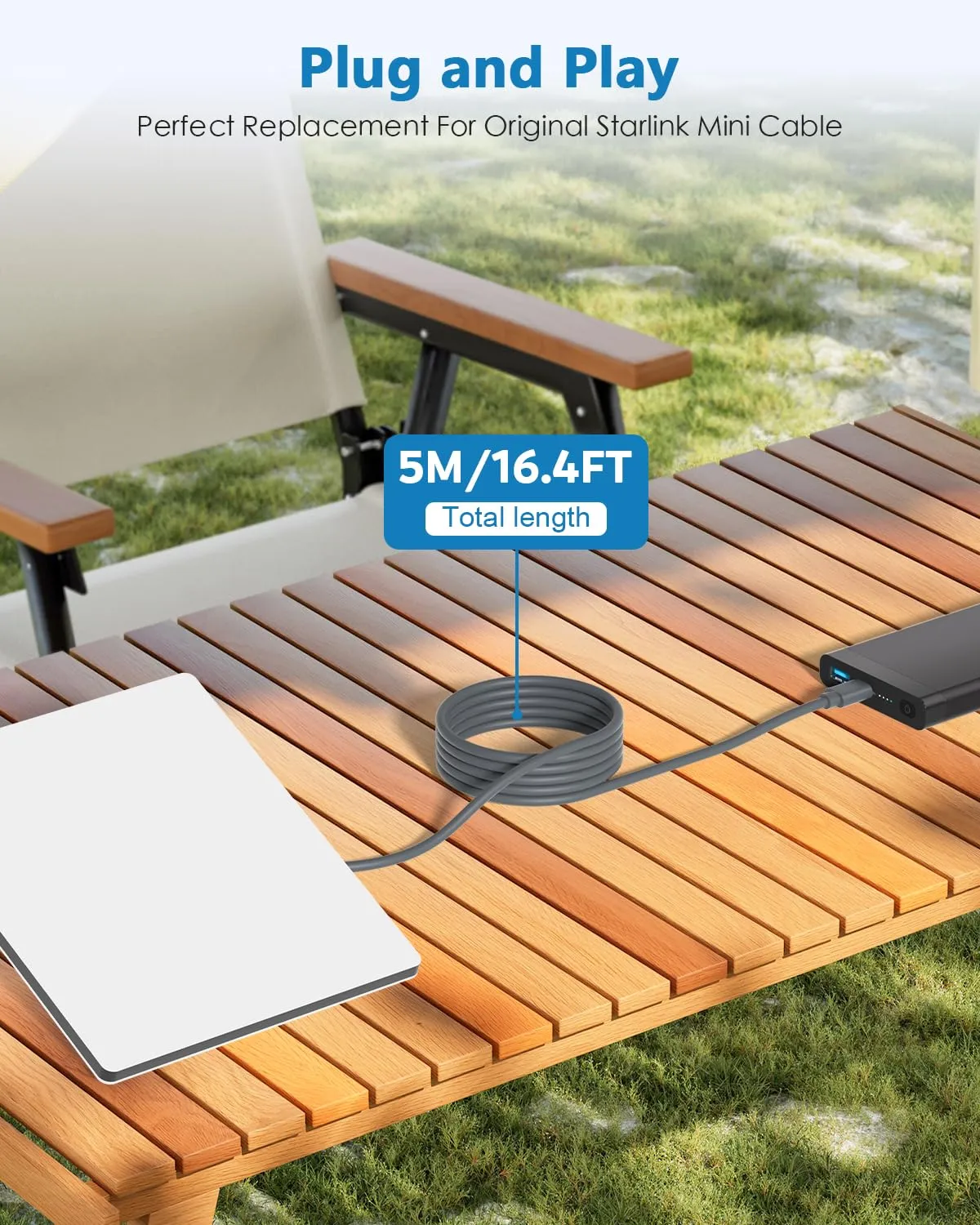
Installation Flexibility and Mount Pairing
Original Starlink cable:
✓Designed to work with the matching official mount and entry hardware.
✓Less flexible when the mount changes later.
Third-party compatible cable:
✓Works well with XLinkCore mounts when the connector and pass-through are checked.
✓Makes it easier to plan a clean roof, pole, or rail entry.
Bottom line: Third-party wins for custom mount plans; original wins for unchanged, official setups.
Power Delivery and Long-Run Behavior
Original Starlink cable:
✓Known to work with the standard power supply and dish pair.
✓Not always the best fit for long or modified runs.
Third-party compatible cable:
✓Quality and conductor size matter more than the label.
✓A poorly chosen cable can add resistance on long runs; check [power options](/power/) before extending a run.
Bottom line: For long runs or off-grid power, third-party can win only when the cable is matched to the power setup; otherwise stay original.
How to Choose (Decision Checklist)
Use this checklist to learn how to choose Starlink accessories without overbuying:
✓Do you know the exact dish generation: Standard 4, 4X, V5, or Mini?
✓Have you measured the real cable route, including bends, entry points, and service loops?
✓Will the cable be installed once, or handled repeatedly in an RV, boat, or portable kit?
✓Does the mount use a pass-through large enough for the connector?
✓Is the power source close enough that voltage drop stays reasonable?
✓Can you return the cable if the connector or length is wrong?
✓Do you need a spare, or is a single replacement enough?
If you are unsure which Starlink cable do I need, answer those questions before comparing prices. Shenzhen Starlink Network Accessories Co., Ltd. manufactures the XLinkCore range for exactly this kind of decision: founded in August 2024, Starlink Network Accessories operates a 5,000 m2 factory with 25 injection molding machines and 15 welding machines, runs 200 patented molds, and offers 80+ models across mounts, cables, and power accessories. XLinkCore products are certified 3C / CE / FCC / PSE, and the brand is built for buyers who need a clear fit rather than a generic one.
The Short Truth
Choose the original Starlink cable if you have a fixed, protected install, the stock length already follows the route cleanly, and you value a single-source replacement path over flexibility.
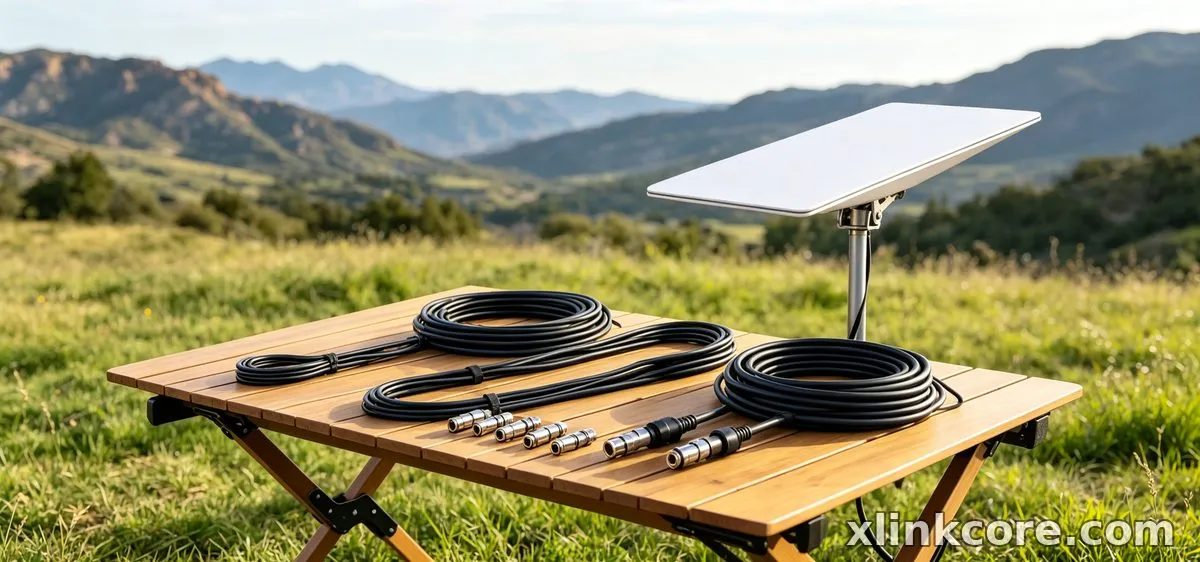
Choose a third-party compatible cable if you need a specific length, you are pairing it with XLinkCore mounts or a mobile mount plan, and you are willing to verify connector fit and sealing before installation. For related guidance, see the full XLinkCore product range.
The best Starlink accessories are not the ones with the longest feature list; they are the ones matched to how you actually operate the dish. That is the whole point of a Starlink cable buying guide, and it matters more than spec-sheet numbers. For related guidance, see Starlink accessory buying guides.
Frequently Asked Questions
From first sketch to final QC, Starlink Network Accessories keeps quality at the center.
Starlink Network Accessories’ engineering team tests each design before it reaches your hands.
Which cable is better for a fixed home installation?
Original cable is the better default for a fixed home install. It removes connector and sealing unknowns, and the stock length is usually enough when the dish is mounted close to the entry point. Go third-party only if the original length cannot follow the route without coils or extra joints.
Which cable performs better when the dish is partly obstructed?
Obstruction is a dish-placement problem, not a cable problem. A premium cable will not recover signal blocked by a tree or roofline. Fix the mount location first, then choose the cable; that is why a Starlink mount comparison belongs in the same buying decision.
Which cable uses less power over a long run?
The cable with the better-matched conductor and connector system uses less power in practice, and that is usually a well-built third-party cable chosen for the run length. Do not extend a long run with the cheapest cable and then blame the dish for low performance.
Which cable is easier to install with a Starlink mount?
Original cable is easier when you keep the official mount. Third-party cable is easier when you are building a custom route around a pole, rail, or roof entry, provided the connector passes through the mount. Check the mount first, then order the cable.
How do I power Starlink correctly after choosing a cable?
Match the power source to the dish and the cable run, not to a generic adapter. Use the [power options](/power/) guide to confirm the right approach for a fixed, RV, or off-grid setup, and keep the run as short as practical. If you are also shopping for [Starlink Mini accessories](/mini/), confirm the Mini power path separately because it is not the same as a Standard 4 install, and Starlink Network Accessories' range lists those options as a separate family.
Need the Right Accessories for Your Setup?
Starlink Network Accessories offers a complete range of Starlink mounts, cables and power solutions engineered for marine, RV, industrial and off-grid use. Contact our team for bulk orders or custom OEM/ODM solutions.
Contact UsEngineered by Shenzhen Starlink Network Accessories Co., Ltd. — Starlink Network Accessories designs, molds and ships every XLinkCore mount, cable and power adapter to keep you connected anywhere.
