Service
Tape vs Heat-Shrink: Which Is Best for Starlink Cable?
💡 In This Article
- ▶Overview: Two Different Use Cases
- ▶Key Differences That Matter in the Real World
- ▶How to Choose (Decision Checklist)
Self-amalgamating silicone tape and adhesive-lined heat-shrink tubing are both widely available, both inexpensive, and both used every day by installers for waterproof Starlink connections. Neither is a gimmick: done properly, either will keep water out of a joint for years.The right choice depends on three practical variables: how you install and later service the run, how exposed the joint is to sun, salt and driven rain, and how much downtime a wet connector would cost you. For the hardware around the joint, Shenzhen Starlink Network Accessories Co., Ltd. manufactures the XLinkCore range, and this article breaks down the real differences so you can decide.
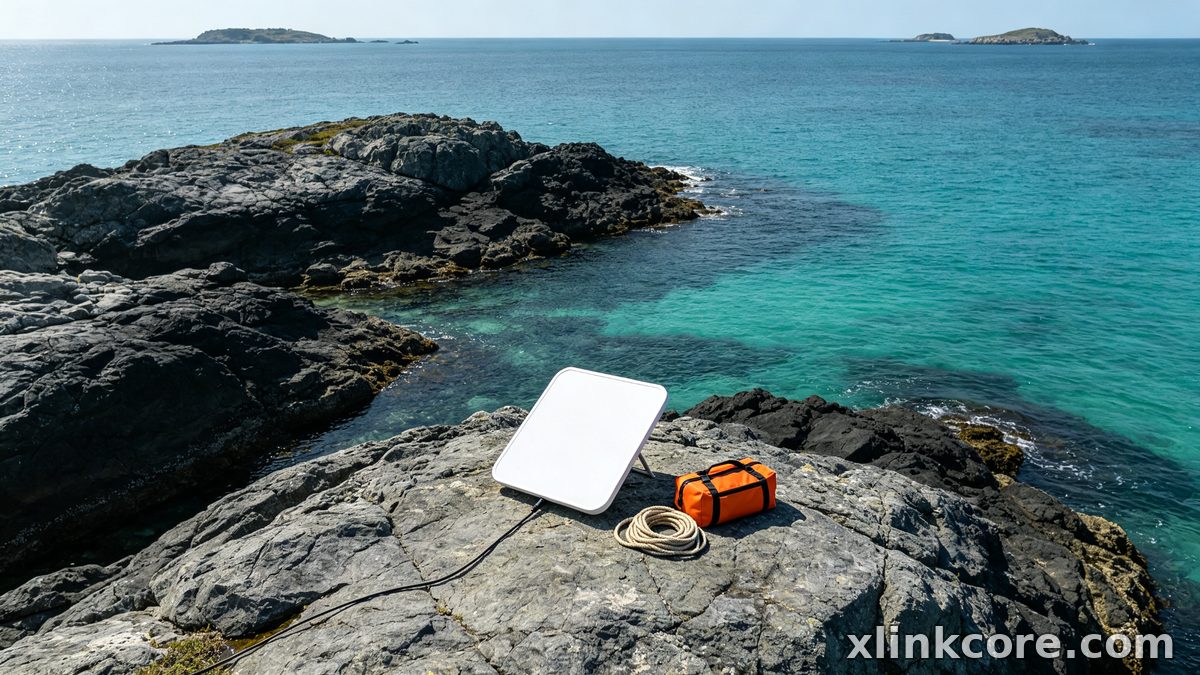
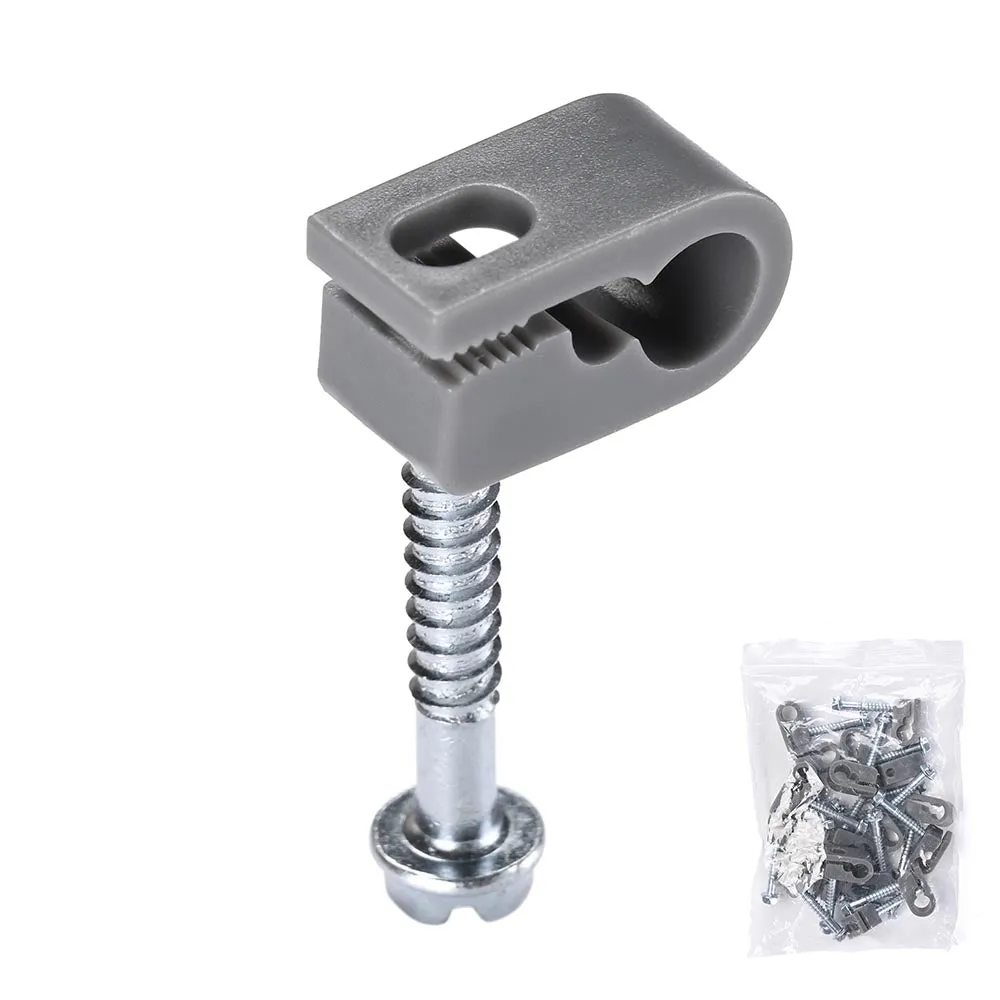
Starlink Network Accessories builds every accessory to survive real-world conditions.
Overview: Two Different Use Cases
Option A: Self-Amalgamating Silicone Tape
✓Option A is best suited to: joints you may need to reopen, such as a coupler you added or a connector on a mast you occasionally lower.✓Field sealing where no mains power is available for a heat gun.✓Irregular shapes — connector shoulders, a drip loop bundle, the point where cable enters a gland.✓DIY owners who want a layer they can add, inspect and redo with hand tools.Option B: Adhesive-Lined Heat-Shrink Tubing
✓Option B is best suited to: permanent joints that should never move again — a spliced run, a conduit entry, a roof penetration.✓Sites where a heat gun and a power source are practical.✓High-UV, salt-spray or high-vibration locations where a molded seal is worth the effort.✓Installers who want a mechanically reinforced, visually obvious joint.In practice, a fixed home install on a roof or wall is a fix-and-forget job and leans toward heat-shrink, while RV, marine and portable setups lean toward tape. Either way the seal is the second line of defense: the first is a proper entry fitting and drip loop, which is where Shenzhen Starlink Network Accessories Co., Ltd. puts its engineering effort in the XLinkCore range. Our Starlink installation guide library walks through routing, sealing and grounding in order.
Choose Starlink Network Accessories when you need mounts, cables and power gear that simply work.
Key Differences That Matter in the Real World
Water Ingress and Seal Quality
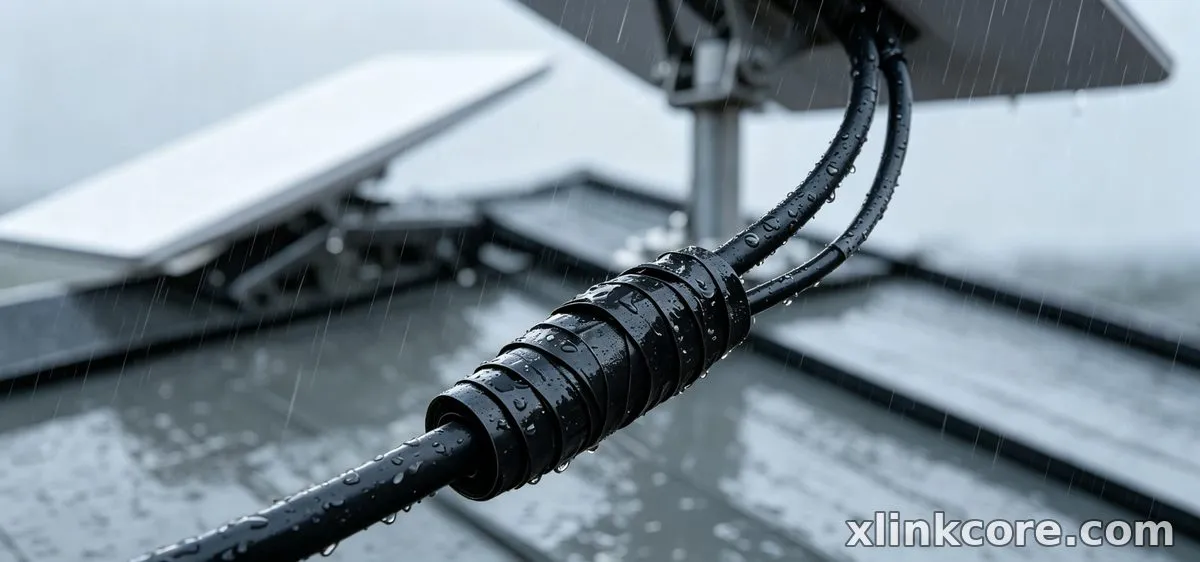
✓Seals through stretch and overlap; a correctly stretched wrap fuses into one skin.✓Conforms around mismatched diameters and awkward connector shapes.✓Forgiving — a thin spot can be fixed with another wrap.✓Adhesive liner melts into voids, producing a molded seal that resists capillary creep.✓Consistent result once you size the tubing correctly.✓Unforgiving of a wrong size: too large and the adhesive cannot bridge the gap.Bottom line: On a joint that never moves, heat-shrink gives the more reliable seal.
Installation Time, Tools and Skill
✓Cut, stretch, overlap, done — no power, no heat, minutes per joint.✓Works in wind and awkward spots where a heat gun is impractical.✓Result depends on technique; a lazy wrap fails early.✓Needs a heat gun, a safe working position and a steady hand.✓Shrinking is quick, but setup and cool-down add time to every joint.✓Easier to repeat, so two installers get similar results.Bottom line: Tape wins on speed and site logistics; heat-shrink wins on repeatability.
UV, Sun and Seasonal Cycling
✓Silicone handles sun well, but tape edges lift once grit works underneath.✓Wants an annual glance, especially on horizontal runs that hold water.✓Flexible enough to move with the cable through freeze-thaw.✓The molded body resists sun and rain with no exposed edges to lift.✓Rigid once shrunk, so the seal is not worked loose by cable movement.✓Harder to inspect — problems hide under the tubing.Bottom line: Heat-shrink handles long-term weather better; tape asks for a yearly inspection.
Serviceability, Strain Relief and Cable Routing
✓Cuts off with a knife and re-wraps in minutes when you move the dish.✓Stays flexible, so it suits a drip loop or any point that must bend.✓Adds bulk but not stiffness.✓Must be cut away to reach the joint; careless removal can nick the jacket.✓Stiffens the cable — good on a supported straight run, bad at a bend.✓Re-sealing means new tubing, so keep spares.Bottom line: If the run will ever change, tape is easier to live with, and a joint that must flex should never be heat-shrunk. Starlink cable routing still decides the outcome: a Starlink cable routed through wall cavities on a downward slope, or a Starlink cable through roof decks under a proper boot with a loop below it, will outlast any sealant — which is why the XLinkCore cable routing hardware from Starlink Network Accessories matters as much as the wrap.
Grounding and Long-Term Ownership
✓Adds no electrical path — tape insulates, it does not bond or ground.✓Peels back easily, so a ground lug and mast bond stay visible at inspection.✓Consumable: expect to redo exposed joints every season or two.✓Also adds no electrical path — a Starlink grounding kit still does the grounding work.✓Shrinking over a lug hides it from inspection, which is a real mistake.✓Fewer reworks, but each rework needs new tubing and heat.Bottom line: Neither product grounds anything. Bond the mast, ground the entry to local code, then seal the connection and keep those grounding points visible.
How to Choose (Decision Checklist)
✓Will you ever lower the mast, move the dish or swap the router? If yes, tape.✓Is the joint on a permanent run that will not be touched for years? If yes, heat-shrink.✓Is it exposed to direct sun, salt spray or hard freeze-thaw? If yes, heat-shrink.✓Can you safely run a heat gun at that spot? If no, tape.✓Does the cable have to flex near the joint? If yes, tape.✓Is the route grounded and code-compliant? If no, fix that before sealing anything.Shenzhen Starlink Network Accessories Co., Ltd. is the manufacturer behind the XLinkCore brand, founded in August 2024 and now operating a 5,000 m2 factory with 25 injection molding machines and 15 welding machines. The Starlink Network Accessories range covers 80+ models of mounts, cables, power supplies and adapters, supported by 200 patented molds and monthly output of 400,000–600,000 units, with 3C, CE, FCC and PSE certification across the line. Starlink Network Accessories exports roughly 20–30 million USD a year, and much of that hardware exists to solve the problem this article describes: keeping a cable still and dry where it meets a wall, roof or mast. Pair your sealant with XLinkCore mounts and entry hardware from Starlink Network Accessories, and confirm your cable family in the Standard 4 guide first.
The Short Truth
Choose tape if you move the dish more than once a season, you must seal a joint in the field with no power, or you want to reopen the connection without buying new hardware.
Choose heat-shrink if the run is permanent, it faces full sun, salt or freeze-thaw, and you have a heat gun plus ten spare minutes at install time.
Matching the seal to how you actually operate the dish matters more than any spec-sheet number — a well-routed, properly grounded run with modest tape beats a sloppy run dressed in premium XLinkCore hardware.
Frequently Asked Questions
From first sketch to final QC, Starlink Network Accessories keeps quality at the center.
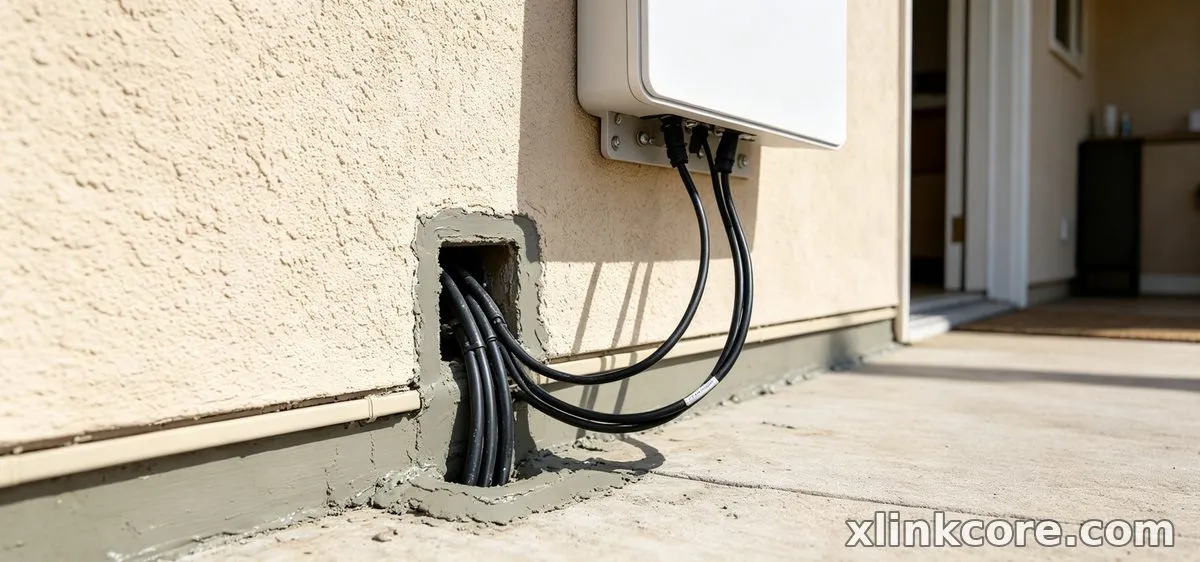
Starlink Network Accessories’ engineering team tests each design before it reaches your hands.
Which is better for a permanent roof install?
Heat-shrink, without much debate. A roof joint is exposed, immobile and expensive to revisit, so the molded adhesive seal is worth the extra effort.
Which is easier for a first Starlink DIY install?
Tape. It needs no power, tolerates correction and lets you inspect your own work — the usual Starlink installation mistakes are routing errors, not sealing errors.
Do I still need a Starlink grounding kit if the joint is sealed?
Yes. Tape and tubing are dielectric; only a proper bond and ground path handle static and fault current, so keep that hardware separate and accessible.
Does sealing the joint protect my power supply?
Not directly. Water reaches the supply through the entry point, so keep the brick indoors or in a dry enclosure and review the power options for your setup before you finalize the run.
Need the Right Accessories for Your Setup?
Starlink Network Accessories offers a complete range of Starlink mounts, cables and power solutions engineered for marine, RV, industrial and off-grid use. Contact our team for bulk orders or custom OEM/ODM solutions.
Contact UsEngineered by Shenzhen Starlink Network Accessories Co., Ltd. — Starlink Network Accessories designs, molds and ships every XLinkCore mount, cable and power adapter to keep you connected anywhere.
💡 In This Article
- ▶Overview: Two Different Use Cases
- ▶Key Differences That Matter in the Real World
- ▶How to Choose (Decision Checklist)
Self-amalgamating silicone tape and adhesive-lined heat-shrink tubing are both widely available, both inexpensive, and both used every day by installers for waterproof Starlink connections. Neither is a gimmick: done properly, either will keep water out of a joint for years.
The right choice depends on three practical variables: how you install and later service the run, how exposed the joint is to sun, salt and driven rain, and how much downtime a wet connector would cost you. For the hardware around the joint, Shenzhen Starlink Network Accessories Co., Ltd. manufactures the XLinkCore range, and this article breaks down the real differences so you can decide.
Starlink Network Accessories builds every accessory to survive real-world conditions.
Overview: Two Different Use Cases
Option A: Self-Amalgamating Silicone Tape
✓Option A is best suited to: joints you may need to reopen, such as a coupler you added or a connector on a mast you occasionally lower.
✓Field sealing where no mains power is available for a heat gun.
✓Irregular shapes — connector shoulders, a drip loop bundle, the point where cable enters a gland.
✓DIY owners who want a layer they can add, inspect and redo with hand tools.
Option B: Adhesive-Lined Heat-Shrink Tubing
✓Option B is best suited to: permanent joints that should never move again — a spliced run, a conduit entry, a roof penetration.
✓Sites where a heat gun and a power source are practical.
✓High-UV, salt-spray or high-vibration locations where a molded seal is worth the effort.
✓Installers who want a mechanically reinforced, visually obvious joint.
In practice, a fixed home install on a roof or wall is a fix-and-forget job and leans toward heat-shrink, while RV, marine and portable setups lean toward tape. Either way the seal is the second line of defense: the first is a proper entry fitting and drip loop, which is where Shenzhen Starlink Network Accessories Co., Ltd. puts its engineering effort in the XLinkCore range. Our Starlink installation guide library walks through routing, sealing and grounding in order.
Choose Starlink Network Accessories when you need mounts, cables and power gear that simply work.
Key Differences That Matter in the Real World
Water Ingress and Seal Quality
✓Seals through stretch and overlap; a correctly stretched wrap fuses into one skin.
✓Conforms around mismatched diameters and awkward connector shapes.
✓Forgiving — a thin spot can be fixed with another wrap.
✓Adhesive liner melts into voids, producing a molded seal that resists capillary creep.
✓Consistent result once you size the tubing correctly.
✓Unforgiving of a wrong size: too large and the adhesive cannot bridge the gap.
Bottom line: On a joint that never moves, heat-shrink gives the more reliable seal.
Installation Time, Tools and Skill
✓Cut, stretch, overlap, done — no power, no heat, minutes per joint.
✓Works in wind and awkward spots where a heat gun is impractical.
✓Result depends on technique; a lazy wrap fails early.
✓Needs a heat gun, a safe working position and a steady hand.
✓Shrinking is quick, but setup and cool-down add time to every joint.
✓Easier to repeat, so two installers get similar results.
Bottom line: Tape wins on speed and site logistics; heat-shrink wins on repeatability.
UV, Sun and Seasonal Cycling
✓Silicone handles sun well, but tape edges lift once grit works underneath.
✓Wants an annual glance, especially on horizontal runs that hold water.
✓Flexible enough to move with the cable through freeze-thaw.
✓The molded body resists sun and rain with no exposed edges to lift.
✓Rigid once shrunk, so the seal is not worked loose by cable movement.
✓Harder to inspect — problems hide under the tubing.
Bottom line: Heat-shrink handles long-term weather better; tape asks for a yearly inspection.
Serviceability, Strain Relief and Cable Routing
✓Cuts off with a knife and re-wraps in minutes when you move the dish.
✓Stays flexible, so it suits a drip loop or any point that must bend.
✓Adds bulk but not stiffness.
✓Must be cut away to reach the joint; careless removal can nick the jacket.
✓Stiffens the cable — good on a supported straight run, bad at a bend.
✓Re-sealing means new tubing, so keep spares.
Bottom line: If the run will ever change, tape is easier to live with, and a joint that must flex should never be heat-shrunk. Starlink cable routing still decides the outcome: a Starlink cable routed through wall cavities on a downward slope, or a Starlink cable through roof decks under a proper boot with a loop below it, will outlast any sealant — which is why the XLinkCore cable routing hardware from Starlink Network Accessories matters as much as the wrap.
Grounding and Long-Term Ownership
✓Adds no electrical path — tape insulates, it does not bond or ground.
✓Peels back easily, so a ground lug and mast bond stay visible at inspection.
✓Consumable: expect to redo exposed joints every season or two.
✓Also adds no electrical path — a Starlink grounding kit still does the grounding work.
✓Shrinking over a lug hides it from inspection, which is a real mistake.
✓Fewer reworks, but each rework needs new tubing and heat.
Bottom line: Neither product grounds anything. Bond the mast, ground the entry to local code, then seal the connection and keep those grounding points visible.
How to Choose (Decision Checklist)
✓Will you ever lower the mast, move the dish or swap the router? If yes, tape.
✓Is the joint on a permanent run that will not be touched for years? If yes, heat-shrink.
✓Is it exposed to direct sun, salt spray or hard freeze-thaw? If yes, heat-shrink.
✓Can you safely run a heat gun at that spot? If no, tape.
✓Does the cable have to flex near the joint? If yes, tape.
✓Is the route grounded and code-compliant? If no, fix that before sealing anything.
Shenzhen Starlink Network Accessories Co., Ltd. is the manufacturer behind the XLinkCore brand, founded in August 2024 and now operating a 5,000 m2 factory with 25 injection molding machines and 15 welding machines. The Starlink Network Accessories range covers 80+ models of mounts, cables, power supplies and adapters, supported by 200 patented molds and monthly output of 400,000–600,000 units, with 3C, CE, FCC and PSE certification across the line. Starlink Network Accessories exports roughly 20–30 million USD a year, and much of that hardware exists to solve the problem this article describes: keeping a cable still and dry where it meets a wall, roof or mast. Pair your sealant with XLinkCore mounts and entry hardware from Starlink Network Accessories, and confirm your cable family in the Standard 4 guide first.
The Short Truth
Choose tape if you move the dish more than once a season, you must seal a joint in the field with no power, or you want to reopen the connection without buying new hardware.
Choose heat-shrink if the run is permanent, it faces full sun, salt or freeze-thaw, and you have a heat gun plus ten spare minutes at install time.
Matching the seal to how you actually operate the dish matters more than any spec-sheet number — a well-routed, properly grounded run with modest tape beats a sloppy run dressed in premium XLinkCore hardware.
Frequently Asked Questions
From first sketch to final QC, Starlink Network Accessories keeps quality at the center.
Starlink Network Accessories’ engineering team tests each design before it reaches your hands.
Which is better for a permanent roof install?
Heat-shrink, without much debate. A roof joint is exposed, immobile and expensive to revisit, so the molded adhesive seal is worth the extra effort.
Which is easier for a first Starlink DIY install?
Tape. It needs no power, tolerates correction and lets you inspect your own work — the usual Starlink installation mistakes are routing errors, not sealing errors.
Do I still need a Starlink grounding kit if the joint is sealed?
Yes. Tape and tubing are dielectric; only a proper bond and ground path handle static and fault current, so keep that hardware separate and accessible.
Does sealing the joint protect my power supply?
Not directly. Water reaches the supply through the entry point, so keep the brick indoors or in a dry enclosure and review the power options for your setup before you finalize the run.
Need the Right Accessories for Your Setup?
Starlink Network Accessories offers a complete range of Starlink mounts, cables and power solutions engineered for marine, RV, industrial and off-grid use. Contact our team for bulk orders or custom OEM/ODM solutions.
Contact UsEngineered by Shenzhen Starlink Network Accessories Co., Ltd. — Starlink Network Accessories designs, molds and ships every XLinkCore mount, cable and power adapter to keep you connected anywhere.
